

In our previous discussion, "Calcium Silicon Alloy: Why Has It Become the Invisible 'Key Player' in Enhancing Steel Performance?"(https://www.weidamaterials.com/show-18-1450.html), we uncovered the crucial role of specialty alloys in industry. Today, we focus on the foundry sector, delving into a core material and technology that is helping numerous enterprises successfully break through the dual pressures of environmental compliance and quality—the cored wire feeding method and cored wire.
With increasingly stringent environmental regulations, traditional foundry processes characterized by high pollution and high energy consumption have become major obstacles to business survival and growth. Dust-filled nodularizing treatment areas, unstable nodularizing effects leading to casting quality issues, and high costs for environmental remediation... these problems are continuously squeezing profit margins. How to achieve green manufacturing in foundries while ensuring stable and improved casting quality is an urgent challenge facing every foundry professional.
1. The Wire Feeding Process: A Precise and Clean Modern Treatment Solution
The wire feeding process has revolutionized molten iron treatment. It uses a specialized wire feeder machine to continuously and uniformly feed cored wire—encasing alloy powders—into the bottom of the ladle. Under the high temperature of the molten iron, the outer steel sheath melts, allowing the internal core material to instantly contact and react fully with the iron. This method not only enables nodularizing treatment for ductile iron but also allows for precise deoxidation, desulfurization, vermicularizing, and inoculation. The process generates almost no smoke or magnesium flare, significantly improving the working environment and reducing environmental pressure. This is undoubtedly an ideal choice to address the current needs for environmental upgrading in the foundry industry and high-quality casting production.
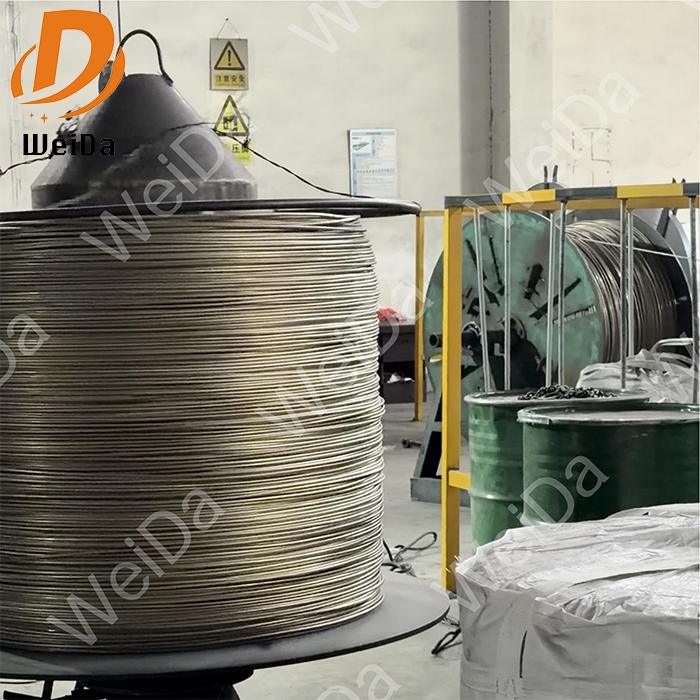
2. Wuxi WeiDa Cored Wire: Excellence Forged from the Source
As a new technology enterprise specializing in the R&D and production of specialty alloy products, Wuxi WeiDa Cored Wire Co., Ltd. has a deep understanding of customer challenges and needs. We are committed to providing stable and reliable solutions through our high-quality alloy cored wire products. Our advantages are rooted in control over every production step.
Stringent Raw Material and Production Control is the foundation of quality. All incoming materials undergo strict inspection before being accepted into inventory. The core material is smelted using a unique dual-water-cooling process, with sampling and testing for every heat to ensure precise composition. During the crushing stage, we use specialized granulating machines under a nitrogen atmosphere, effectively reducing magnesium oxidation loss and ensuring core material activity and safety. Before steel strip winding and forming, we insist on trial production and testing to ensure key parameters like cored wire diameter, weight per meter, and filler content meet standards before mass production begins.
3. Addressing the Core: The Differentiated Advantages of Wuxi WeiDa Products
Facing potential market issues with cored wire products such as inconsistent core material, brittle steel sheath, and unstable nodularizing effects, we provide our definitive answers:
First, we select Q08Al high-quality carbon structural steel strip. Its high toughness and excellent elongation ensure the cored wire resists tearing and breaking during high-speed feeding, guaranteeing a continuous and stable treatment process.
Second, we adhere to standards for cored wire manufacturing specifications. Core material particle size is strictly controlled, with over 85% between 0.2—1.5mm, ensuring uniform reaction rates. For ductile iron cored wire and inoculant cored wire, we precisely control the weight of core powder per unit length within tolerances. This enables accurate control of alloy addition per ton of molten iron, stabilizing magnesium recovery rate and nodularizing effect, thereby helping customers reduce scrap rates caused by composition fluctuations.
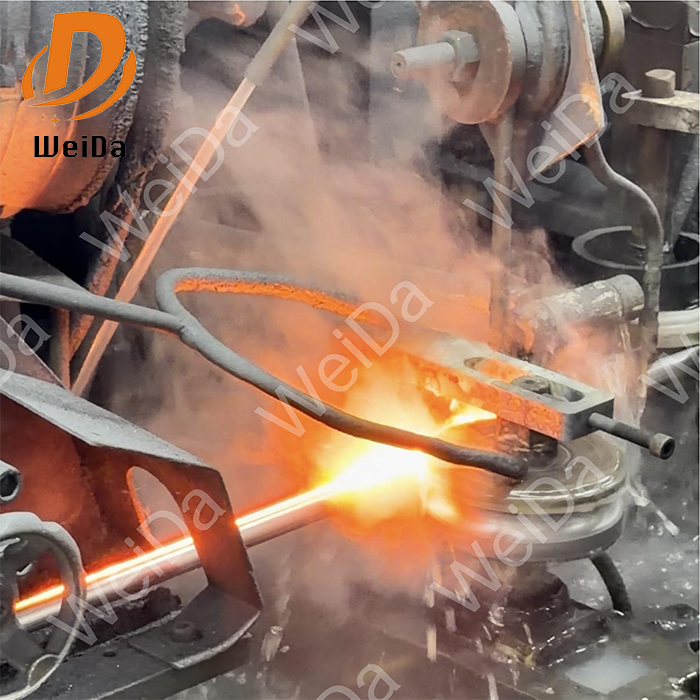
4. Application Practices and Future Outlook
Correct usage of cored wire is key to maximizing its effectiveness. The wire feeding speed needs to be optimized based on molten iron temperature and ladle depth, aiming for the optimal "ignition" point near the ladle bottom. The wire feeding length should be scientifically calculated based on the original iron's sulfur content and the target residual magnesium level. We advise customers to determine the optimal process parameters through preliminary tests and to avoid using cored wire with empty sections, underfilled sections, or rust, which can compromise treatment results.
Today, from small stations handling a few hundred kilograms to large-scale cored wire nodularizing stations handling tens of tons of molten iron, the wire feeding method is widely used in China. Its advantages in operational convenience, treatment stability, and environmental friendliness are particularly pronounced in the production of large ductile iron castings and heavy-section ductile iron castings. Looking ahead, with the deepening of foundry automation upgrades and the concept of green and intelligent foundry, the wire feeding method will undoubtedly become the preferred process for more foundries pursuing excellence and sustainable development across broader applications.
Choosing Wuxi WeiDa means choosing a guarantee of stable and reliable quality. Certified under ISO9001 and other international systems, and equipped with advanced production and testing equipment, we serve the foundry industry through technological innovation. Visit our official website https://www.weidamaterials.com/ to learn more about solutions for nodularizer cored wire, inoculant cored wire, and custom alloy wire. Let's work together on the path towards a strong foundry industry