

In the previous article, "How to Further Improve Steelmaking Deoxidation Efficiency by Optimizing the Wire Feeding Process?"(https://www.weidamaterials.com/show-18-1453.html), we delved into the critical role of optimizing the wire feeding process for enhancing deoxidation efficiency. However, process optimization is only one dimension of efficiency improvement. Even when wire feeding speed, angle, and depth reach optimal levels, many steelmaking enterprises still face a series of deeper challenges: incomplete flotation of deoxidation products, leading to excessive internal inclusions in steel; fluctuating alloy element yield rates, making cost control difficult; and the inability of conventional additives to meet stringent composition and purity requirements when processing special steel grades. The root cause of these bottlenecks often points to the core of refining materials—the cored wire itself. This article focuses on innovations in the intrinsic composition and structure of cored wires, revealing how breakthroughs at the material end can achieve comprehensive cost reduction and efficiency improvement in steel refining.
Precision Composition Design: From "Rough Addition" to "Targeted Metallurgy"
The filler composition of traditional cored wires is relatively fixed, often proving inadequate when dealing with complex steel grades and higher purity requirements. A core advantage of Wuxi WeiDa Cored Wire Co., Ltd. lies in its precision customized composition design based on in-depth metallurgical principles. We do not simply provide standard products like calcium iron wire or silicon calcium wire; instead, we treat each cored wire as a "micro metallurgical reaction unit."
For instance, to address the common challenge of modifying liquid inclusions in aluminum-deoxidized steels, we have developed composite refining cored wires. Instead of using pure calcium wire, these employ precisely proportioned calcium-magnesium-rare earth composite alloy powders. This design generates composite deoxidation products with lower melting points that agglomerate and float more easily, significantly reducing the number of microscopic inclusions in steel and improving the fatigue life and low-temperature impact toughness of the steel. For steel grades requiring strict control of acid-soluble aluminum, our special silicon calcium barium cored wires enable gentler, more controllable deoxidation and sulfide morphology control, avoiding waste and increased slag volume caused by over-deoxidation. Through this targeted metallurgical design, we directly address common industry woes such as unstable alloy yield rates and difficulties in achieving the purity of high-grade steels, helping customers improve steel quality while achieving lean control of steelmaking additive costs.
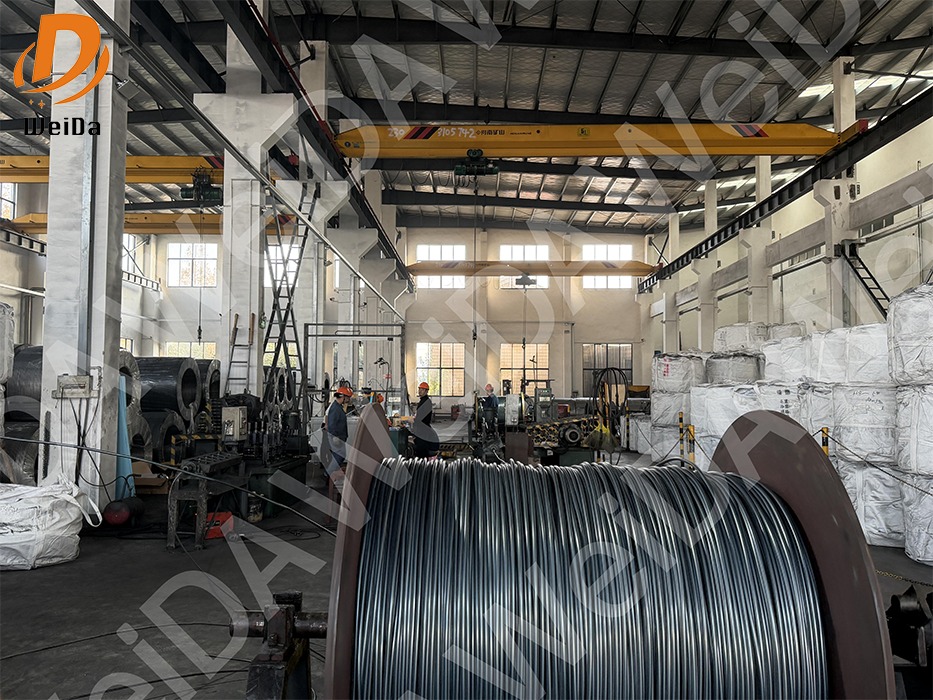
Gradient Layered Structure: Breaking Through the Limitations of Reaction Kinetics
Even with perfect composition, an unreasonable internal powder structure in the cored wire can cause it to "gush out" or "react incompletely" in the molten steel, leading to element burning or localized high concentrations. This is a common issue affecting the stability of calcium treatment effects and the reliability of the wire feeding process. Weida Materials' innovative solution is the introduction of gradient layered composite structure technology.
In our high-performance calcium iron cored wire, the powders are not uniformly mixed but are scientifically layered and filled according to their melting point, reactivity, and function. The outer layer acts as a "buffer layer" for preheating and initial reaction, while the inner layer contains the core reactants. This structure ensures that after the cored wire penetrates the slag layer and enters the deep part of the molten steel, the active elements are released steadily and fully according to the preset sequence. The direct benefits this brings are: significantly improving the effective utilization rate of calcium in molten steel, making the effect of calcium treatment for manganese sulfide morphology control more stable and reliable, and greatly reducing the risk of nozzle clogging. Meanwhile, the steady reaction avoids violent splashing, enhancing production safety and the operating environment. For operations requiring deep desulfurization, our layered composite desulfurization cored wire achieves deeper desulfurization efficiency with lower temperature drop, which is a boon for customers pursuing ultra-high strength steel smelting and special steel grade development.
Coating and Controlled Release Technology: Safeguarding High-Value Alloy Elements
When handling expensive and easily oxidized trace elements such as titanium, boron, and rare earths, ensuring they safely reach the interior of the molten steel bath and function efficiently is the greatest challenge in special alloy cored wire applications. Oxidation by air and erosion by the slag layer can lead to unnecessary loss of precious alloys. Wuxi WeiDa Cored Wire Co., Ltd.'s proprietary alloy coating and controlled release technology was born precisely for this purpose.
We coat the surfaces of highly oxidizable alloy powder particles with an ultra-thin protective film that serves a specific metallurgical function. This film isolates the particles from air during storage and wire feeding, dissolving only when the wire reaches a specific depth within the high-temperature molten steel before releasing the active core. This technology significantly increases the recovery rate of rare earth alloys and the recovery rate of boron, making micro alloying additions unprecedentedly precise and economical. Customers no longer need to over-add to achieve trace composition targets, directly reducing alloying costs for special steels and ensuring compositional uniformity. For producing high-value-added steel grades such as oil pipeline steel, wear-resistant steel, and high-strength automotive sheet steel, this translates to more stable performance and lower raw material costs.
Densification and High-Strength Steel Sheathing: Ensuring the "Last Mile" of the Wire Feeding Process
The external physical properties of the cored wire are equally crucial. Uneven steel sheath thickness, weak seams, and low filling density can lead to wire breakage, powder ejection, or even gun jamming during the feeding process, not only affecting production efficiency but also potentially causing safety incidents. Weida Materials controls quality from the source, using high-quality cold-rolled steel strips and employing advanced forming and welding processes to ensure that every cored wire we produce has excellent straightness, extremely high filling density, and exceptional tensile strength.
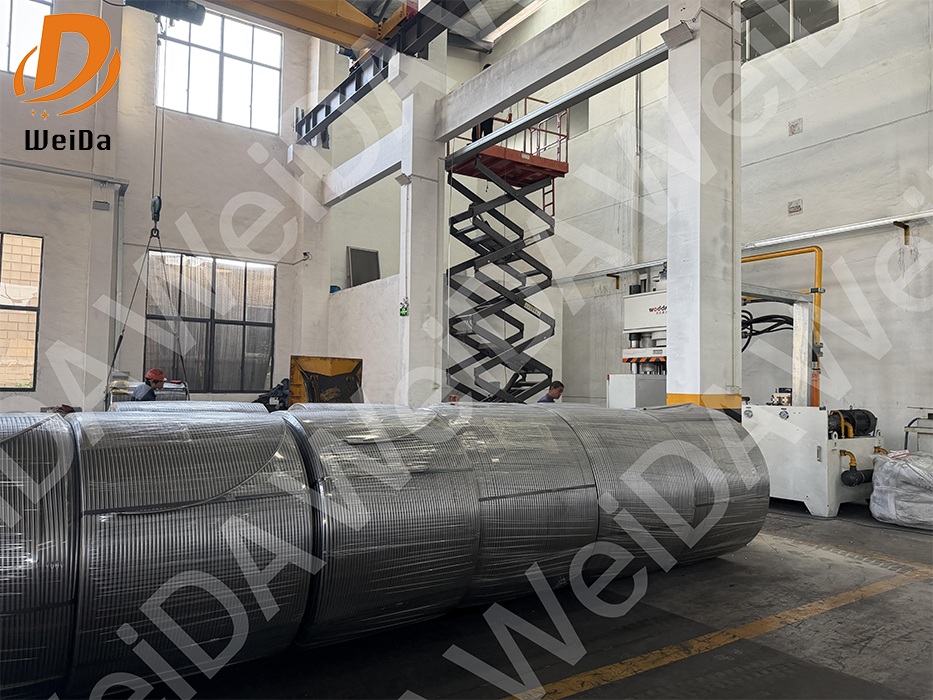
High-density filling means more effective components are carried per unit length of cored wire, improving feeding efficiency. High sheath strength ensures it can penetrate thick slag layers at high speed and stably, reaching the optimal reaction zone in the molten steel. This is the physical foundation for achieving efficient deep desulfurization and deep calcium treatment. We understand that reliable physical performance is the carrier for advanced metallurgical functions, which is why our products consistently perform stably on high-speed wire feeders and are trusted by numerous large domestic and international steel enterprises.
In summary, cost reduction and efficiency improvement in steel refining have evolved from macro-process optimization to micro-material innovation. Wuxi WeiDa Cored Wire Co., Ltd. is committed to systematically addressing core issues such as difficulty in controlling molten steel purity, low alloy yield rates, and substandard refining effects for high-value-added steel grades through precision customization of cored wire core composition, gradient design of internal structure, coating protection of alloy elements, and reliability of physical properties. Visit our official website at https://www.weidamaterials.com/ to learn more about how material innovation can empower your steel refining process and achieve a win-win situation for both quality and cost.