

In our previous discussion, "Why is the Stable Operation of Wire Feeding Machines Crucial for Improving Steel Quality and Reducing Costs?"(https://www.weidamaterials.com/show-18-1457.html), we highlighted the critical role of stable wire feeding equipment in controlling steel quality and costs. As the core of the wire feeding process, the technical specifications and performance of cored wire directly determine the final quality of castings. Faced with multiple challenges in the foundry industry, such as environmental upgrades, quality traceability, and cost optimization, selecting a cored wire product with stable composition and advanced technology has become a key factor for enterprises to achieve green, efficient, and high-quality production.
Cored Wire Core Material Process: The Root of Stability
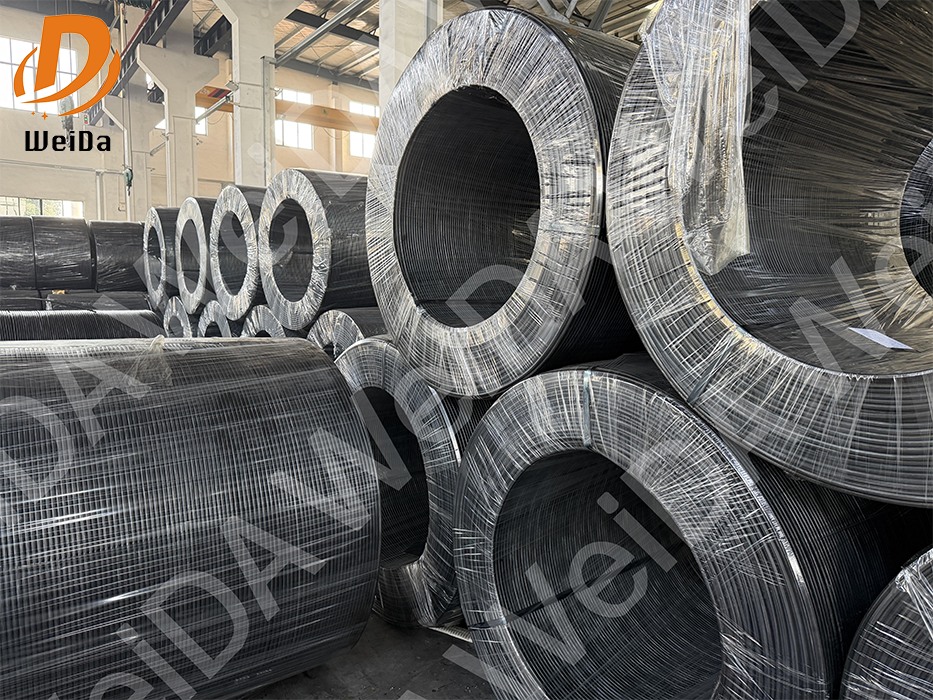
The core of cored wire lies in its core material, and the preparation method determines the uniformity of its composition and process stability. Currently, mainstream methods include fusion method, mechanical mixing method, and layering method, each with its own characteristics. Among these, the fusion method produces core material with the most uniform composition. Magnesium exists in the form of a magnesium-silicon master alloy, ensuring stable absorption, making it particularly suitable for producing high-performance ductile iron castings, such as automotive engine components, wind power castings, and other high-end applications. Although the production cost is relatively high, the resulting stable nodularity grade and low slag inclusion tendency can significantly reduce casting rejection rates, optimizing overall production costs.
In contrast, the mechanical mixing method, while cost-effective, often leads to uneven mixing due to differences in component densities, causing significant fluctuations in nodularizing effects and affecting casting consistency. The layering method, as an emerging process, seeks a balance between cost and uniformity, but its long-term stability still requires practical verification. Wuxi WeiDa Cored Wire Co., Ltd. deeply understands the stringent requirements for stability in high-end casting. By employing advanced fusion processes, we ensure minimal fluctuations in the chemical composition of every meter of cored wire, providing fundamental assurance for stable nodularity rates and improved graphite spheroidal shape.
How Key Performance Indicators Directly Affect Casting Quality
The technical parameters of cored wire are not just simple numbers; each indicator is closely linked to the final casting's performance and defect control.
Firstly, the stability of the core material's chemical composition is fundamental. Minor fluctuations in magnesium (Mg) and rare earth (Re) content can directly lead to unstable nodularity grades, causing mechanical properties to fall short of specifications or shrinkage defects. Our products ensure composition fluctuation ranges are far below industry standards through precise batching and melting control, assisting customers in achieving zero-variation production quality for ductile iron castings.
Secondly, magnesium oxide (MgO) content is a crucial hidden indicator. Excessive MgO directly increases the risk of slag inclusions in castings, leading to slag holes after machining, seriously affecting castings with high airtightness requirements, such as hydraulic components and pump valves. Wuxi WeiDa's cored wire strictly controls MgO content, significantly reducing rejections caused by slag inclusions and enhancing the overall metallurgical quality and cleanliness of castings.
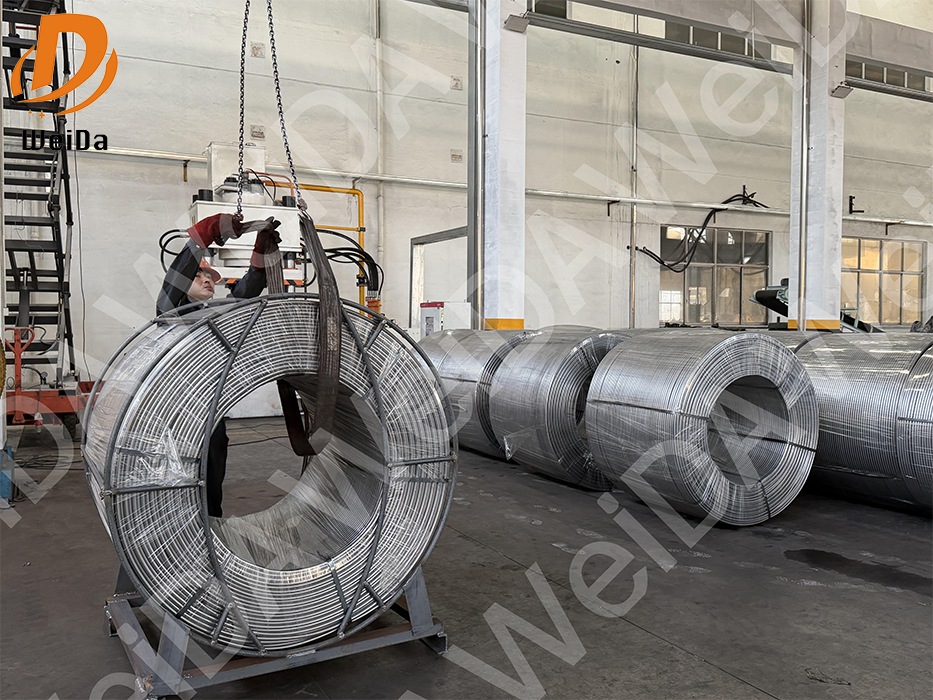
Furthermore, the physical appearance and structural strength of the cored wire are equally critical. Issues like hollow wraps, powder leakage, or insufficient steel strip strength can lead to wire breakage or clogging during feeding, causing treatment failure or inconsistent composition, and halting production. We use high-quality carbon steel strips to ensure the cored wire is robust and evenly filled, providing a smooth and uninterrupted wire feeding experience and ensuring efficient continuous operation of the production line.
Integrated Solutions to Common Wire Feeding Process Challenges
Having high-quality cored wire is the first step; scientific process application is equally important. Many foundries often face issues such as unstable residual magnesium, excessive temperature drop, and frequent equipment failures when applying wire feeding technology.
Addressing the issue of residual magnesium fluctuation—often not just a detection problem but a result of inconsistent cored wire composition and mismatched feeding speed—Wuxi WeiDa provides cored wire with highly uniform composition. Combined with customer-specific molten iron conditions, we recommend optimized feeding speeds and height-to-diameter ratios to reduce variability at the source. For the challenge of excessive molten iron temperature drop during treatment, besides optimizing ladle insulation measures, selecting cored wire products with inherently lower reaction temperature drop is also vital. Our product design fully considers reaction kinetics, helping to minimize molten iron heat loss while ensuring nodularizing effects, providing a more flexible process window for subsequent pouring.
Regarding equipment compatibility, our cored wire coils are neatly wound with straight wire bodies, effectively reducing resistance during operation in various wire feeders, preventing wire jams and breaks, and minimizing unplanned downtime. Simultaneously, we offer customers integrated solutions covering wire feeding station layout and dust removal system design, ensuring the green nodularizing treatment process truly achieves no smoke or dust overflow, improving the workshop environment.
Providing Customized Solutions for High-End and Large Castings
With the upgrading of the equipment manufacturing industry, the demand for large, thick-walled, and high-performance castings is increasing. Such castings have long solidification times and are prone to defects like graphite degeneration and shrinkage porosity. General-purpose cored wire often fails to meet these specific requirements.
Wuxi WeiDa Cored Wire Co., Ltd., leveraging strong R&D capabilities, offers customized core material formulation services. For example, for large wind power ductile iron castings, we can precisely adjust the ratios of rare earth and trace alloying elements (such as Sb, Ca, etc.) in the core material to neutralize interfering elements, promote graphite nodule refinement, and improve matrix structure uniformity, thereby effectively combating degradation issues in heavy-section ductile iron castings. Additionally, we recommend combining this with efficient late-stage inoculation processes to form a complete wire feeding nodularizing and enhanced inoculation package, ensuring performance consistency from the core to the surface.
Whether for automated production lines or small-batch single-piece production, we can provide matching cored wire specifications and supporting technical assistance. Visit our official website https://www.weidamaterials.com/ to learn more about how high-performance cored wire feeding technology can enhance your casting quality, reduce overall costs, and achieve green production. Choosing Wuxi WeiDa means choosing stability and reliability from material to process.