

In the previous article, we discussed "Why Deoxidation is the First Step in Determining Steel Quality." Today, we turn our attention to another crucial element in steel: sulfur. High sulfur content is the "source of brittleness" within steel. It forms inclusions like manganese sulfide, which severely fractures the steel matrix, leading to cracks during rolling or forging, and reducing toughness and plasticity, particularly in transverse properties. This not only affects the production pass rate of products but also poses a serious challenge to the safety of final applications in critical structural components, pipelines, or high-end automotive steels. Facing this common industry challenge, Wuxi WeiDa Cored Wire Co., Ltd. offers the solution of efficient calcium treatment process.
The Core Issue: The "Invisible Damage" of Sulfides
Sulfide inclusions in steel are like microscopic cracks hidden within. They are not only inherently brittle but also tend to elongate along the rolling direction during hot working, forming banded inclusions, causing severe anisotropy in steel properties. Many foundries and steel plants, despite attempting desulfurization through powder injection or adding lump materials during secondary refining, often face challenges such as unstable reactions, fluctuating absorption rates, significant temperature drops, and difficulty in effectively controlling sulfide morphology. This ultimately prevents final product performance from meeting the standards of high-end customers.
Our Advantage: Precise Calcium Treatment Technology
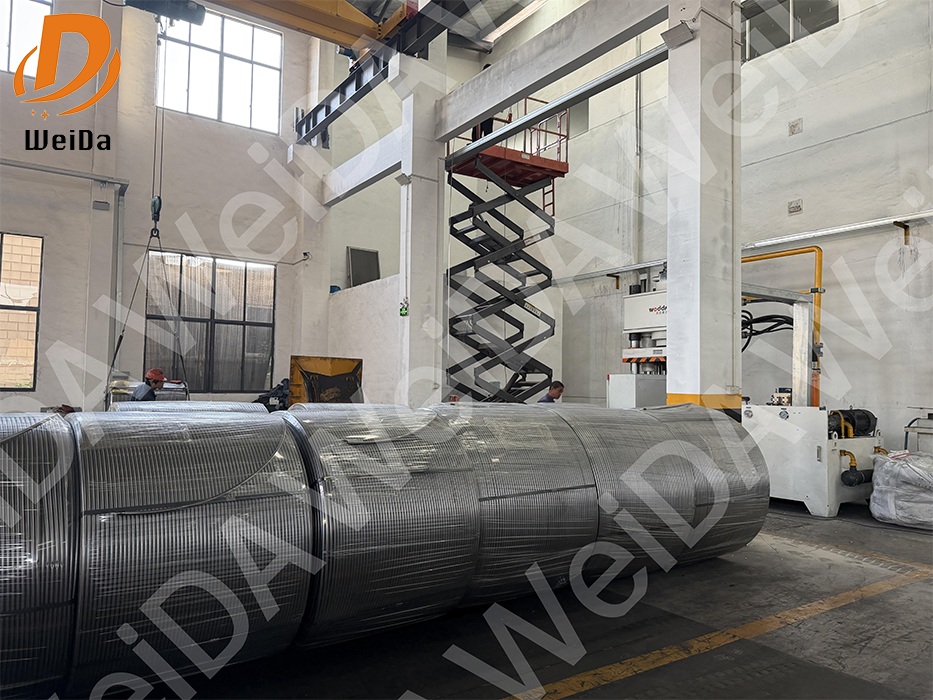
To address this series of problems, Wuxi WeiDa Cored Wire Co., Ltd.'s high-efficiency calcium iron wire and calcium silicon wire products are your ideal choice. We encapsulate high-purity metallic calcium or special calcium alloys in precise proportions within dense steel strips, which are then precisely injected into deep molten steel via a wire feeder. This process achieves controlled release and forced stirring of calcium deep within the steel, ensuring full reaction between calcium and elements like sulfur and oxygen.
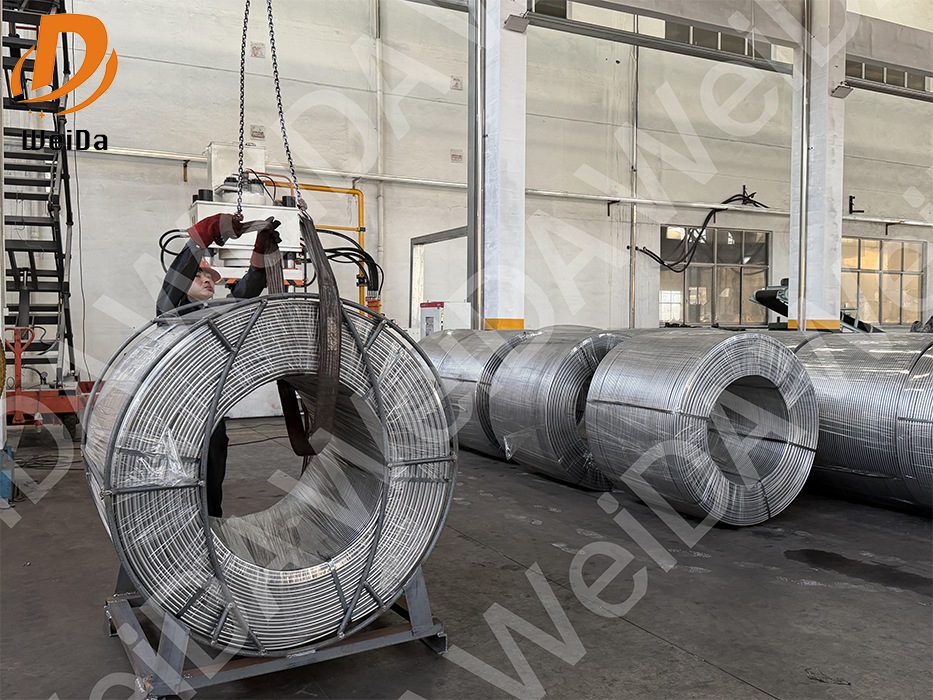
Its core advantages are: Firstly, extremely high calcium yield and stable reaction avoid the severe splashing and temperature loss associated with traditional processes, resulting in a smoother operation. Secondly, it transforms high-melting-point manganese sulfide (MnS) and alumina inclusions into low-melting-point globular calcium aluminates (e.g., 12CaO·7Al₂O₃). These globular inclusions remain undeformed during rolling, thereby significantly improving the ductility, impact toughness, and isotropy of the steel. This is key to achieving production of high-strength, high-toughness pipeline steel, improving the machinability of quality alloy steel, and enhancing the surface quality of continuous cast slabs.
Better Steelmaking Process Control and Cost Efficiency
Using our cored wire for calcium treatment is not just solving a technical problem; it optimizes the entire steelmaking process. It helps stabilize the flow in continuous casting tundish nozzles, preventing clogging, increasing sequence casting heats, and directly improving production efficiency. In the long run, stable product quality reduces scrap rates and customer complaints, and the resulting benefits far exceed the cost of the raw materials themselves. Choosing Wuxi WeiDa's cored wire products means choosing stable control over the core process of "sulfide morphology control."
To explore more details about optimizing calcium treatment processes in steel plants, how to improve calcium yield, and globular inclusion technology, please visit our official website https://www.weidamaterials.com/ for professional s