

Beyond the field of iron and steel metallurgy, our technology also shines. Extending from the previous article on solving "nozzle clogging," the core concepts of "wire feeding" and "modification treatment" have crucial applications in the foundry industry. The performance of cast iron, especially ductile iron, hinges on graphite morphology. If graphite exists in flake form, the material is brittle; modifying it to spheroidize grants excellent strength and toughness. However, traditional nodularizing processes (like the sandwich method) suffer from inherent defects such as fast nodularization fade, low magnesium absorption rate, heavy smoke and flare, and poor production environment. How to produce high-quality ductile iron stably, environmentally, and efficiently? Wuxi WeiDa Cored Wire Co., Ltd.'s wire feeding nodularizing treatment solution is leading technological innovation in foundry workshops.
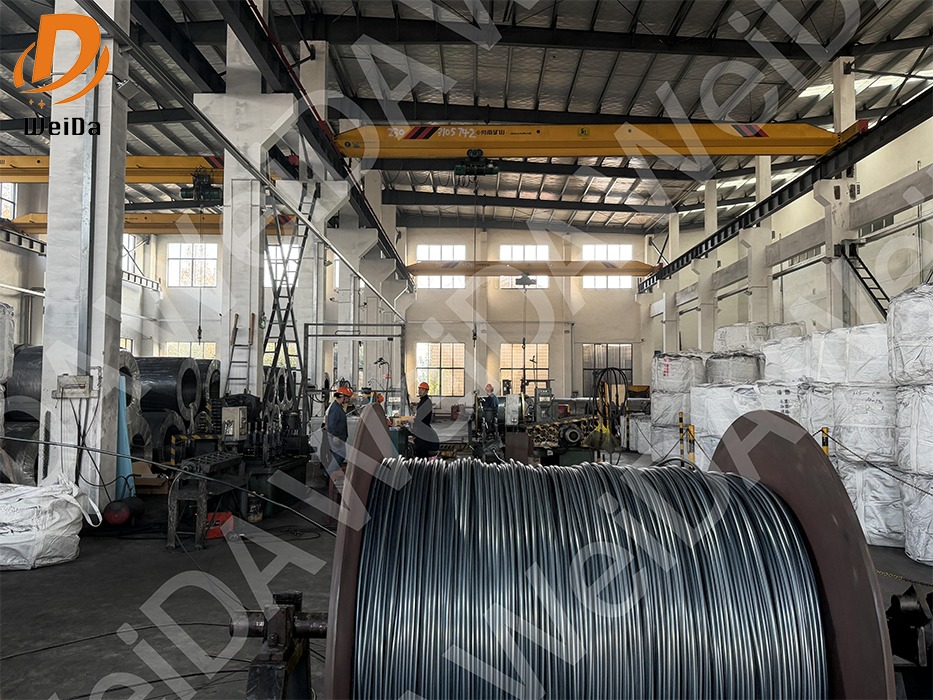
Challenges and Risks of Traditional Nodularizing Processes
Using the sandwich method, placing nodularizer (usually containing magnesium) in the pocket of the pouring ladle and then pouring molten iron causes a violent reaction at the ladle bottom, with severe magnesium boiling and burn-off. This not only leads to unstable yield of nodularizing elements (affecting nodularity grade), producing intense glare and harmful fumes, but also easily causes splashing, posing significant safety risks. More critically, the nodularizing effect rapidly deteriorates with prolonged holding time of the molten iron, imposing strict time windows for pouring and limiting the production of large or complex castings.
Wire Feeding Nodularizing: A Quiet Revolution
Wuxi WeiDa's magnesium alloy cored wires (e.g., silicon magnesium, rare earth magnesium wires) are specifically designed for the wire feeding process. Using a nodularizing wire feeder, the cored wire is inserted at a constant speed into the bottom of a precisely calculated amount of molten iron in the treatment ladle. Magnesium is released steadily and diffuses uniformly deep within the iron.
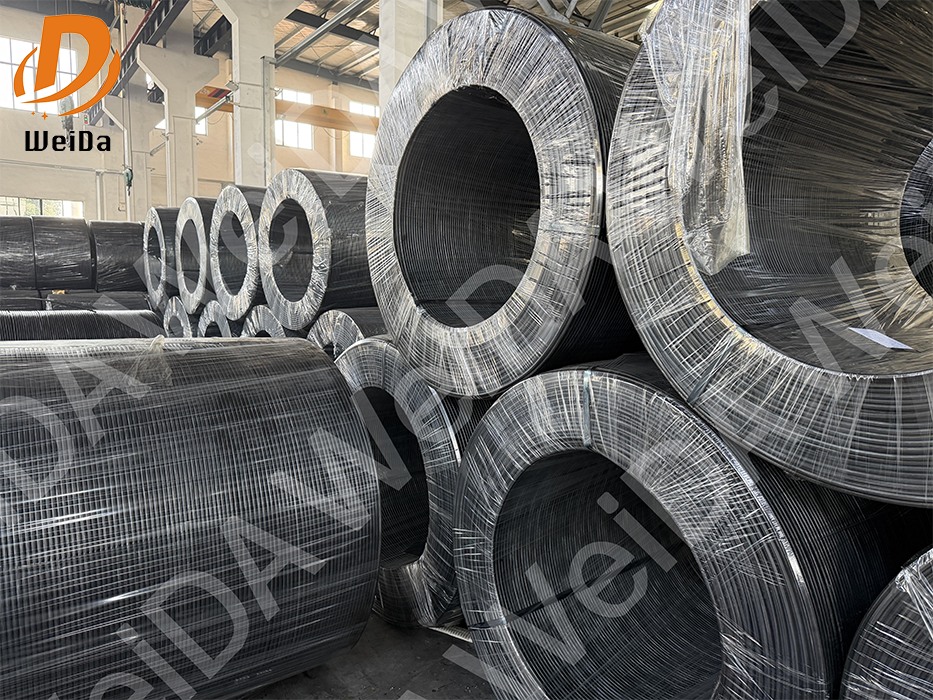
The advantages of this process are extremely clear: First, excellent and stable nodularizing effect. Magnesium yield is greatly increased and controllable, resulting in high graphite nodularity and good roundness, significantly improving the elongation and impact resistance of ductile iron. Second, almost smokeless and flameless. The reaction occurs under the sealed molten iron, greatly improving the workshop environment and aligning with the development of green foundry. Third, high flexibility. Enables inline instantaneous treatment with slow nodularization fade, allowing longer pouring times, especially suitable for production of large ductile iron castings and centrifugal ductile iron pipes. Fourth, good process reproducibility. By controlling wire feed speed and length, the process is digitized and standardized.
From "Experience-Dependent" to "Precision Control"
Wire feeding nodularizing transforms foundry from a "craft" reliant on experienced masters into a modernized production process that is quantifiable and replicable. It reduces raw material consumption, improves consistency and pass rates of product performance, making the comprehensive cost more competitive. Whether producing wind power castings, automotive engine crankshafts, or municipal pipes, stable and reliable nodularizing treatment is the cornerstone of quality.
Want to learn more about wire feeding nodularizing process parameters, how to improve magnesium absorption in ductile iron, or achieve environmental upgrades in foundries? Wuxi WeiDa is your reliable partner. Please visit the official website https://www.weidamaterials.com/ for details.