

Throughout our series, we've emphasized the critical role of calcium treatment in modern steelmaking—from inclusion modification to sulfide shape control and nozzle clogging prevention. Yet one challenge consistently frustrates metallurgists: the inherent variability and often disappointing recovery of calcium additions. Given calcium's high vapor pressure and reactivity, significant portions can be lost to vaporization, oxidation, or reaction with refractories before performing their intended function. How can you dramatically improve calcium recovery and achieve consistent, predictable treatment results? Wuxi WeiDa Cored Wire Co., Ltd. provides advanced calcium treatment solutions engineered for maximum efficiency.
The Calcium Recovery Challenge: Why So Much Is Lost
Calcium's behavior in liquid steel is complex and unforgiving. With a boiling point below steelmaking temperatures (1484°C vs. 1600°C+ steel), calcium vaporizes vigorously when exposed. Its high affinity for oxygen means it reacts instantly with any available oxygen in steel or slag. It attacks refractory materials, dissolving MgO and Al₂O₃. And its distribution between metal, slag, and vapor phases depends critically on steel composition, temperature, and addition method. Traditional lump or powder additions can lose 70-90% of the calcium before any metallurgical benefit occurs, making treatment results unpredictable and forcing excessive addition "safety factors."
Our Approach: Engineered for Maximum Efficiency
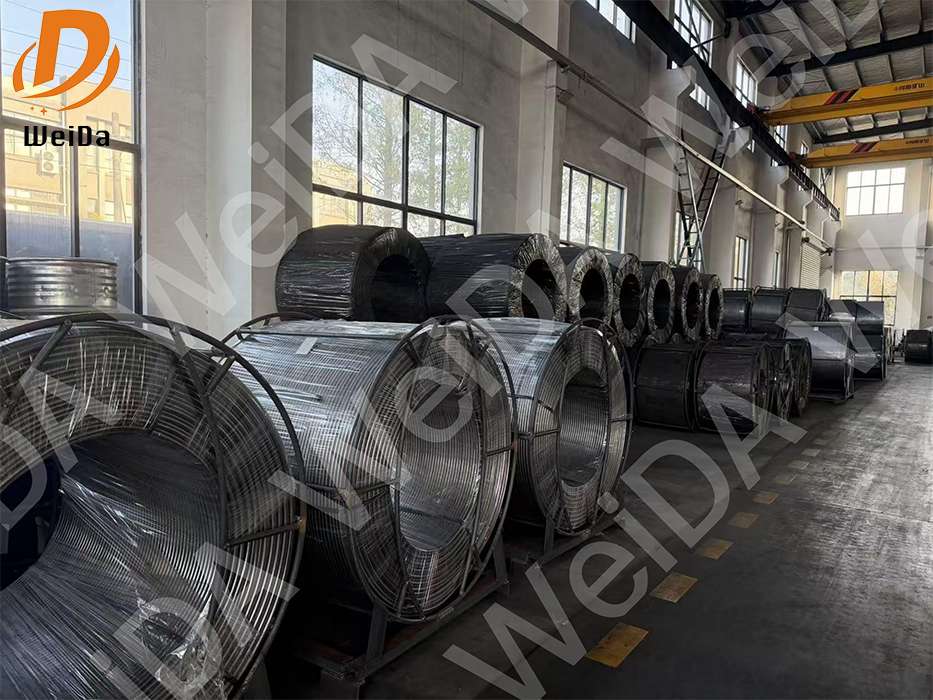
Wuxi WeiDa's calcium cored wires are specifically designed to overcome these challenges. First, protected delivery. The steel sheath isolates calcium from atmosphere and slag until it reaches the desired depth. Our calcium metal cored wire and calcium iron wire release calcium directly into the steel bath, where it can dissolve and react before vaporization occurs.
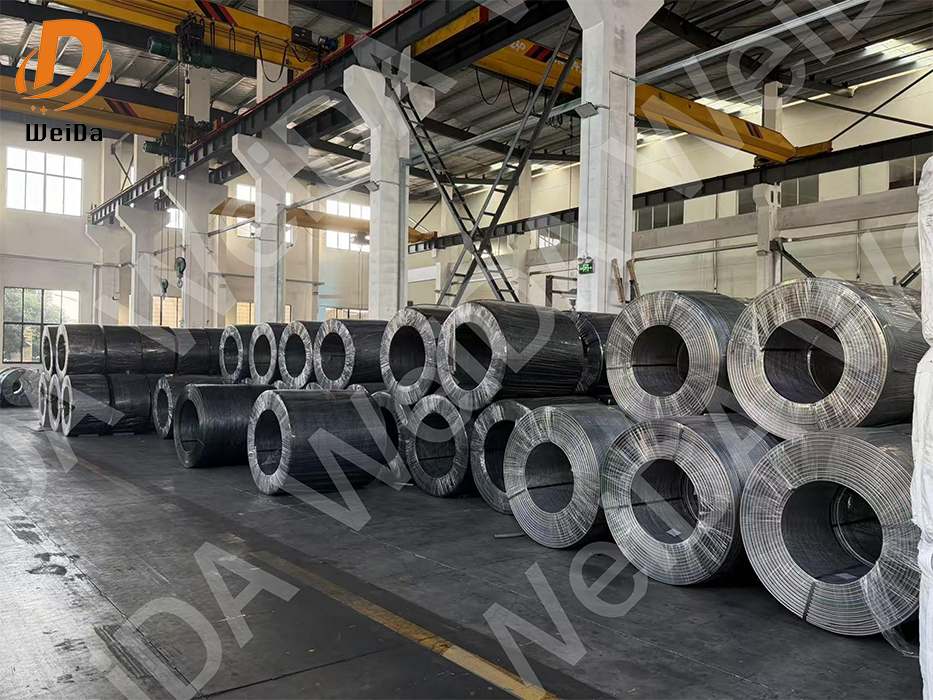
Second, depth-optimized design. Research has shown that calcium vaporization occurs only when calcium droplets rise to within approximately 1.2 meters of the steel surface, where ferrostatic pressure drops sufficiently . Our wires are engineered with specific steel thickness and powder density to reach optimal release depths—typically 2.5-3.0 meters in large ladles—ensuring maximum dissolution before vaporization begins.
Third, composition-matched formulations. Different steel chemistries respond differently to calcium treatment. Our pure calcium wire is recommended for steels with higher carbon, silicon, and manganese contents, while our calcium-aluminum wire provides better results for low-silicon, low-manganese steels . We help you select the optimal formulation for your specific steel grades.
Fourth, precision feed rate control. The ideal feeding speed—typically 3.2-4.8 m·s⁻¹ for large ladles—ensures the wire penetrates to the target depth before complete melting . Our feeding parameter recommendations, customized for your ladle dimensions and steel conditions, maximize effective calcium utilization.
Measurable Results: Higher Recovery, Consistent Performance
Steel plants implementing Wuxi WeiDa's optimized calcium treatment have achieved significant improvements. Calcium recovery rates have increased by 15-30% compared to conventional practices . Contamination by brittle silicates has been reduced substantially—in some cases from maximum ratings of 4.0 to 2.5 . The combination of higher recovery and more consistent results translates directly to reduced calcium consumption, more predictable inclusion modification, and lower overall treatment costs.
If you're ready to maximize your calcium treatment efficiency, contact Wuxi WeiDa through https://www.weidamaterials.com/ to discuss your specific requirements.