

In our previous discussion on microalloying for thin slab casting and direct rolling, we highlighted the importance of uniform alloy distribution. Today, we return to a classic challenge faced by nearly every producer of aluminum-killed steel – continuous casting nozzle clogging. This is the most troublesome "aftermath" of the aluminum deoxidation process. Al₂O₃ inclusions continuously accumulate like snowflakes on the inner wall of the nozzle, leading to interrupted casting, reduced casting speeds, frequent nozzle changes, and even breakout accidents. This severely impacts continuous casting operation rates and steel yield, while also making production schedules unpredictable. How can you fundamentally solve the nozzle clogging problem during aluminum-killed steel casting and achieve long-sequence, multi-heat continuous casting? Wuxi WeiDa Cored Wire Co.,Ltd's precision calcium treatment and composite deoxidation technology is your key weapon to break this production bottleneck.
The Root Cause of Clogging: The "Netting" Effect of Al₂O₃
When aluminum is used for deoxidation, the resulting Al₂O₃ inclusions have several deadly characteristics: high melting point (approximately 2050°C) , dendritic or clustered morphology, and poor wettability with molten steel. As these tiny inclusions flow through the continuous casting nozzle, they continuously adhere like "cotton wool" to the refractory surface of the nozzle. Over time, these adhered materials sinter, thicken, and eventually completely block the nozzle. Traditional countermeasures – such as changing nozzle materials, argon sealing, or mechanical clearing – only address the symptoms, not the root cause, and cannot fundamentally change the physicochemical characteristics of Al₂O₃.
Our Solution: "Modifying" the Al₂O₃
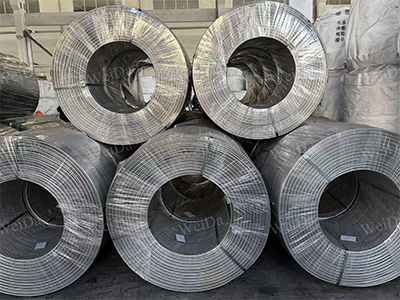
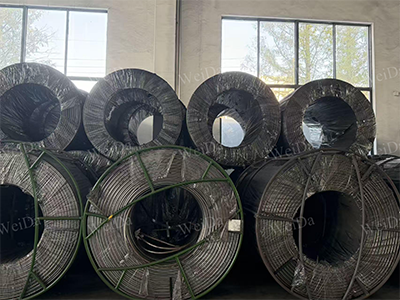
Wuxi WeiDa's core solution is calcium treatment modification technology. By feeding pure calcium wire (Ca-wire) or calcium iron wire (CaFe-wire) , we precisely inject metallic calcium deep into the molten steel after aluminum deoxidation. Calcium chemically reacts with Al₂O₃ to form a series of low-melting-point calcium aluminate complexes (e.g., 12CaO·7Al₂O₃, melting point approximately 1450°C). This "modification" process brings revolutionary changes:
1.Morphology spheroidization: The high-melting-point solid Al₂O₃ clusters transform into liquid, globular calcium aluminates. Globular inclusions do not easily aggregate or adhere.
2.Softening and removal: The liquid calcium aluminates more easily collide, agglomerate, grow, and rapidly float up into the ladle slag layer for absorption.
3.Improved fluidity: Molten steel that has been adequately calcium-treated shows greatly improved "castability," minimizing the risk of nozzle clogging.
Beyond Clogging Prevention: Multiple Benefits of Calcium Treatment
Wuxi WeiDa's precision calcium treatment solution brings benefits beyond just smooth continuous casting. First, it significantly enhances steel cleanliness. The damage to fatigue properties and isotropy of the steel from globular inclusions is far less than that from sharp, clustered Al₂O₃. Second, it improves the utilization rate of valuable alloys. Stable casting conditions mean less crop and tail scrap and higher metal yield. Third, it reduces production costs. Reducing nozzle change frequency, extending sequence casting lengths, and lowering argon consumption all translate directly into your profit.
Process Optimization: Finding the "Optimal Calcium Amount"
More calcium is not necessarily better. Excess calcium can form large calcium aluminate inclusions, harming steel cleanliness. Insufficient calcium fails to achieve complete modification. Wuxi WeiDa's technical team will use thermodynamic calculations and on-site trials based on your steel grade, aluminum content, refining slag system, and continuous casting conditions to help you find the precise "golden window." What we provide is not just a product, but a validated, repeatable process package for preventing continuous casting nozzle clogging.
If continuous casting nozzle clogging is troubling your production, please visit https://www.weidamaterials.com/ to obtain our detailed technical guide on calcium treatment process optimization for aluminum-killed steel.