

Having solved the nozzle clogging problem, our next challenge is slab surface quality. During continuous casting, defects such as surface cracks, slag entrapment, pinholes, and irregular oscillation marks are primary causes of scrap or downgrading of downstream rolled products. These surface defects not only affect the appearance of hot-rolled coils, plates, bars, and wire rods, but can also become stress concentration points, severely damaging the fatigue life and corrosion resistance of the final product. How can you systematically improve the surface quality of continuous casting slabs, reduce the burden of conditioning processes, and increase yield? Wuxi WeiDa Cored Wire Co.,Ltd offers comprehensive solutions ranging from mold metallurgy to mold flux optimization.
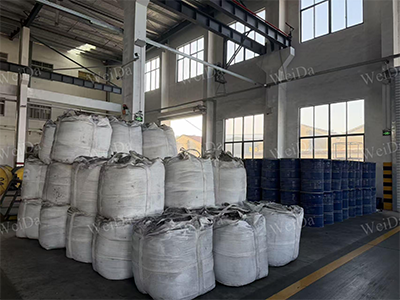
Root Cause Analysis of Surface Defects
The causes of slab surface defects are complex, but can be summarized into several main categories: First, uneven shell growth in the mold. This is usually caused by level fluctuations, poor mold flux lubrication, or improper mold taper, leading to longitudinal cracks or deep oscillation marks. Second, poor mold flux performance. Mismatches in viscosity, melting point, or crystallization temperature with the steel grade can lead to excessive slag rim formation, uneven slag film, causing slag entrapment or sticker breakout risk. Third, poor steel cleanliness. Inclusions floating near the meniscus can be captured by the solidifying shell, forming subsurface slag entrapment. Fourth, improper cooling intensity. Uneven or overly aggressive cooling in the secondary cooling zone can induce transverse cracks.
Our Solution: End-to-End Protection from Source to Slab
Wuxi WeiDa provides a range of products and services to help you improve surface quality at the source. First, optimize metallurgical behavior in the mold. We recommend using high-stability mold fluxes, with compositions tailored to your steel grade (low carbon, medium carbon, high carbon, peritectic steel), ensuring optimal lubrication and uniform heat transfer. Additionally, our bismuth and tellurium cored wires can be used as mold flux modifiers to adjust the flux's crystallization behavior and prevent excessive slag rim formation.
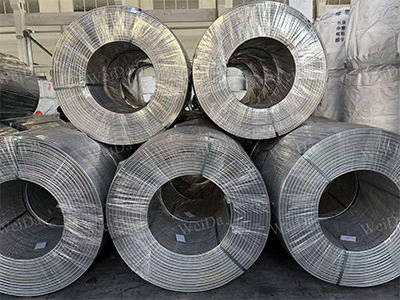
Second, improve steel cleanliness as a foundation. As discussed previously, our calcium treatment technology and high-efficiency refining slags maximize the removal of large inclusions from the molten steel. The cleaner the steel entering the mold, the fewer inclusions will be captured by the solidifying shell, and the lower the risk of subsurface slag entrapment.
Third, implement tundish metallurgy. We have mentioned the importance of the tundish earlier. By using our tundish weirs, dams, and covering fluxes, we optimize the flow field within the tundish, promoting inclusion flotation and ensuring uniform temperature and composition of the steel entering the mold. This is crucial for stabilizing the meniscus and reducing slag entrainment.
Fourth, precise steel composition control. Certain elements are extremely sensitive for surface cracks. For example, residual elements like copper, tin, and antimony can enrich at grain boundaries, inducing hot shortness (surface cracks). Our high-purity alloy cored wires (e.g., low-tin, low-antimony aluminum wire) help you strictly control these harmful impurities. Furthermore, feeding rare earth cored wires can modify harmful low-melting-point inclusions, reducing their crack-inducing potential.
Systematic Approach, Visible Improvements
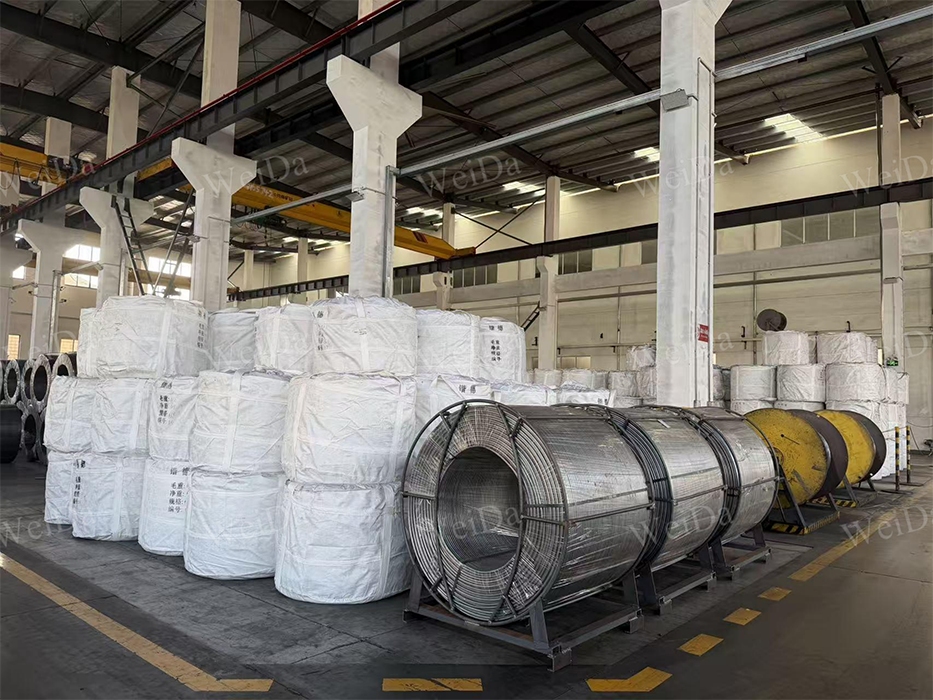
Improving slab surface quality cannot be achieved by a single measure; it requires a systematic approach. Wuxi WeiDa's strength lies in our ability not only to provide products but also to integrate these products into your existing processes. Our technical team can conduct a full-process audit, examining everything from steel composition and refining practices to mold flux selection and casting parameters, to identify the key short slab limiting your surface quality and propose targeted improvement recommendations. Ultimately, you will see reduced conditioning line grinding, improved rolled product surface acceptance rates, and reduced customer complaints.
Want to achieve defect-free continuous casting slabs? Want to learn about mold flux selection guides or tundish metallurgy optimization techniques? Please visit https://www.weidamaterials.com/ to engage in an in-depth discussion with our continuous casting experts.