

Following our previous discussion on tramp element control in scrap-based steelmaking, which touched upon the synergistic effect of calcium treatment and sulfide modification, today we focus on a special category of steel grades: high-sulfur steels. Contrary to the traditional view that "sulfur is a harmful impurity," in certain specific steel grades, sulfur is an intentionally added alloying element. For example, free-cutting steels utilize sulfur to form MnS inclusions for chip breaking and tool lubrication; gear steels benefit from appropriate sulfur levels to improve machinability of the tooth root. However, high sulfur content (0.02%-0.35%) presents significant challenges for calcium treatment: calcium preferentially reacts with sulfur to form high-melting-point CaS. These CaS inclusions can easily clog nozzles and can even negate the modification effect of calcium on Al₂O₃. How can you implement precise calcium treatment in high-sulfur steels, preserving beneficial MnS while ensuring smooth continuous casting and steel properties? Wuxi WeiDa Cored Wire Co.,Ltd provides customized solutions based on selective calcium treatment and sulfide morphology control.
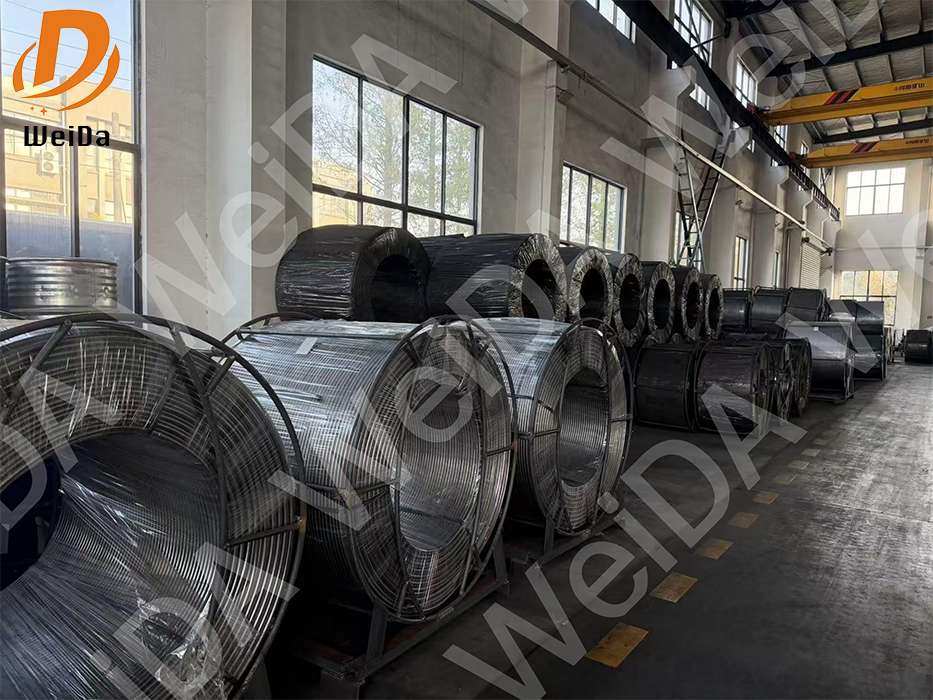
The Calcium Treatment Dilemma for High-Sulfur Steels: The "Double-Edged Sword" of CaS
In low-sulfur steels, the goal of calcium treatment is to modify Al₂O₃ and elongated MnS. But in high-sulfur steels, the sulfur content far exceeds oxygen and aluminum levels. When calcium is added, it preferentially reacts with sulfur: Ca + S → CaS. CaS is a high-temperature stable phase with a melting point of 2525°C. If CaS exists as fine, dispersed particles, it has little effect on properties; but if it forms large clusters or accumulates on the nozzle inner wall, it leads to nozzle clogging and slab surface defects. Worse, calcium is "consumed" in forming CaS, leaving insufficient calcium to modify Al₂O₃, so the Al₂O₃ clogging problem persists. Therefore, calcium treatment for high-sulfur steels requires finding a delicate balance between "modifying sulfides" and "avoiding CaS hazards."
Our Solution: A Selective Calcium Treatment Strategy
Wuxi WeiDa has developed specialized calcium treatment strategies for high-sulfur steels. The core concept is "modify Al₂O₃ first, then control sulfide morphology."
First, prioritize deoxidation and Al₂O₃ modification. Before adding any calcium, first use aluminum wire for thorough deoxidation, ensuring the free oxygen content in the steel is reduced to extremely low levels. Then, apply micro-calcium treatment – adding a relatively small amount of pure calcium wire or calcium iron wire – with the goal not to modify all sulfides, but to preferentially react with residual Al₂O₃, modifying it into low-melting-point calcium aluminates. The key in this step is to control the calcium addition amount so that it is just enough to "consume" the Al₂O₃ without reacting with sulfur.
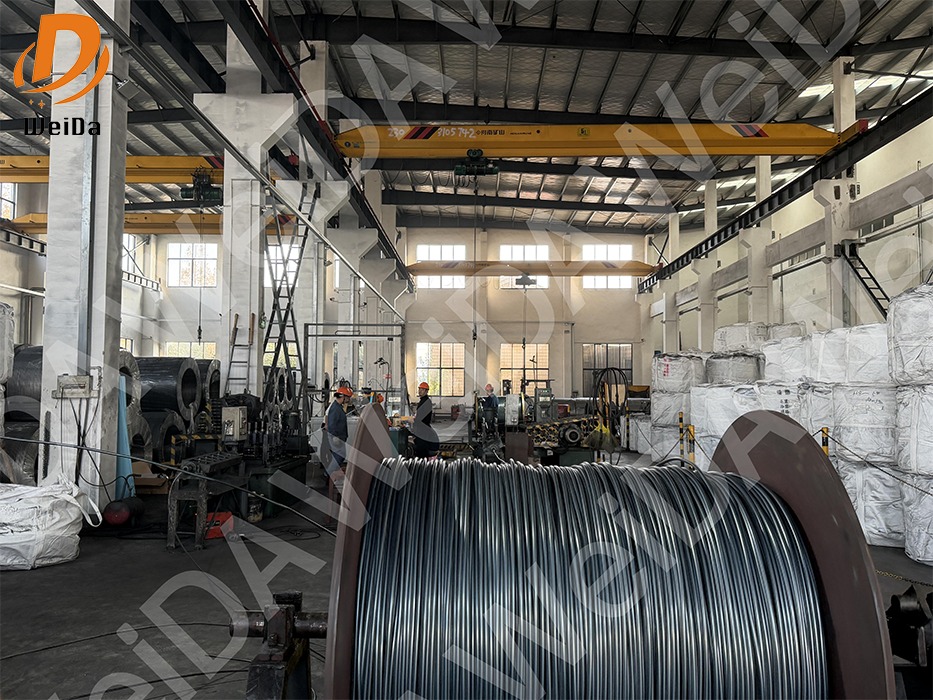
Second, natural control of sulfide morphology. In high-sulfur steels, the formation of MnS is inevitable and beneficial. Our strategy is not to eliminate MnS, but to control its morphology and distribution. By controlling the cooling rate and solidification conditions of the molten steel, MnS can be promoted to precipitate in a fine, globular, dispersed form, rather than elongated or chain-like. This requires our sulfide morphology control cored wires, which contain elements like tellurium (Te) or selenium (Se) that can alter the precipitation behavior of MnS, spheroidizing it.
Third, avoid excessive calcium treatment. In high-sulfur steels, "overkill" calcium treatment is more dangerous than "insufficient" treatment. Excess calcium leads to the formation of CaS, which is even harder to handle than Al₂O₃. Wuxi WeiDa's technical team will use thermodynamic calculations to precisely determine the maximum allowable calcium addition – the before triggering nozzle clogging risk. We recommend a stepped addition method of "small, frequent additions," sampling and analyzing along the way to find the optimal calcium amount.
Synergistic Optimization of Process Parameters
Beyond calcium treatment itself, other process parameters are also important for the castability of high-sulfur steels:
•Steel temperature control: Appropriately increasing the steel temperature can reduce the tendency for CaS precipitation because the solubility of CaS increases with temperature.
•Mold flux selection: Use mold fluxes with high absorption capacity to absorb floating CaS inclusions, preventing their accumulation at the nozzle.
•Tundish flow field optimization: Use weirs and dams to extend the residence time of molten steel in the tundish, promoting CaS flotation and removal.
The Art of Balance: Machinability vs. Castability
Producers of free-cutting steels and gear steels face a core conflict: adding sulfur improves machinability, but worsens castability. Wuxi WeiDa's selective calcium treatment strategy, combined with sulfide morphology control technology, helps you find the best balance. While maintaining sulfur levels sufficient for machinability (e.g., 0.15%-0.35%), precise micro-calcium treatment minimizes the risk of nozzle clogging, enabling long-sequence, multi-heat continuous casting.
If you are producing high-sulfur free-cutting steels or sulfur-containing gear steels and facing challenges of frequent nozzle clogging or excessive CaS inclusions, please visit https://www.weidamaterials.com/ to obtain our specialized technical guide on calcium treatment processes for high-sulfur steels.