

Following our discussion on the pursuit of ultra-high cleanliness for tire cord steel, we turn to a seemingly insignificant but impactful factor affecting steel cleanliness: ladle glaze. During use, a layer forms on the inner wall of the ladle from the reaction between refining slag and refractories. This layer is called "glaze" or "slag coating." A good glaze can protect the ladle refractory and reduce steel temperature drop. However, a poor glaze, especially when it spalls off, becomes a source of large exogenous inclusions in the molten steel, significantly affecting the yield of high-surface-quality products such as automotive sheets, thin-gauge strips, and tinplate. How can you optimize ladle glaze practice to make the glaze a "protective layer" rather than a "contamination source"? Wuxi WeiDa Cored Wire Co.,Ltd provides glaze optimization solutions based on slag composition control and management specifications.
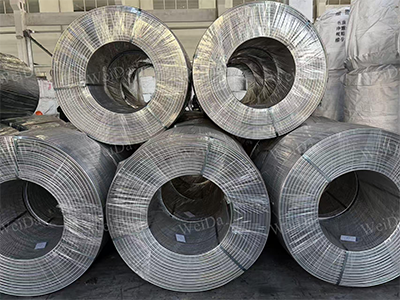
The "Double-Edged Sword" Effect of Ladle Glaze: Protection and Contamination Coexist
The formation of ladle glaze is both inevitable and necessary. A uniform, dense, and stable glaze has the following benefits:
•Protects the refractory: The glaze layer isolates the molten steel and slag from direct erosion of the ladle wall refractory.
•Provides thermal insulation: Glaze has good insulating properties, reducing temperature drop of the molten steel during refining and transport.
•Reduces "washing": A stable glaze reduces cross-contamination between different steel grades.
However, when the glaze is unstable, uneven, or spalls off, problems arise. Spalled glaze fragments enter the molten steel, becoming coarse exogenous inclusions. These inclusions are typically large (can reach millimeter size) and have complex compositions (containing MgO, CaO, Al₂O₃, SiO₂, etc.), causing far greater damage to steel properties than endogenous inclusions.
Main Causes of Glaze Spalling
Glaze spalling is typically caused by the following reasons:
•Composition mismatch: The thermal expansion coefficient difference between the glaze and the ladle refractory is too large, leading to thermal shock spalling.
•Excessively thick glaze: Long periods without cleaning cause the glaze to become too thick, leading to spalling due to stress concentration during temperature changes.
•Frequent steel grade changes: The refining slag compositions of different steel grades vary significantly. The new slag reacts with the old glaze, forming low-melting-point phases that cause the glaze to "soften" and spall.
•Improper ladle turnaround: The ladle cools too rapidly or unevenly, causing the glaze to crack due to thermal stress.
Our Solution: Slag System Optimization and Management Specifications
Wuxi WeiDa starts with the "slag" to help customers establish a healthy glaze system.
First, design a "friendly" refining slag composition. The stability of the glaze depends on its chemical composition. We recommend controlling the MgO content in the refining slag at 8-12% , bringing it close to MgO saturation and reducing erosion of the ladle wall. At the same time, control the slag basicity between 3-5. Basicity that is too high or too low affects glaze stability. Our synthetic slag cored wire can precisely adjust the slag composition based on your steel grade and ladle conditions.
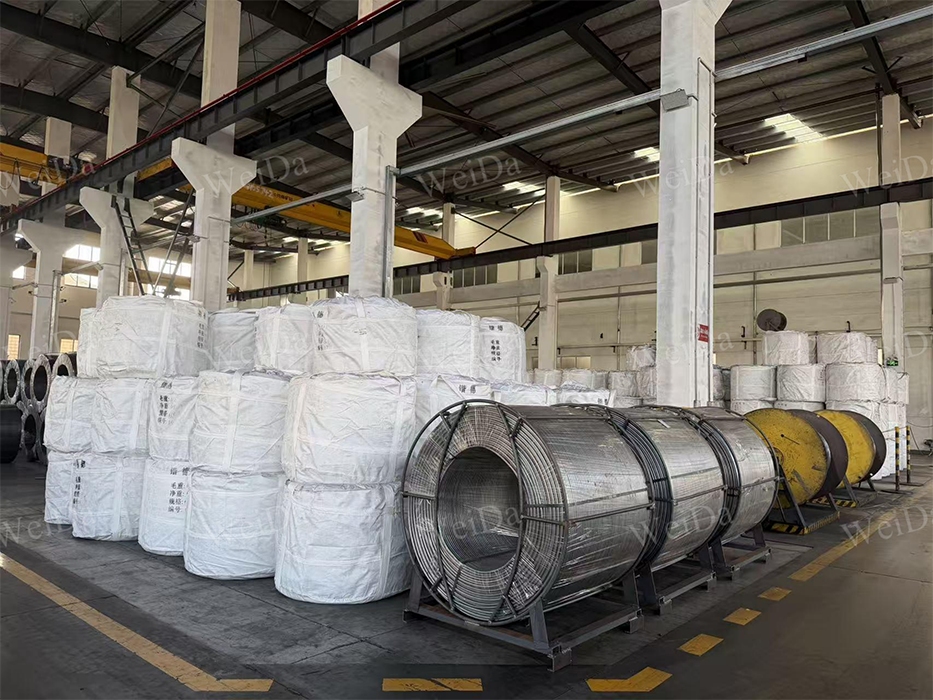
Second, use magnesia cored wire for glaze "maintenance" . As previously discussed, magnesia cored wire can supplement MgO into the slag, maintaining MgO saturation in the glaze. Periodically adding magnesia materials to the slag via wire feeding during ladle use can repair damaged glaze layers and extend their life.
Third, establish a ladle management system.
•Regular cleaning: When the glaze thickness exceeds a certain limit (e.g., 30mm), mechanical cleaning should be performed promptly.
•Ladle preheating: Before being put back into service, the ladle should be fully and uniformly preheated to reduce thermal shock stress.
•Steel grade sequencing: When production plans, arrange steel grades with similar refining slag compositions on the same ladle circuit as much as possible to reduce glaze instability caused by drastic slag composition changes.
Fourth, use ladle covering flux to protect the glaze. During steel casting, using low-reactivity ladle covering flux to cover the slag surface can prevent slag crusting and reduce stress on the glaze caused by rapid cooling of the top surface.
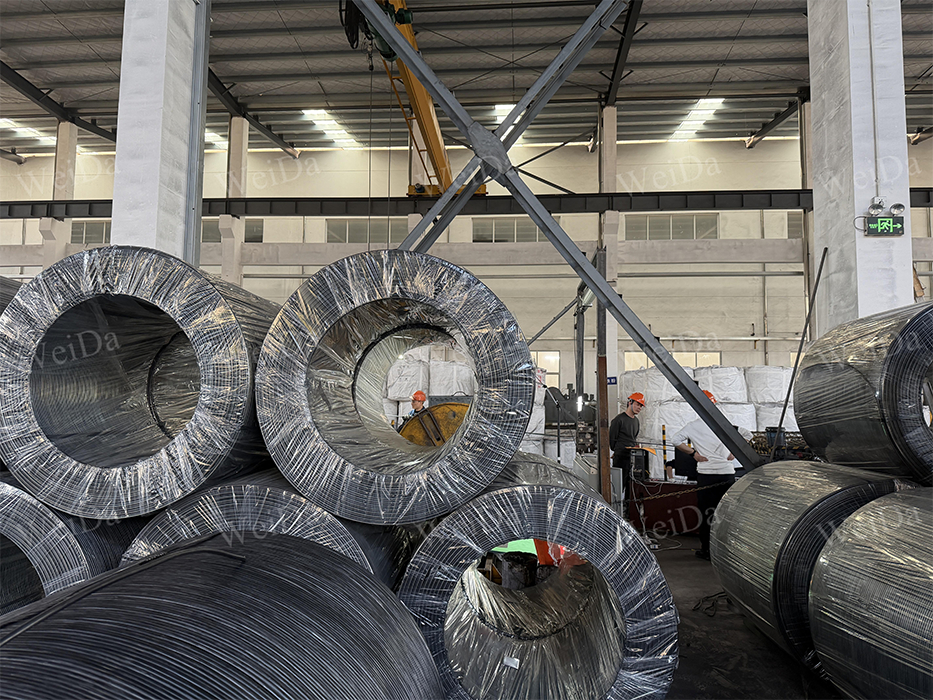
Avoid "Packaging Dirt into the Steel"
For enterprises producing high-quality thin sheets such as automotive outer panels, home appliance panels, and packaging steel, large exogenous inclusions in the molten steel are "zero tolerance." These inclusions often do not originate from incomplete removal during steelmaking, but are introduced from "secondary sources" such as the ladle and tundish. Wuxi WeiDa's glaze optimization solution helps you reduce these exogenous inclusions at the source, significantly improving cold-rolled sheet surface quality and coating adhesion.
If you are troubled by steel plate surface defects caused by ladle glaze spalling and wish to establish a healthy, stable, and controllable ladle glaze system, please visit https://www.weidamaterials.com/ to obtain information on our professional services for ladle management and slag system optimization.