

In the previous article, we discussed the impact of ladle glaze practice on steel cleanliness. Today, we focus on a core parameter that determines the quality consistency of aluminum killed steel: molten steel oxygen activity. Oxygen activity is the "gold standard" for measuring the degree of steel deoxidation. It directly affects deoxidation product quantity, alloy yield, nozzle clogging tendency, and final product cleanliness. Excessively high oxygen activity leads to increased Al₂O₃ inclusions and severe alloy burn-off. Excessively low oxygen activity, while beneficial for cleanliness, may increase costs and require excessive calcium treatment. How can you precisely control molten steel oxygen activity to achieve optimal cleanliness while minimizing costs? Wuxi WeiDa Cored Wire Co.,Ltd provides an oxygen activity control system based on real-time detection and precision re-feeding.
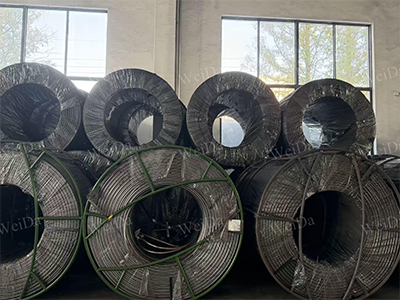
Oxygen Activity: The "Barometer" of Aluminum Killed Steel Quality
In the aluminum deoxidation process, aluminum reacts with oxygen to form Al₂O₃: 2Al + 3O → Al₂O₃. At equilibrium, there is a determined relationship between dissolved oxygen content and residual aluminum content in the molten steel. Excessively high oxygen activity indicates insufficient deoxidation or incomplete Al₂O₃ flotation. Excessively low oxygen activity suggests excess aluminum, which not only wastes cost but may also lead to the formation of coarse Al₂O₃ inclusions. For high-quality products such as automotive sheets, can-making steel, and electrical steel, fluctuations in oxygen activity directly lead to fluctuations in inclusion ratings, fluctuations in continuous casting nozzle life, and fluctuations in final product performance.
Main Root Causes of Oxygen Activity Fluctuation
Factors causing unstable oxygen activity include:
•Initial oxygen content fluctuation: Variations in converter or EAF end-point oxygen content carry over into the refining process.
•Inaccurate aluminum addition: Errors in aluminum wire feeding length and speed cause deviations between actual and target aluminum addition amounts.
•Changes in slag FeO: Fluctuations in FeO content in the refining slag affect molten steel oxygen activity through slag-steel reactions.
•Temperature variation: Changes in molten steel temperature affect the equilibrium constant of the Al-O reaction.
•Detection lag: Traditional sampling analysis has a time lag, making it impossible to guide real-time adjustments.
Our Solution: Real-Time Detection and Dynamic Re-Feeding
Wuxi WeiDa integrates advanced oxygen activity detection technology with precision cored wire feeding systems to provide customers with a closed-loop control solution.
First, rapid oxygen activity detection. We recommend using solid electrolyte oxygen probes that can measure oxygen activity in molten steel within seconds. Compared to traditional sampling chemical analysis, this method is real-time, rapid, and capable of continuous monitoring, making dynamic adjustment possible.
Second, establish an oxygen-activity-to-aluminum-content relationship model. Tailored to your specific steel grade, temperature, and slag system, we help establish a correspondence curve between oxygen activity and dissolved aluminum content. By measuring oxygen activity, the current dissolved aluminum content can be calculated, determining whether aluminum re-feeding is needed.
Third, precise aluminum wire re-feeding. When oxygen activity detection indicates insufficient deoxidation, our high-purity aluminum cored wire can be added precisely and quantitatively via the wire feeder. The aluminum content per meter of wire is known. We can calculate the required wire length for re-feeding based on the oxygen activity deviation, achieving "on-demand aluminum re-feeding" and avoiding excess or deficiency.
Fourth, indirect control of slag FeO. Oxygen activity detection not only reflects the state of the molten steel but also indirectly reflects the oxidizing nature of the slag. If oxygen activity remains persistently high, we recommend checking the FeO content of the refining slag and reducing the slag by adding deoxidizer cored wires (such as calcium silicon wire or aluminum wire).
Fifth, temperature compensation calculation. Oxygen activity is closely related to temperature. Our oxygen activity detection system integrates temperature measurement functionality and automatically corrects the oxygen activity value to a standard temperature (e.g., 1600°C), eliminating the interference of temperature fluctuations on judgment.
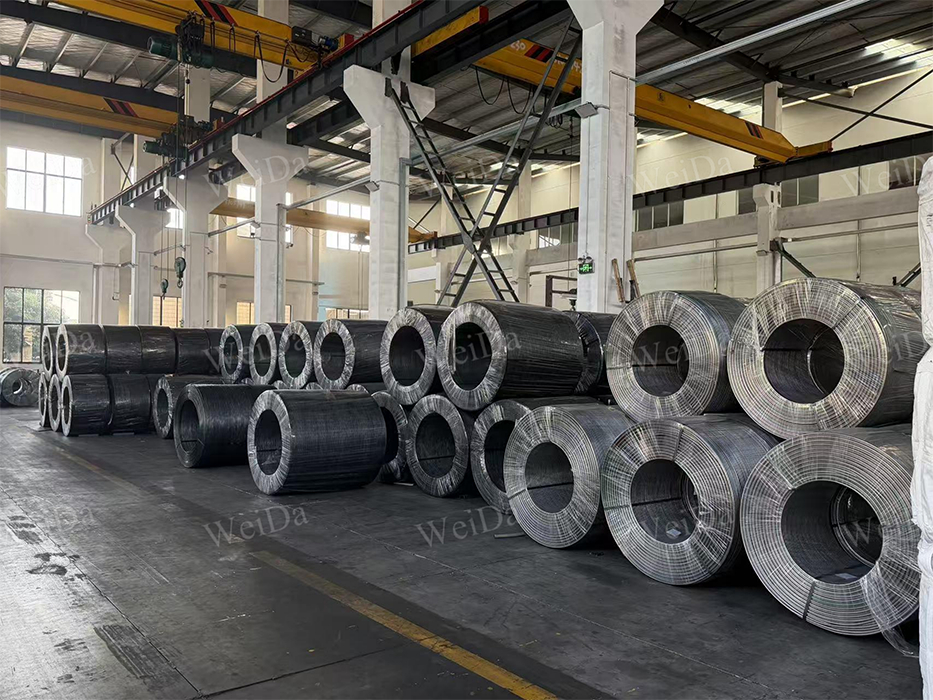
Implementation Results: From "Experience-Based Steelmaking" to "Data-Driven Steelmaking"
After implementing Wuxi WeiDa's oxygen activity control system, numerous customers have achieved significant improvements:
•Reduced aluminum consumption: Precision re-feeding avoids excess addition, reducing aluminum consumption by 15-25% .
•Improved inclusion stability: More stable oxygen activity control significantly reduces fluctuations in the quantity and size of Al₂O₃ inclusions.
•Extended nozzle life: Stable deoxidation degree means stable Al₂O₃ generation, reducing the risk of nozzle clogging.
•Increased sequence casting heats: Due to process stability, sequence casting heats have increased by an average of 10-20%.
•Improved product performance consistency: Stable oxygen activity directly translates into stable steel cleanliness, with batch-to-batch variations in final product performance significantly reduced.
From "Blind Addition" to "Precision Control"
In traditional aluminum deoxidation processes, operators often add excess aluminum as a "safety margin," preferring too much over too little. This "safety" comes at the cost of higher expenses and potentially compromised cleanliness. Wuxi WeiDa's oxygen activity control system transforms aluminum deoxidation from "open-loop" blind addition to "closed-loop" precision control. You no longer need to guess how much aluminum to add; instead, you add precisely the required amount based on real-time detection data.
If you wish to reduce aluminum consumption costs, improve the quality consistency of aluminum killed steel, and achieve the leap from experience-based steelmaking to data-driven steelmaking, please visit https://www.weidamaterials.com/ to learn about our complete solution for oxygen activity control and precision aluminum wire feeding.