

In the previous article, we discussed achieving quality consistency in aluminum killed steel through oxygen activity control. Today, we focus on a refining process closely related to oxygen activity: calcium treatment for low-carbon aluminum killed steel. Low-carbon aluminum killed steel (carbon content <0.08%) is widely used in high-end flat products such as automotive outer panels, home appliance panels, and tinplate substrate. These steel grades have extremely high requirements for surface quality, formability, and cleanliness. Calcium treatment is a key method for solving Al₂O₃ inclusion nozzle clogging and improving product performance. However, calcium treatment for low-carbon aluminum killed steel has a special "minefield" – control of liquid calcium aluminate inclusions. How can you optimize the calcium treatment process for low-carbon aluminum killed steel to maximize steel cleanliness and performance while ensuring smooth continuous casting? Wuxi WeiDa Cored Wire Co.,Ltd provides an optimization solution based on precise calcium dosage control and inclusion engineering.
The Core Goal of Calcium Treatment for Low-Carbon Aluminum: Making Al₂O₃ "Liquid"
Unlike high-carbon steels or special steels, the core goal of calcium treatment for low-carbon aluminum killed steel is not sulfide modification (since sulfur content is extremely low), but rather transforming high-melting-point clustered Al₂O₃ inclusions into low-melting-point liquid globular calcium aluminates. This transformation brings three major benefits:
•Eliminates nozzle clogging: Liquid inclusions do not adhere to the nozzle inner wall, greatly improving castability.
•Improves cleanliness: Liquid inclusions more easily collide, agglomerate, and float up to be absorbed by the slag.
•Improves product performance: Globular inclusions cause far less damage to steel fatigue properties and formability than sharp, clustered Al₂O₃.
The "Golden Window" for Calcium Treatment of Low-Carbon Aluminum Killed Steel
Calcium treatment is not "the more, the better." Insufficient calcium leads to incomplete Al₂O₃ modification, and the risk of nozzle clogging remains. Excess calcium forms high-melting-point CaO·2Al₂O₃ or 3CaO·Al₂O₃, which actually worsens cleanliness and may exacerbate nozzle buildup. Research indicates that an "optimal calcium-to-aluminum ratio window" exists – typically controlling dissolved calcium content in the steel between 10-30ppm, with a Ca/Al weight ratio in the range of 0.08-0.15. Outside this window, the inclusions become "re-hardened."
Our Solution: Precise Calcium Dosage Calculation and Dynamic Adjustment
Wuxi WeiDa has developed a scientific calcium treatment optimization method for low-carbon aluminum killed steel.
First, calcium dosage calculation based on oxygen activity. The required calcium dosage is not a fixed value; it depends on the dissolved oxygen and dissolved aluminum content in the steel after deoxidation. Our technical team uses thermodynamic models to precisely calculate the theoretical required calcium dosage based on your oxygen activity measurement values and target aluminum content, avoiding "blind addition."
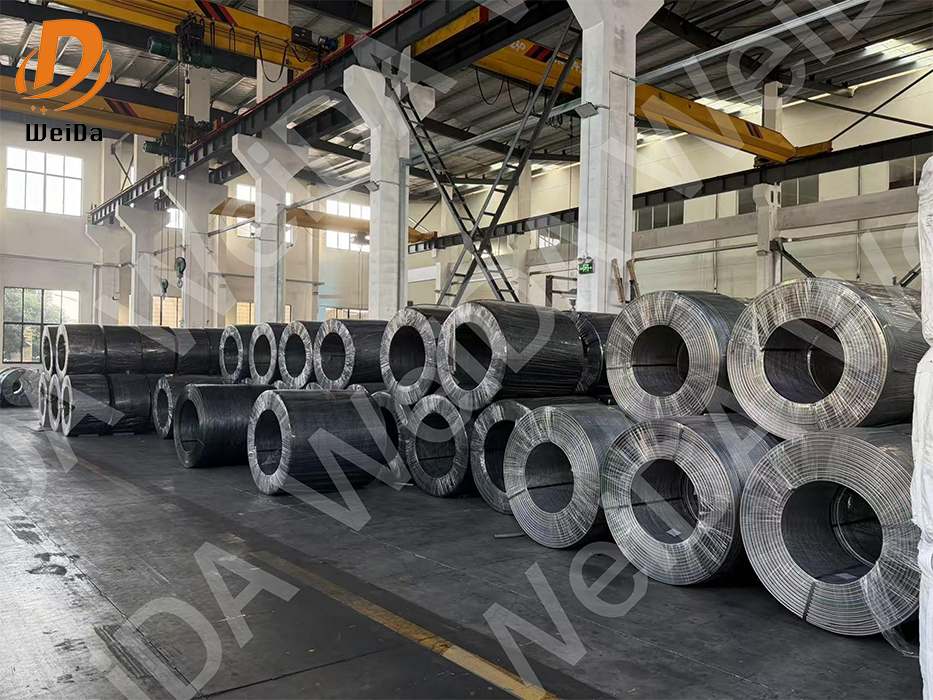
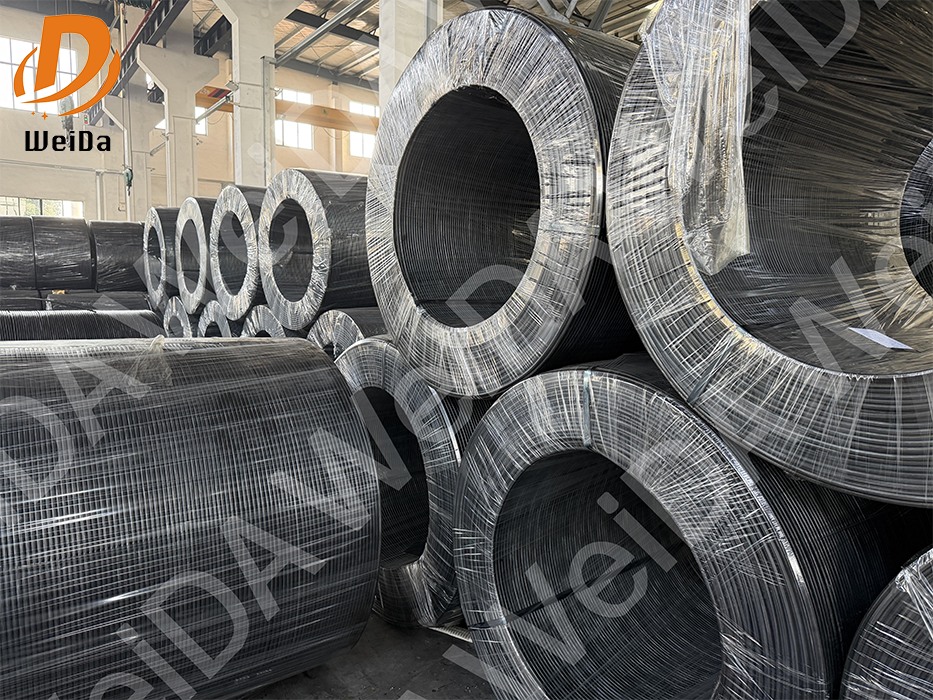
Second, use pure calcium wire or calcium iron wire. Compared to calcium silicon wire, pure calcium wire and calcium iron wire have higher calcium content per unit length and greater density, making them more suitable for low-carbon aluminum killed steel that has already been deeply deoxidized. They can precisely deliver calcium deep into the molten steel, improving recovery.
Third, stepwise addition and effect verification. We recommend a strategy of "small, multiple additions, adding while monitoring." First add 60-70% of the calculated dosage, then decide whether to supplement based on sample analysis results. At the same time, use oxygen activity probes and rapid slag sample analysis to evaluate the calcium treatment effect.
Fourth, avoid conflict between calcium treatment and sulfur. For low-carbon aluminum killed steel, sulfur content is typically already controlled at very low levels (<0.005%). However, if sulfur content is unexpectedly high, calcium will preferentially react with sulfur to form CaS, consuming valuable calcium. In this case, desulfurize first, then perform calcium treatment, or appropriately increase the calcium dosage.
Fifth, holding time after calcium treatment. After calcium treatment, the steel needs 8-15 minutes of holding time to allow the modified liquid calcium aluminate inclusions to fully float up into the slag layer. Insufficient holding time means inclusions cannot float up in time and will remain in the steel, affecting final product quality.
Avoiding the Trap of "Over-Calcium Treatment"
In low-carbon aluminum killed steel production, "over-calcium treatment" is more and more dangerous than "insufficient calcium treatment." Excess calcium leads to:
•Increased calcium aluminate inclusions: These high-melting-point phases exacerbate nozzle buildup.
•Secondary oxidation of molten steel: Excess calcium exposed to air forms CaO, becoming a new source of inclusions.
•Increased costs: Calcium iron wire is expensive, and excess addition directly increases per-ton steel costs.
Wuxi WeiDa's recommendation is: "Less is more" – find the minimum effective calcium dosage through precise calculation, rather than blindly pursuing "high calcium."
Supporting Measures During Continuous Casting
Even if calcium treatment is very successful, problems can still occur if the continuous casting process is not properly controlled. We recommend:
•Full protective casting: Prevent secondary oxidation of molten steel that would generate new Al₂O₃.
•Optimize tundish weirs: Extend the residence time of molten steel in the tundish, promoting flotation of residual inclusions.
•Use high-absorption-capacity mold flux: Ensure that floating inclusions are absorbed by the flux rather than entering the mold.
From "Adequate" to "Excellent"
For producers of low-carbon aluminum killed steel, the goal of calcium treatment is not just "no nozzle clogging," but rather producing high-end products with excellent surface quality and superior deep drawability. Wuxi WeiDa's precise calcium treatment solution has helped customers control the calcium-to-aluminum ratio within the optimal window, achieving 50% extension in nozzle life, 30% reduction in cold-rolled sheet surface defect rates, and increased sequence casting heats to 15-20 heats with remarkable results.
If you are producing low-carbon aluminum killed steel and wish to break through the technical bottlenecks of calcium treatment to achieve consistent production of high-end products, please visit https://www.weidamaterials.com/ to obtain our complete technical solution for calcium treatment optimization for low-carbon aluminum killed steel.