

In the previous article, we discussed centerline porosity control in continuous casting slabs. Today, we focus on one of the most challenging steel families for continuous casting: peritectic steels. Peritectic steels (carbon content between 0.08% and 0.15%) undergo a δ→γ peritectic phase transformation during solidification, accompanied by approximately 0.38% volume shrinkage. This drastic volume change leads to uneven initial shell growth, making the slab surface highly susceptible to longitudinal cracks, deep oscillation marks, depressions, and even sticker breakouts. For products like automotive high-strength steel, line pipe steel, and electrical steel, surface quality control of peritectic steel is key to ensuring smooth production and high product yield. How can you achieve stable, continuous casting of peritectic steels while minimizing surface defects? Wuxi WeiDa Cored Wire Co.,Ltd provides comprehensive solutions based on mold flux optimization, oscillation parameter control, and crystallizer thermal management.
The Peritectic Challenge: Phase Transformation Shrinkage and Heat Transfer Non-Uniformity
During the solidification of peritectic steel, the transformation from δ-ferrite to γ-austenite results in a linear shrinkage of approximately 0.38%, far exceeding that of other carbon ranges. This drastic shrinkage causes the initial shell to lose contact with the mold copper plate, forming an air gap. The air gap leads to non-uniform heat transfer across the mold width. Areas with good contact cool quickly and form a thick shell; areas with air gaps cool slowly and form a thin shell. Under the combined action of thermal and mechanical stresses, these thin spots develop longitudinal cracks. The key to casting peritectic steel successfully is managing this shrinkage through enhanced lubrication and controlled, uniform heat transfer.
Our Solution: High-Performance Mold Fluxes and Optimized Casting Parameters
First, use peritectic-grade mold flux with controlled crystallization. Standard mold fluxes are insufficient for peritectic grades. Our specialized peritectic steel mold fluxes are formulated with higher basicity (1.0-1.3) and contain components that promote controlled crystallization. The key is to form a crystalline slag layer against the mold wall. This crystalline layer has lower thermal conductivity than the liquid layer, effectively "insulating" the mold and reducing heat extraction. More importantly, the crystalline layer physically supports the solidifying shell in regions where shrinkage would otherwise create an air gap, promoting uniform heat transfer and reducing crack formation.
Second, optimize oscillation parameters. The oscillation mark depth is directly related to crack susceptibility. Deeper oscillation marks act as stress raisers and can become crack initiation sites. We recommend using high-frequency, small-amplitude oscillation for peritectic steels. Typical parameters: frequency of 180-300 cycles per minute and amplitude of 3-6mm. The negative strip time (the period when the mold moves downward faster than the shell) should be kept short, typically 0.08-0.12 seconds, to minimize oscillation mark depth while maintaining adequate lubrication.
Third, control mold cooling intensity. Reducing the mold water flow rate and velocity can significantly improve crack resistance. For peritectic steels, we recommend:
•Water flow rate: Reduce by 10-20% compared to plain carbon steel grades.
•Water velocity: Maintain below 7-8 m/s to avoid过于 aggressive cooling.
•Inlet water temperature: Keep above 30-35°C to minimize thermal shock.
These adjustments slow the initial shell cooling rate, reducing the thermal gradient and the associated transformation stresses.
Fourth, stabilize mold level control. Level fluctuations at the meniscus are particularly dangerous for peritectic steels because they cause alternating wetting and drying of the mold flux, destabilizing the slag film. We recommend using electromagnetic level control systems to maintain level fluctuations within ±3mm. Additionally, maintain stable casting speed – avoid speed changes during the casting of a single heat whenever possible.
Fifth, optimize steel composition through cored wire microalloying. Casting parameters alone cannot eliminate crack susceptibility; steel composition also plays a role. Our cored wire technology can help reduce peritectic crack sensitivity:
•Titanium microalloying: Feeding ferro titanium cored wire forms fine TiN and TiC particles that refine the solidification structure, reduce segregation, and improve shell ductility at high temperatures.
•Rare earth treatment: As discussed previously, rare earths modify sulfide and oxide inclusions, improving high-temperature ductility.
•Boron microalloying: Small boron additions (0.001-0.003%) can strengthen grain boundaries, improving crack resistance.
•Phosphorus control: Phosphorus exacerbates peritectic cracking. Keep phosphorus as low as possible, typically below 0.015%.
Sixth, manage mold taper. The mold taper must match the shell shrinkage profile. For peritectic steels, a parabolic taper or multi-stage taper is more effective than a linear taper. The upper zone (0-200mm below meniscus) requires a higher taper to accommodate rapid initial shrinkage; the lower zone requires a lower taper. We can provide taper design recommendations based on your specific slab width and casting speed.
The Synergistic Effect: Putting It All Together
Successful peritectic steel casting requires all elements to work together. The mold flux provides the crystalline layer and lubrication. The oscillation parameters control mark depth. The cooling intensity manages the thermal gradient. The level control ensures stability. The composition adjustments modify the steel's intrinsic crack sensitivity. And the mold taper ensures proper shell support. Wuxi WeiDa provides support across all these areas:
•Mold flux selection and supply: Tailored to your specific peritectic grade and casting conditions.
•Process parameter recommendations: Oscillation, cooling, level control, and taper based on modeling and field experience.
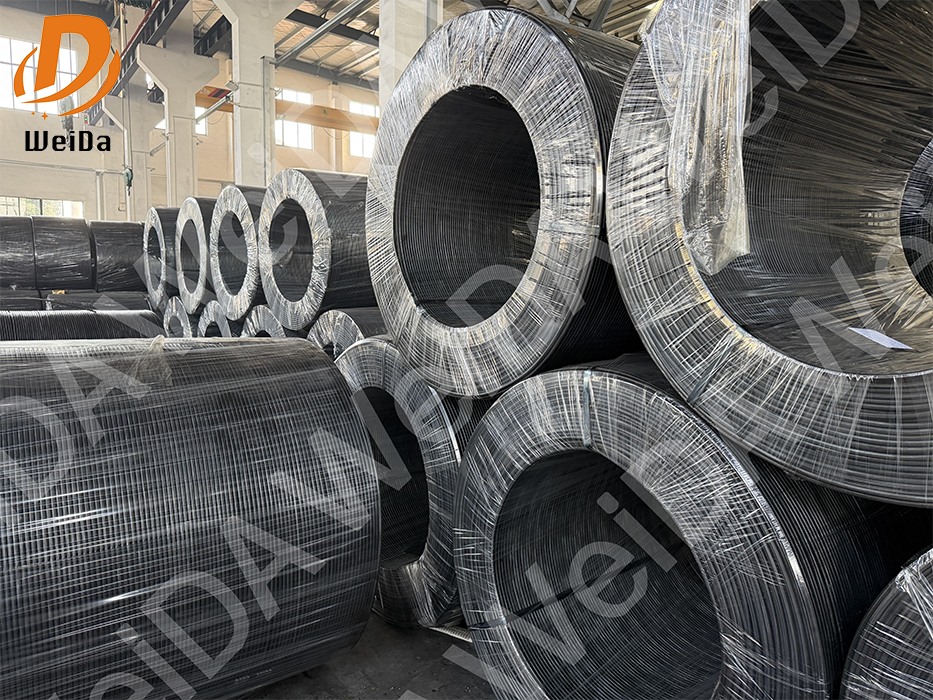
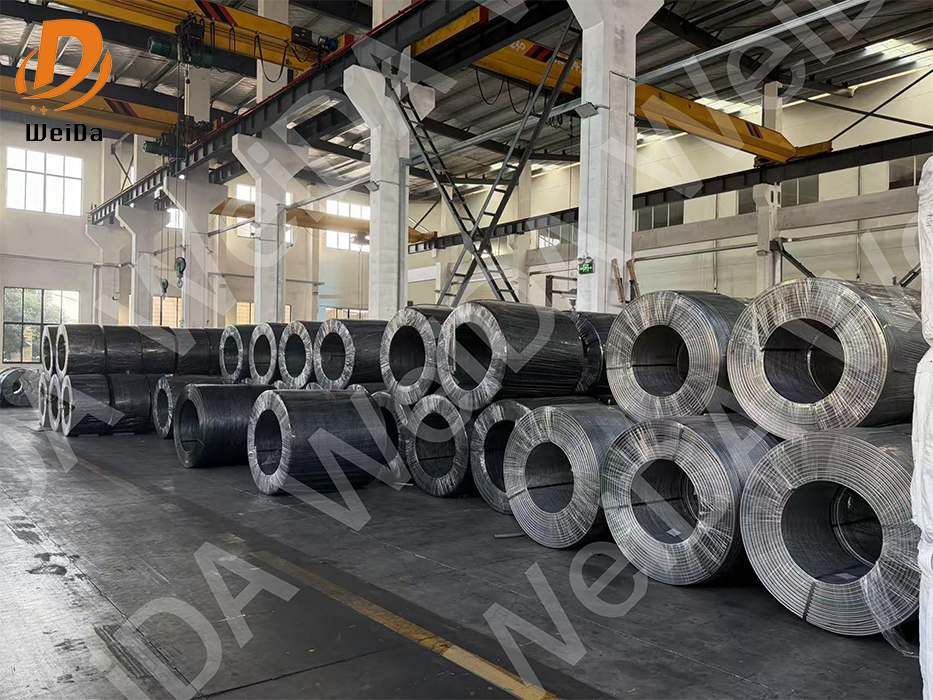
•Cored wire products: Titanium, rare earth, and boron wires for composition optimization.
•On-site technical support: During trials and production ramp-up.
From Problematic to Predictable
Many steel producers struggle with peritectic steels, accepting high conditioning costs or limiting production. With the right combination of mold flux, process parameters, and composition control, peritectic steels can be cast as reliably as plain carbon grades. Wuxi WeiDa has helped numerous customers achieve:
•Longitudinal crack incidence reduced by 60-80%
•Depression depth reduced to within acceptable limits
•Sticker breakout frequency nearly eliminated
•Surface conditioning requirements cut in half
If you are producing peritectic steels and facing surface quality challenges that limit your productivity or product offerings, please visit https://www.weidamaterials.com/ to learn about our complete peritectic steel casting solution.