

In the previous article, we discussed achieving stable continuous casting of peritectic steels. Today, we focus on a fundamental aspect of secondary metallurgy that influences steel cleanliness, alloy recovery, refractory life, and casting performance: ladle refining slag optimization. The refining slag is not merely a passive cover on the molten steel; it is an active participant in critical reactions including desulfurization, deoxidation, inclusion absorption, and thermal insulation. An poorly designed slag leads to poor desulfurization, high inclusion counts, refractory corrosion, and even reversion of harmful elements. How can you design and maintain the optimal refining slag for your specific steel grades and process conditions? Wuxi WeiDa Cored Wire Co.,Ltd provides comprehensive slag engineering solutions based on customized slag systems and precise slag modification technologies.
The Four Critical Functions of Refining Slag
A properly designed refining slag performs four essential functions. First, desulfurization. The slag absorbs sulfur from the steel through the reaction (CaO) + [S] → (CaS) + [O] . High basicity (high CaO activity) and low oxidizing potential (low FeO+MnO) are essential for deep desulfurization. Second, inclusion absorption. The slag acts as a "sponge," absorbing deoxidation products (Al₂O₃, SiO₂, etc.) that float up from the steel. The slag must have sufficient capacity to dissolve these inclusions without becoming saturated. Third, protection and insulation. The slag layer prevents the steel from reoxidizing by contact with air and reduces heat loss through radiation. Fourth, refractory protection. A properly saturated slag minimizes chemical attack on the ladle refractory lining, extending ladle life.
The Consequences of Poor Slag Design
The effects of a poorly designed slag are immediate and costly. Insufficient basicity or high FeO leads to poor desulfurization, forcing longer treatment times or resulting in off-grade sulfur levels. Low inclusion capacity means Al₂O₃ and other oxides remain in the steel, causing nozzle clogging and product defects. Slag that is too fluid or too viscous fails to protect the steel properly, leading to reoxidation and temperature loss. Aggressive slag chemistry attacks the refractory lining, leading to frequent ladle changes and increased refractory consumption.
Our Solution: Customized Slag Systems and Precision Modification
First, design the optimal base slag composition. There is no single "best" slag composition; the optimal composition depends on your steel grade, refining equipment, and quality targets. Our technical team works with you to design a slag system tailored to your needs. For ultra-low sulfur grades (e.g., pipeline steel, bearing steel), we recommend high basicity slags with CaO/SiO₂ ratio of 4-6, low FeO (<1%), and MgO content of 8-12%. For general structural steels, a basicity of 2-4 is often sufficient. For stainless steels, slag composition must account for chromium oxidation and reduction.
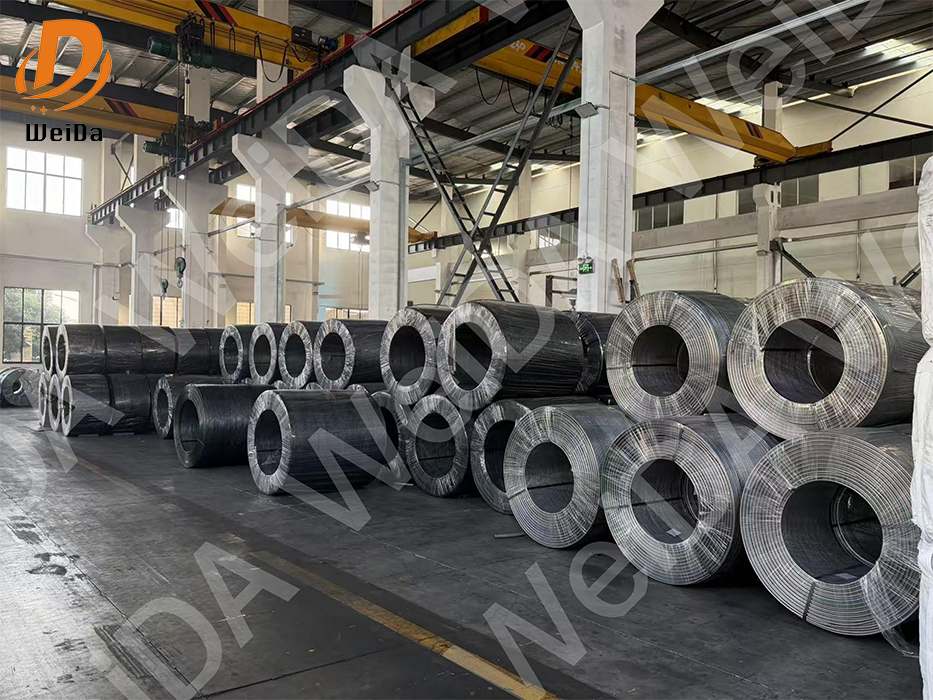
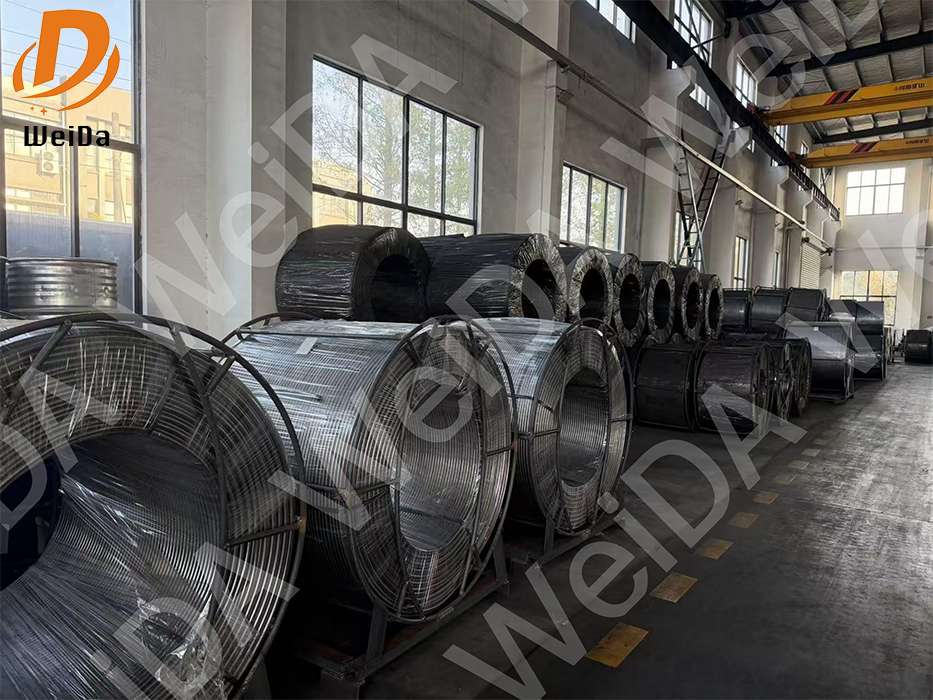
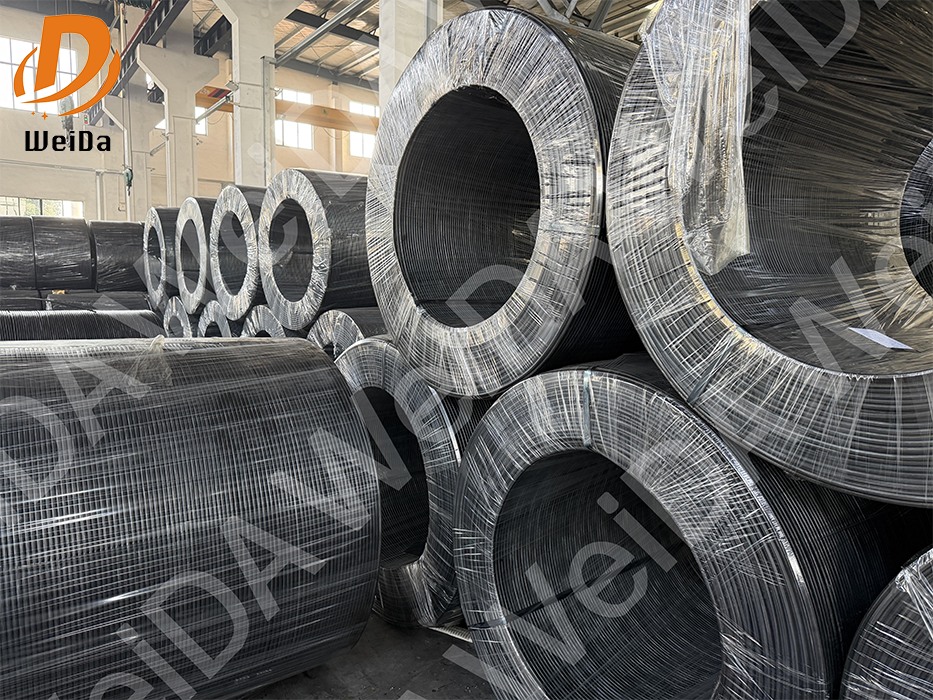
Second, use synthetic slag cored wire for rapid slag formation. Traditional slag practice involves adding lump lime and other components to the ladle during tapping. These components take time to melt and homogenize. Our pre-melted synthetic slag cored wire contains a homogenous mixture of CaO, Al₂O₃, CaF₂ (or fluoride alternatives), and other components. When injected into the ladle, it melts rapidly, forming an effective refining slag within minutes rather than 10-15 minutes, reducing treatment time and improving early desulfurization.
Third, modify slag composition in real-time with specialty cored wires. Even with an optimal starting slag, composition changes during refining. Desulfurization consumes CaO and produces CaS. Al₂O₃ from deoxidation accumulates in the slag. MgO may be picked up from the refractory. Our slag modification cored wires allow precise, real-time adjustment:
•Lime cored wire (CaO) : Increases basicity and sulfide capacity.
•Calcium aluminate cored wire: Adds CaO and Al₂O₃ simultaneously, useful for adjusting slag fluidity.
•Magnesia cored wire (MgO) : Saturates the slag with MgO, reducing refractory attack.
•Calcium fluoride cored wire (CaF₂) : Lowers slag viscosity and melting point (use minimized for environmental and refractory life reasons).
Fourth, control slag oxidizing potential. The FeO+MnO content of the slag is the single most important factor for deep desulfurization. Our strong deoxidation practices, including proper aluminum addition before slag formation and optional slag deoxidation with aluminum or calcium silicon wire, keep slag FeO+MnO below 1% for clean steel grades. For less demanding grades, levels below 2-3% are typically sufficient.
Fifth, manage slag foaming and volume. Excessive slag foaming can cause ladle overflow and safety hazards. Insufficient foaming reduces heat insulation. Our slag foaming control recommendations, including proper carbon injection practices and stirring intensity management, help maintain optimal slag volume and foaming height.
Sixth, implement slag sampling and analysis protocols. You cannot control what you do not measure. We help customers establish rapid slag analysis protocols using XRF or other techniques. Typical sampling frequency: one sample per heat, with rapid turnaround (5-10 minutes). Key parameters to track: basicity (CaO/SiO₂), FeO+MnO, MgO, Al₂O₃, and (for desulfurization) CaS content. Trends in these parameters identify process drift before it causes quality problems.
The Economic Case for Slag Optimization
Investment in slag optimization pays returns through multiple channels. Reduced desulfurization time increases productivity and reduces energy consumption. Higher alloy recoveries (especially for expensive elements like aluminum, titanium, and boron) lower raw material costs. Improved inclusion control reduces downstream defects and customer claims. Longer refractory life reduces maintenance costs and ladle turnaround delays. And more consistent quality enables premium pricing for high-grade products.
From "Standard Slag" to "Engineered Slag"
Many steel producers use the same slag practice for all grades, accepting suboptimal performance for all but their most demanding products. Wuxi WeiDa helps you move from "one size fits all" to grade-specific, engineered slag systems. Whether you need ultra-low sulfur for pipeline steel, controlled Al₂O₃ absorption for aluminum-killed grades, or chromium retention for stainless steel, our slag engineering expertise and cored wire products deliver the performance you need.
If you are ready to optimize your refining slag practice to improve quality, reduce costs, and increase productivity, please visit https://www.weidamaterials.com/ to discuss your specific requirements with our slag engineering team.