

In the previous article, we discussed ladle refining slag optimization for high-quality steel production. Today, we focus on a specific inclusion type that is increasingly problematic as steel grades become more demanding: titanium inclusions. Titanium is added to many steel grades for beneficial purposes—grain refinement (TiN pins austenite grain boundaries), precipitation strengthening (TiC), and stabilization (fixing carbon and nitrogen in stainless steels). However, uncontrolled titanium reactions produce hard, angular TiN and TiOx inclusions that are among the most damaging to steel properties. These inclusions cause surface defects, fatigue crack initiation, tool wear, and wire breakage. How can you control titanium inclusions effectively to achieve the benefits of titanium addition without the detrimental side effects? Wuxi WeiDa Cored Wire Co.,Ltd provides comprehensive titanium inclusion management solutions based on precise addition control, nitrogen management, and inclusion modification.
The Dual Nature of Titanium: Friend and Foe
Titanium is a powerful microalloying element. When properly controlled, it forms fine, dispersed TiN and TiC particles that refine grain size and increase strength. However, when uncontrolled, titanium forms large, angular TiN inclusions (often 5-20 microns or larger) that are extremely harmful. The problem is the reaction pathway: titanium has a very high affinity for both nitrogen and oxygen. At steelmaking temperatures, titanium reacts preferentially with nitrogen to form TiN. If oxygen is present, titanium also forms TiOx. Both TiN and TiOx are characterized by high hardness (TiN hardness ~2000 HV, compared to steel matrix ~200 HV) and angular morphology. These inclusions do not deform during rolling or drawing; instead, they act as stress raisers, crack initiation sites, and abrasive particles.
The Root Causes of Titanium Inclusion Problems
Titanium inclusion issues typically arise from one or more of the following factors. Excessive titanium addition beyond the amount needed for the intended metallurgical effect generates surplus titanium that forms inclusions. High nitrogen content in the steel before titanium addition causes rapid TiN formation. Poor addition practice—adding titanium before full deoxidation or without proper stirring—leads to localized supersaturation and large inclusions. Inadequate flotation time prevents TiN particles from floating out before casting. Inconsistent titanium recovery makes it difficult to predict final titanium content, leading to over-addition "safety factors."
Our Solution: Precision Titanium Management
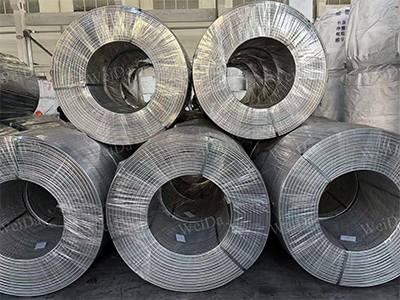
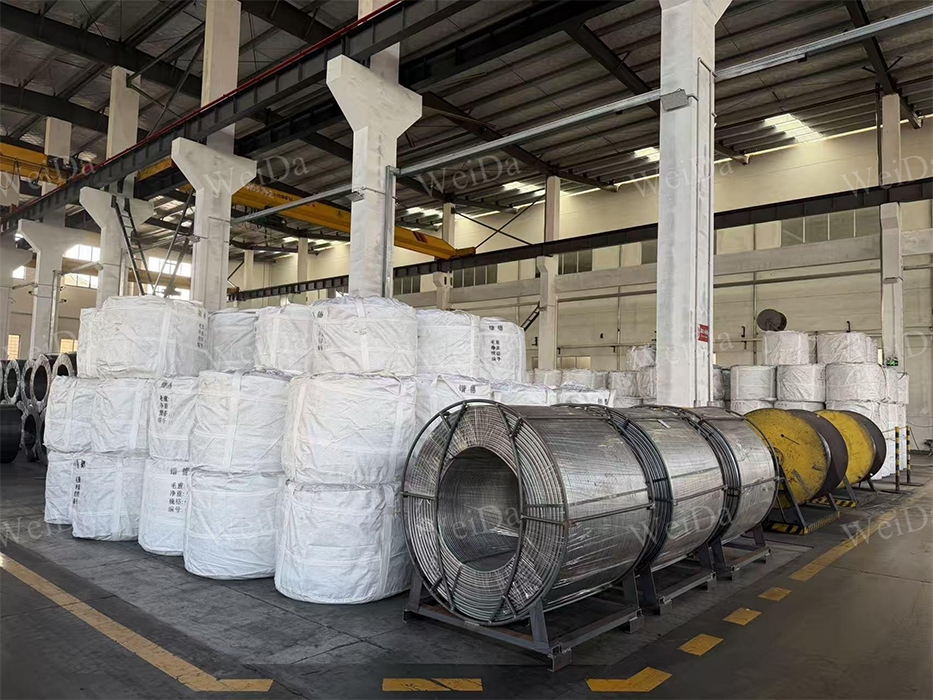
First, accurate titanium addition using cored wire. Our ferro titanium cored wire and titanium metal cored wire enable precise, consistent titanium addition. The cored wire format protects titanium from oxidation during feeding and delivers it deep into the steel where it can dissolve efficiently. Typical titanium recovery with cored wire is 85-95%, compared to 60-75% with lump additions. This predictability eliminates the need for "safety over-additions."
Second, strict nitrogen control before titanium addition. Nitrogen is the primary reactant for TiN formation. Before adding titanium, ensure nitrogen content is as low as practical. For most steel grades, target below 50-60ppm. For critical applications (bearing steel, tire cord), target below 40ppm. Achieve low nitrogen through: using low-nitrogen charge materials (DRI/HBI instead of high-residual scrap), minimizing air entrainment during tapping and ladle transfers, and using protective shrouding during casting.
Third, complete deoxidation before titanium addition. Titanium will react with oxygen if any remains free in the steel. Ensure complete deoxidation using aluminum before titanium addition. Target dissolved oxygen below 5ppm. This prevents formation of TiOx and ensures titanium is available for the intended reaction (TiN or TiC formation, not titanium oxides).
Fourth, optimized titanium addition timing and location. Add titanium after deoxidation and after any desulfurization treatments that involve calcium. The ideal addition point is during the final composition adjustment stage of ladle refining, typically 10-15 minutes before casting begins. Feed the cored wire at the recommended speed (typically 3-5 m/s for large ladles) to ensure deep penetration. After addition, provide mild argon stirring for 2-3 minutes to homogenize titanium without causing excessive flotation of TiN particles.
Fifth, titanium-nitrogen ratio management. For applications where TiN formation is desired (e.g., grain refinement), the Ti/N ratio must be carefully controlled. The stoichiometric ratio for TiN is Ti/N = 3.4 by weight. For grain refinement, target a slight excess of titanium (Ti/N = 4-6) to ensure all nitrogen is fixed as TiN. For applications where TiN is undesirable, keep titanium addition to the minimum required for the primary purpose and keep nitrogen as low as possible.
Sixth, inclusion modification for residual titanium inclusions. When TiN or TiOx inclusions form despite best practices, their harm can be reduced through modification. Rare earth treatment (cerium, lanthanum) can modify TiN surfaces, making them less damaging. Our rare earth cored wire can be used after titanium addition, with the rare earths preferentially reacting with any remaining oxygen and sulfur before modifying existing TiN surfaces. Calcium treatment is less effective on TiN but can help modify TiOx.
Seventh, application-specific titanium strategies. Different steel grades require different approaches. For stainless steels (321, 409, etc.) , titanium is added for stabilization. The target Ti/C ratio is typically 4-6. Ensure nitrogen is low to prevent excessive TiN. For high-strength low-alloy steels, titanium is a grain refiner. Target Ti/N = 4-6, with total titanium typically 0.01-0.05%. For bearing steels and tire cord, titanium is an impurity to be minimized. Target titanium below 0.0015% (15ppm). Use low-titanium raw materials and avoid titanium-containing additions.
Process Monitoring and Troubleshooting
Effective titanium control requires measurement. We help customers implement rapid titanium analysis using optical emission spectroscopy or XRF. Sample after titanium addition and before casting to verify target achievement. When problems occur, our systematic troubleshooting approach examines: raw material titanium levels, nitrogen content before addition, deoxidation practice, addition timing, stirring practice, and casting protection.
From Uncontrolled Reaction to Engineered Addition
Titanium is too valuable a microalloying element to avoid, but too damaging to ignore. With Wuxi WeiDa's precision titanium management approach, you can confidently add titanium to achieve grain refinement, stabilization, or precipitation strengthening, while controlling TiN and TiOx inclusions to acceptable levels.
If you are adding titanium to your steel grades and experiencing surface defects, fatigue failures, or processing difficulties related to titanium inclusions, please visit https://www.weidamaterials.com/ to discuss our titanium inclusion management solutions.