

In the previous article, we discussed how to reduce the loss of valuable alloys through precision wire feeding technology. Today, we focus on a often-overlooked factor that has a "deadly" impact on steel cleanliness: ladle glaze. Many steel mills, after solving deoxidation and alloying problems, still find that large inclusions in the finished product exceed specifications. These inclusions are often not generated during steelmaking, but come from the "seemingly harmless" layer of slag on the inner wall of the ladle. When this glaze becomes unstable or spalls off, it becomes a primary source of large exogenous inclusions in the molten steel, directly causing surface defects on automotive sheets, edge cracking on thin-gauge strips, and wire breakage during drawing. Are you troubled by these non-metallic inclusions? How can you, through scientific slag management and glaze maintenance, transform the ladle from a "contamination source" into a "protective layer"? Wuxi WeiDa Cored Wire Co.,Ltd provides you with a comprehensive solution based on magnesia cored wire and slag system control.
Ladle Glaze: Both a "Protective Layer" and a "Contamination Source"
During continuous use of a ladle, the refractory material on its inner wall reacts with the refining slag, forming a dense – this is the "glaze" or "slag coating." The ideal glaze should be a uniform, dense, and stable glassy or ceramic substance. Its benefits are clear: it isolates the molten steel and slag from direct erosion of the refractory, extending ladle life; simultaneously, it provides thermal insulation, reducing steel temperature drop.
However, in actual production, the glaze is often unstable and non-uniform. When the refining slag composition changes drastically, the ladle undergoes rapid heating and cooling due to long turnaround times, or the glaze builds up too thickly, this "protective shell" can crack and spall off. The spalled glaze fragments are typically large (ranging from a few millimeters to several centimeters), have complex compositions (rich in MgO, CaO, Al₂O₃, SiO₂, etc.), and once they fall into the molten steel, they cannot float up and be removed. These large exogenous inclusions become the source of surface cracks on rolled products or directly cause rejection during ultrasonic testing. For high-end products like deep-drawing automotive panels, easy-open can ends, and fine stainless steel wire, this is often fatal.
Root Cause Analysis of Glaze Spalling
Glaze spalls off primarily for three main reasons. First, mismatch between slag composition and refractory. If the MgO content in the refining slag is far below the saturation value, it will continuously dissolve MgO from the ladle lining, the structural integrity of the glaze. Second, severe temperature fluctuations. After the molten steel is tapped out, the empty ladle cools rapidly; during the next tapping, high-temperature molten steel heats it instantly. This thermal shock causes cracking due to differences in thermal expansion coefficients. Third, frequent steel grade changes. The refining slag compositions of different steel grades (especially basicity and CaO/Al₂O₃ ratio) vary significantly. The new slag reacts with the old glaze, forming low-melting-point phases that cause the glaze to "soften" and spall.
Our Solution: Transforming "Contamination Source" into "Protective Layer"
The core strategy of Wuxi WeiDa Cored Wire Co.,Ltd is to keep the glaze stable long-term through fine-tuning of the refining slag. We do not directly manufacture refractories, but we provide tools that can change the interface reactions among slag, steel, and refractory.
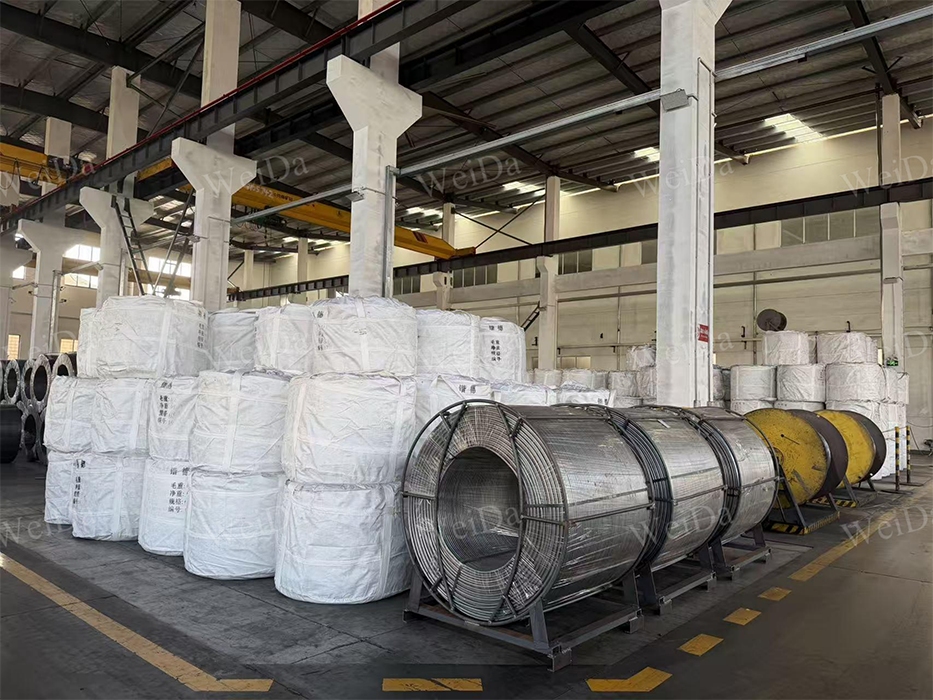
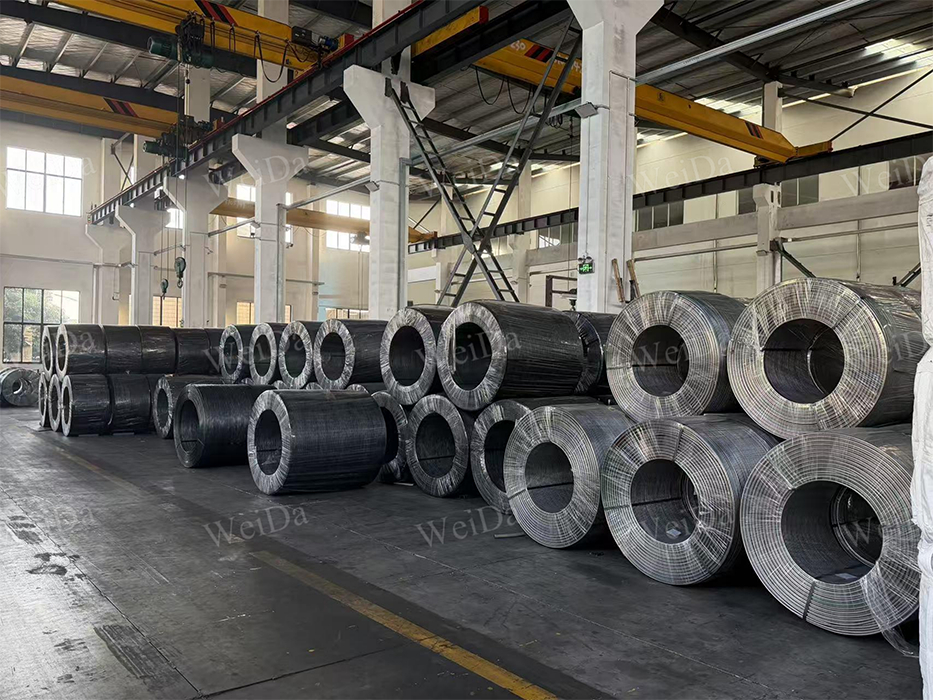
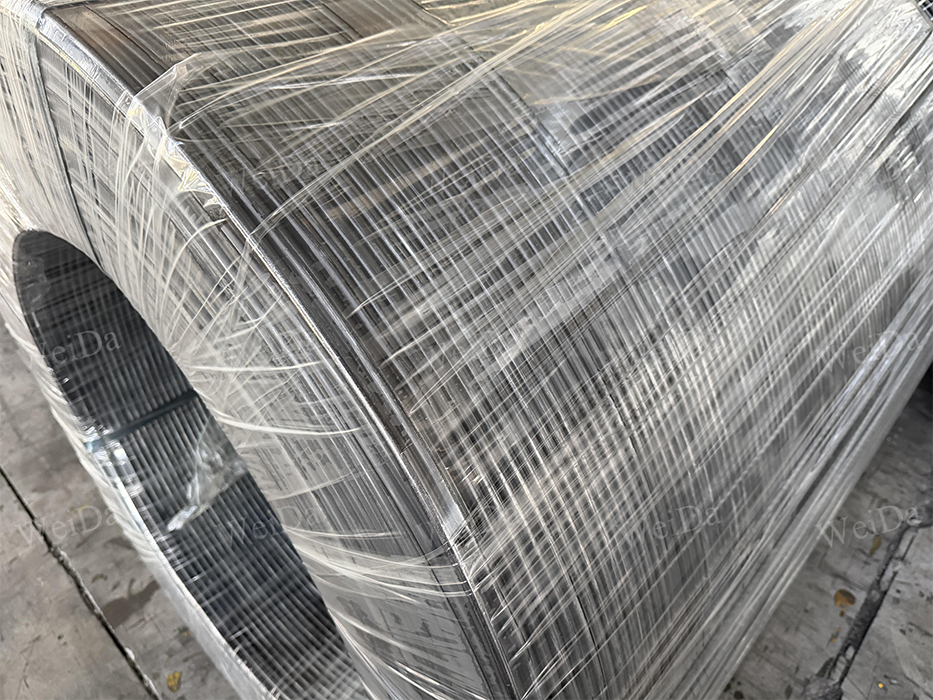
First, use magnesia cored wire for glaze "maintenance" . This is the most direct method for maintaining glaze stability. Our high-purity magnesia cored wire can precisely supplement MgO into the slag during refining. When the MgO content in the slag reaches or approaches saturation (typically controlled at 8%-12%), its chemical attack on the magnesia-carbon brick lining is minimized. This is like contacting a salt block with "saturated salt water" – the salt block will no longer dissolve. Regular, feeding of magnesia wire can effectively repair eroded glaze layers and extend their service life.
Second, optimize the basicity and fluidity of the refining slag. A "friendly" glaze requires not only MgO saturation but also appropriate basicity (CaO/SiO₂). We recommend controlling the basicity of the refining slag between 3.0 and 5.0. Basicity that is too low results in poor resistance to erosion; basicity that is too high leads to poor slag fluidity and crusting. Our synthetic slag cored wire helps you achieve rapid slag formation and precisely adjust the composition window of the slag system, ensuring the glaze has both good thermal shock resistance and is not overly porous.
Third, implement a "hot ladle" turnaround practice. Process management optimization is equally important. Where conditions permit, shortening the waiting time from tapping to empty ladle and using hot ladle turnaround can significantly reduce thermal stress cracking of the glaze caused by rapid heating and cooling. We provide ladle covering fluxes to assist with thermal insulation, reducing the cooling rate during the empty ladle period.
Fourth, establish a glaze thickness monitoring and cleaning mechanism. This is not "neglect," but "scientific management." When the glaze thickness exceeds 30-40mm, mechanical cleaning should be performed. At the same time, when switching between steel grades with vastly different refining requirements (e.g., from ultra-low carbon steel to high-manganese steel), it is advisable to perform a "ladle washing" treatment – using a low-basicity slag to clean the inner wall before putting the ladle back into service.
Eliminating the "Run It Until Failure" Mentality
Many companies, in pursuit of high ladle turnaround rates, "run the ladle until failure," only addressing the problem when glaze spalling severely affects steel quality. This habit can make you pay a high price for subsequent rolling defects. Wuxi WeiDa Cored Wire Co.,Ltd advocates the concept of "prevention first, combine maintenance with repair" . By incorporating refined ladle lining maintenance into daily management procedures, you can fundamentally prevent large inclusions caused by glaze spalling, thereby significantly improving the surface acceptance rate of cold-rolled sheets and the drawing performance of high-end wire rods.
If you are troubled by large inclusions on the surface of your steel products or wish to significantly extend the service life of your ladles, please visit our website https://www.weidamaterials.com/ to obtain the complete technical solution for ladle glaze management and clean steel production.