

In the previous article, we discussed how ladle glaze can become a source of steel contamination. Today, we go a step further, delving into how to actively prevent glaze spalling, rather than after contamination has already occurred. Glaze spalling does not happen overnight; it is a gradual accumulation process. Many steel mills often only check the ladle condition after discovering large inclusion defects on the surface of rolled products, but by then, the loss has already occurred. How can you identify the risk during the "incubation period" of glaze spalling and nip it in the bud through scientific daily management? Wuxi WeiDa Cored Wire Co.,Ltd provides you with a set of proactive defense strategies based on slag composition monitoring, magnesia wire maintenance, and thermal management.
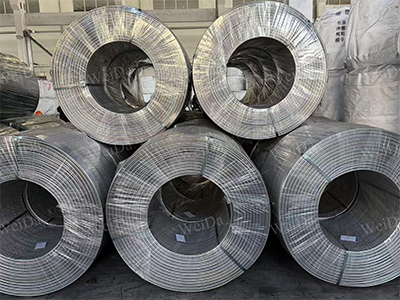
The "Incubation Period" of Glaze Spalling: Identifying Early Warning Signs
Glaze spalling rarely happens suddenly. Before it occurs, a series of warning signs appear. Warning sign one: During ladle turnaround, observe large pieces of slag crust on the ladle mouth or wall. This indicates that the glaze has already separated from the parent refractory lining. Warning sign two: During refining, observe an abnormal increase in "floating slag" on the molten steel surface. This floating slag is often not normal refining slag, but spalled glaze fragments. Warning sign three: After the same ladle has been used continuously for multiple heats, the detected values of large inclusions in the steel show an increasing trend. This is direct evidence of gradual glaze deterioration. Warning sign four: During casting, observe abnormal nozzle erosion or clogging. Spalled high-melting-point fragments containing MgO can become lodged in the nozzle inner wall. If these signs appear in your plant, the glaze is already unstable and requires urgent intervention.
The Root Causes of Glaze Spalling: Thermal Shock, Composition Mismatch, and Mechanical Stress
To prevent glaze spalling, you must understand the underlying mechanical and chemical mechanisms. First, thermal shock cracking. The rapid temperature rise of the ladle from empty (approximately 800-1000°C) to full (above 1600°C), and the rapid cooling after tapping, generate thermal stresses within the glaze. When the difference in thermal expansion coefficients between the glaze and the lining is too large, these stresses lead to cracking. Second, reaction layer formation due to composition mismatch. When the composition of the refining slag differs significantly from the old glaze, a low-melting-point reaction layer forms at their interface. This reaction layer has very low strength and becomes a "weak plane" for glaze spalling. Third, mechanical impact during ladle turnaround. During operations such as lifting, pouring residual steel, and cleaning the ladle mouth, mechanical vibration or impacts are inevitable. These external forces can dislodge already cracked glaze.
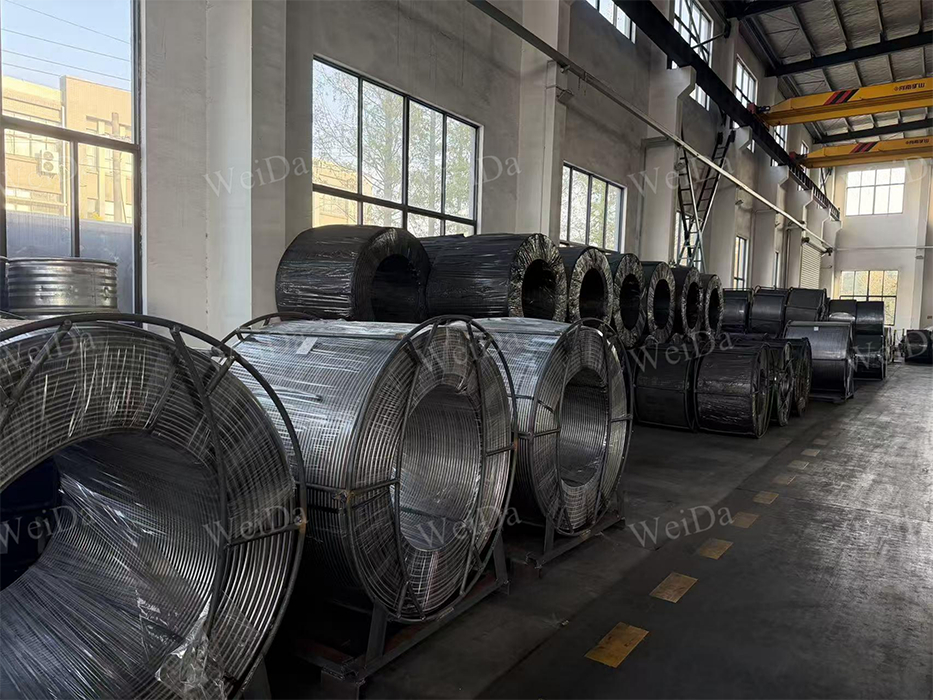
Our Solution: Establishing a Glaze "Health Management" System
Wuxi WeiDa Cored Wire Co.,Ltd advocates not just "repair when problems occur," but establishing a complete glaze health management process.
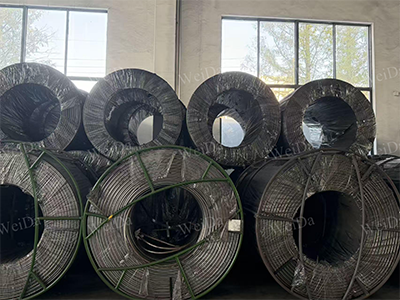
First, implement a "magnesia wire maintenance" system to maintain MgO saturation in the slag. This is the core of preventing chemical attack on the glaze. We recommend that for continuously used ladles, supplement high-purity magnesia cored wire into the slag every 2-3 heats via the wire feeder. The addition amount is dynamically adjusted based on the detected MgO value in the slag, with the target of stably controlling MgO content at 8%-12% . This "saturated" slag forms a dynamic equilibrium with the lining, dissolving MgO from the lining, thereby protecting the structural integrity of the glaze.
Second, control the basicity fluctuation of the refining slag and avoid drastic switches. In production scheduling, avoid arranging steel grades with vastly different refining slag compositions (e.g., ultra-low carbon steel and high-sulfur free-cutting steel) for continuous use on the same ladle circuit. If unavoidable, perform a "ladle washing" treatment before the switch – use one heat of low-basicity, high-MgO "washing slag" to treat the ladle inner wall before putting it into service.
Third, optimize the ladle preheating practice to reduce thermal shock damage. Thermal shock is a major driver of glaze cracking. We recommend a slow heating, stepped preheating process, avoiding directly putting a cold ladle into high-temperature molten steel. The cooling rate during the empty ladle period should also be controlled within a reasonable range, using ladle covering flux or insulating covers to slow the temperature drop when necessary.
Fourth, establish a regular glaze thickness measurement and recording system. Use a laser rangefinder or mechanical probe to measure glaze thickness at different parts of the ladle wall after the ladle has cooled. Record the glaze change curve over the "life cycle" of each ladle. When glaze thickness exceeds 40mm, schedule mechanical cleaning ; when the glaze is uneven or locally, intervene early.
Fifth, standardize ladle handling procedures to reduce mechanical impact. During operations such as lifting, seating, and tipping, require crane operators to handle smoothly, avoiding collisions. At the same time, regularly inspect the ladle mouth flange and walls, promptly loose glaze caused by mechanical impact.
From "Passive Repair" to "Active Prevention"
Many steel mills have an attitude of "no spalling, no treatment; spalling occurs, then repair" towards ladle glaze. This passive management approach cannot produce high-cleanliness steel. Wuxi WeiDa Cored Wire Co.,Ltd helps you upgrade glaze management from "post-event" to "pre-event prevention" . By incorporating the four measures of magnesia wire maintenance, composition control, thermal management, and regular inspection into your daily procedures, you can significantly reduce the risk of glaze spalling.
After achieving this transformation, you will see the following results: ladle average life extended by 20%-30% , number of large inclusions in molten steel reduced by over 50% , surface defect rate of cold-rolled sheets significantly decreased , and yield of high-end products steadily improved.
If you wish to establish a scientific ladle glaze management system to eliminate the source of large inclusions at its origin, please visit our website https://www.weidamaterials.com/ to obtain the complete technical solution for magnesia cored wire application and ladle life optimization.