

In the previous article, we discussed how to prevent ladle glaze spalling from damaging steel quality through proactive prevention strategies. Today, we focus on one of the most troublesome "persistent problems" in the continuous casting process: nozzle clogging in aluminum-killed steel. For almost all steel grades that use aluminum deoxidation, nozzle clogging is a lingering nightmare. Al₂O₃ inclusions continuously accumulate like "snowflakes" on the inner wall of the nozzle, leading to forced reductions in casting speed, interrupted casting, frequent nozzle changes, and even breakout accidents. This severely affects continuous casting operation rates and steel yield, while also making production schedules unpredictable. How can you fundamentally solve the nozzle clogging problem during aluminum-killed steel casting to achieve long-sequence, multi-heat continuous casting and produce high-cleanliness steel? Wuxi WeiDa Cored Wire Co.,Ltd's precision calcium treatment and composite deoxidation technology is your key weapon to break this production bottleneck.
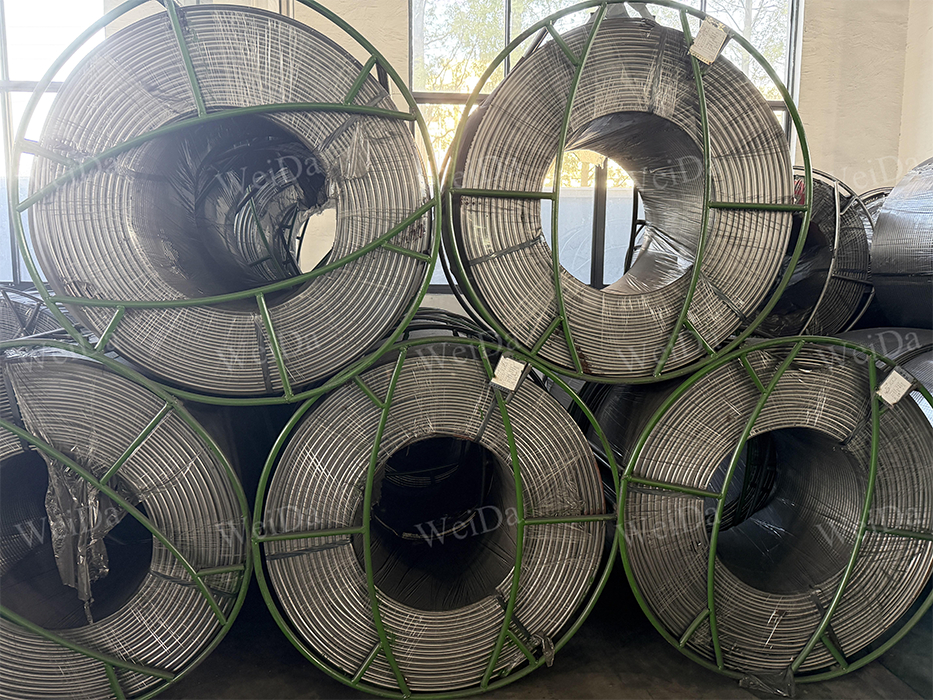
The Root Cause of Clogging: The "Netting" Effect of Al₂O₃
When aluminum is used for deoxidation, the resulting Al₂O₃ inclusions have several fatal characteristics: extremely high melting point (approximately 2050°C) , dendritic or clustered morphology, and poor wettability with molten steel. As these tiny inclusions flow through the continuous casting nozzle, they continuously adhere like "cotton wool" to the refractory surface of the nozzle. Over time, these adhered materials sinter, thicken, and eventually completely block the nozzle. This process is typically gradual: initially, you might only notice a slight decrease in casting speed; after a few hours, the nozzle clogging becomes severe enough to require replacement; in extreme cases, complete blockage can occur within tens of minutes.
Limitations of Traditional Countermeasures
Traditional countermeasures – such as changing nozzle materials, increasing argon sealing flow rate, or mechanical clearing – only address the symptoms, not the root cause. Changing nozzle materials (e.g., using ZrO₂-C nozzles) can slow the adhesion rate but cannot eliminate the adhesion tendency of Al₂O₃. Increasing argon flow can temporarily "blow away" adhered materials, but excessively large argon bubbles can exacerbate steel turbulence and even entrain mold flux into the steel, causing new defects. Mechanical clearing can only be performed after clogging has occurred, as a passive measure, not a prevention.
Our Solution: "Modifying" the Al₂O₃
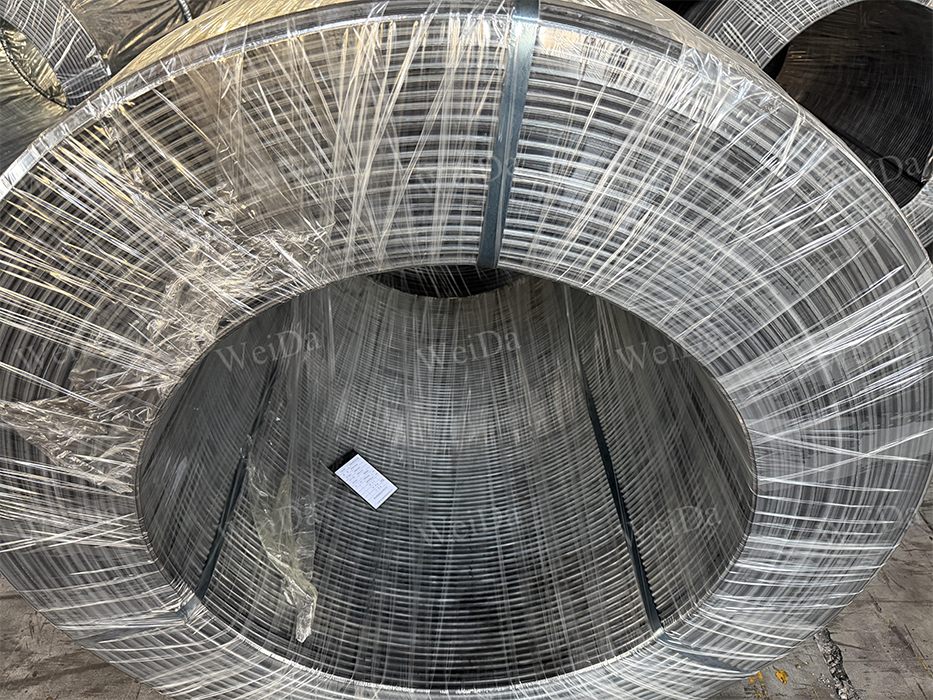
Wuxi WeiDa's core solution is calcium treatment modification technology. By feeding pure calcium wire (Ca-wire) or calcium iron wire (CaFe-wire) , we precisely inject metallic calcium deep into the molten steel after aluminum deoxidation. Calcium chemically reacts with Al₂O₃ to form a series of low-melting-point calcium aluminate complexes (e.g., 12CaO·7Al₂O₃, melting point approximately 1450°C). This "modification" process brings revolutionary changes:
1.Morphology spheroidization: The high-melting-point solid Al₂O₃ clusters transform into liquid, globular calcium aluminates. Globular inclusions do not easily aggregate or adhere.
2.Softening and removal: The liquid calcium aluminates more easily collide, agglomerate, grow, and rapidly float up into the ladle slag layer for absorption.
3.Improved fluidity: Molten steel that has been adequately calcium-treated shows greatly improved "castability," minimizing the risk of nozzle clogging.
The "Golden Window" of Calcium Treatment: Precision is Key
However, more calcium is not necessarily better. This is a "golden window" problem. With insufficient calcium, Al₂O₃ modification is incomplete, and the risk of nozzle clogging remains. With excess calcium, high-melting-point CaO·2Al₂O₃ or 3CaO·Al₂O₃ forms, and these inclusions can also clog the nozzle, even more difficult to handle than untreated Al₂O₃. Our technical team uses thermodynamic calculations based on your molten steel oxygen activity, aluminum content, and temperature to precisely calculate the theoretically required calcium amount. We recommend a stepwise addition strategy of "small, multiple additions, adding while monitoring" to precisely control the Ca/Al ratio within the optimal window of 0.08-0.15.
Beyond Clogging Prevention: Multiple Benefits of Calcium Treatment
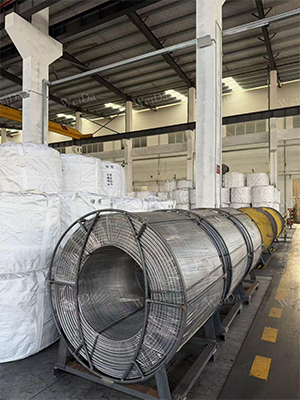
Wuxi WeiDa's precision calcium treatment solution brings benefits beyond just smooth continuous casting. First, it significantly enhances steel cleanliness. The damage to fatigue properties and isotropy of the steel from globular inclusions is far less than that from sharp, clustered Al₂O₃. Second, it improves the utilization rate of valuable alloys. Stable casting conditions mean less crop and tail scrap and higher metal yield. Third, it reduces production costs. Reducing nozzle change frequency, extending sequence casting lengths, and lowering argon consumption all translate directly into your profit.
Synergistic Optimization of Process Parameters
Beyond calcium treatment itself, the coordination of other process parameters is equally important. We recommend allowing 8-15 minutes of holding time after calcium treatment to allow the modified liquid calcium aluminate inclusions to fully float up. At the same time, use high-absorption-capacity tundish covering flux to ensure that floating inclusions are absorbed by the slag layer rather than returning to the steel. Furthermore, full protective casting is the foundation for preventing secondary oxidation of the steel and the generation of new Al₂O₃.
From "Frequent Nozzle Changes" to "Multi-Heat Continuous Casting"
If you are troubled by nozzle clogging in aluminum-killed steel, you no longer have to accept "frequent nozzle changes" as the norm. Wuxi WeiDa's precision calcium treatment solution has helped numerous customers achieve increased sequence casting heats from 5-8 to 15-20, more than double the nozzle life, and significantly improved surface quality of cold-rolled sheets.
If you wish to completely say goodbye to the nightmare of nozzle clogging in aluminum-killed steel and achieve stable, efficient, multi-heat continuous casting, please visit our website https://www.weidamaterials.com/ to obtain the complete solution for calcium treatment process optimization and aluminum-killed steel continuous casting technology.