

In the previous article, we discussed how to solve the nozzle clogging problem in aluminum-killed steel through precision calcium treatment. Today, we turn our attention to an area with extremely demanding performance requirements for steel: sour service pipeline steel. As global energy demand grows, oil and gas extraction is increasingly moving into sour environments containing high levels of hydrogen sulfide (H₂S). In such environments, steel faces a particularly dangerous failure mode: hydrogen-induced cracking (HIC) . HIC manifests as stepwise cracks within the steel. These cracks can occur without any external stress and cannot be completely detected by conventional non-destructive testing. Once they occur, they often lead to pipeline rupture and leakage, causing catastrophic accidents. How can you completely eliminate the risk of hydrogen-induced cracking in sour service pipeline steel and produce pipeline materials that can safely serve in harsh environments? Wuxi WeiDa Cored Wire Co.,Ltd provides a comprehensive solution based on sulfide morphology control, centerline segregation improvement, and ultra-high cleanliness steelmaking.
The Cause of Hydrogen-Induced Cracking: The "Trap Effect" of Sulfides
The mechanism of HIC is well understood. When steel is exposed to a wet environment containing H₂S, hydrogen atoms generated by corrosion reactions diffuse into the steel. When these hydrogen atoms encounter elongated MnS inclusions or hard, brittle oxide inclusions, they accumulate and combine at the interface between these inclusions and the steel matrix to form hydrogen molecules. Hydrogen molecules cannot diffuse through the steel and generate internal pressure at localized sites. When this pressure exceeds the strength limit of the steel, microcracks form. Multiple microcracks propagate at different levels and connect, eventually forming characteristic stepwise cracks. Therefore, the core of HIC control lies in two directions: eliminate or modify sulfide inclusions, and reduce the entry and accumulation of hydrogen atoms.
The Pain Points of Traditional Processes: Why is HIC Difficult to Eradicate?
Many pipeline steel producers face the following dilemmas when dealing with HIC requirements. First, simply reducing sulfur content is costly. Reducing sulfur content from 0.005% to below 0.001% requires significantly extending refining time and increasing desulfurizer consumption. Second, while calcium treatment can modify sulfides, it is difficult to operate. Insufficient calcium leads to incomplete MnS modification; excess calcium forms CaS, which can become a new crack source. Third, centerline segregation is difficult to eliminate. Carbon, phosphorus, and manganese segregation at the center of the continuous casting slab form hard phases such as martensite or bainite, which are also points for hydrogen. Fourth, HIC testing has a long cycle and high cost. A batch of samples requires 96 hours of immersion to obtain results; by the time problems are found, large quantities of non-compliant product have already been produced.
Our Solution: Sulfide Spheroidization + Centerline Segregation Improvement + Hydrogen Trap Control
Wuxi WeiDa Cored Wire Co.,Ltd has developed a technical solution covering the entire process for sour service pipeline steel.
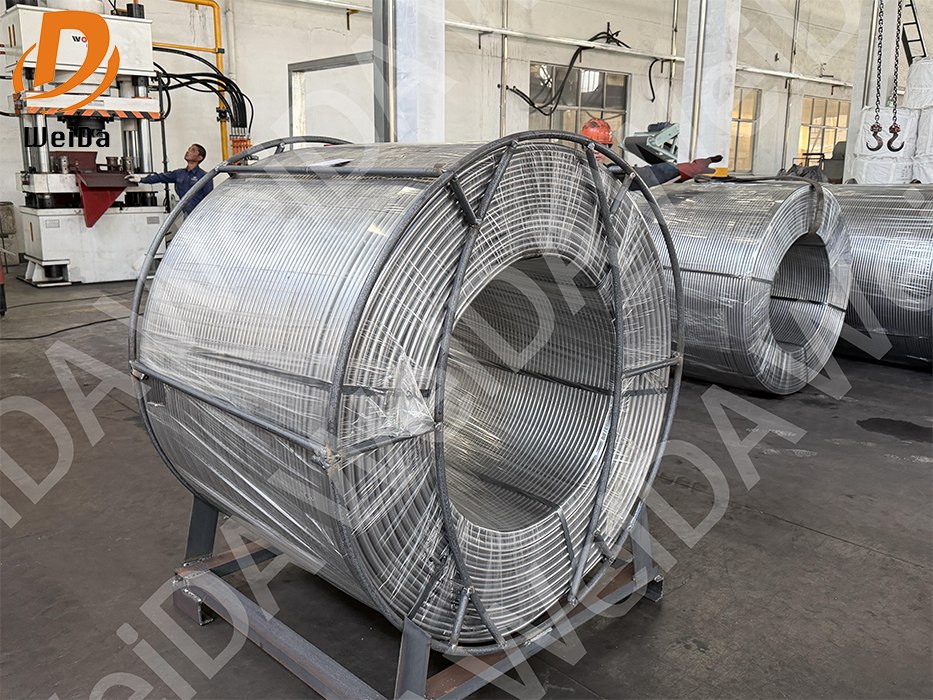
First, rare earth treatment: completely sulfide morphology. Compared to calcium treatment, rare earths (cerium, lanthanum) have a stronger ability to modify sulfides. The reaction products of rare earths with sulfur (RE₂S₃ or RE₂O₂S) are globular or short-rod-shaped and do not deform at all during rolling. Our rare earth cored wire, at very low addition levels (typically 20-50 ppm rare earths), can completely transform elongated MnS into globular rare earth sulfides, fundamentally eliminating the initiation sites for HIC. Research shows that rare earth treatment can reduce the HIC susceptibility of pipeline steel by over 80%.
Second, optimize the deoxidation process to control oxide inclusions. Hard, brittle Al₂O₃ and spinel inclusions are also points for hydrogen. We recommend a composite deoxidation process using calcium silicon barium cored wire or aluminum calcium composite wire to modify oxide inclusions into low-melting-point globular calcium aluminates. These globular inclusions are more easily removed during flotation.
Third, reduce centerline segregation to eliminate hard phases. Hard phases (martensite, bainite) formed by carbon, phosphorus, and manganese segregation at the center of the continuous casting slab are another important crack source for HIC. We assist in improving centerline segregation through the following methods:
•Soft reduction parameter optimization: Based on your slab cross-section and steel grade, recommend the optimal total reduction amount (typically 6-12mm) and reduction zone.
•Final electromagnetic stirring: Optimize the stirring intensity and frequency of F-EMS to expand the equiaxed crystal zone and reduce centerline segregation.
•Rare earth treatment assistance: Globular sulfides formed by rare earths can act as heterogeneous nucleation sites, promoting equiaxed crystal formation.
Fourth, ultra-low sulfur smelting process. For the most demanding sour service environments (e.g., NACE MR0175 requirements), sulfur content must be controlled below 0.001%. Our high-efficiency synthetic slag cored wire rapidly forms a high-basicity, low-oxidizing refining slag. Combined with strong deoxidation and argon stirring, we achieve stable control of sulfur content below 0.0008% .
Fifth, precise application of calcium treatment. Although rare earths are the preferred choice for modifying sulfides, calcium treatment is still necessary in some cases (e.g., for treating Al₂O₃ inclusions). Our precision calcium treatment technology controls the Ca/Al ratio within the optimal window of 0.08-0.15, ensuring the formation of globular calcium aluminates rather than high-melting-point CaS.
Process Validation and Quality Control
HIC performance is not "guessed" but "melted." We help customers establish a full-process quality traceability system, recording every step from hot metal pretreatment, converter end-point control, refining desulfurization, calcium/rare earth treatment, to continuous casting soft reduction. At the same time, we recommend implementing online HIC rapid prediction – by the sulfur content, inclusion rating, and degree of centerline segregation in the steel, HIC risk can be predicted before the 96-hour immersion test is complete.
From "High-Cost HIC Prevention" to "Low-Cost, High-Reliability"
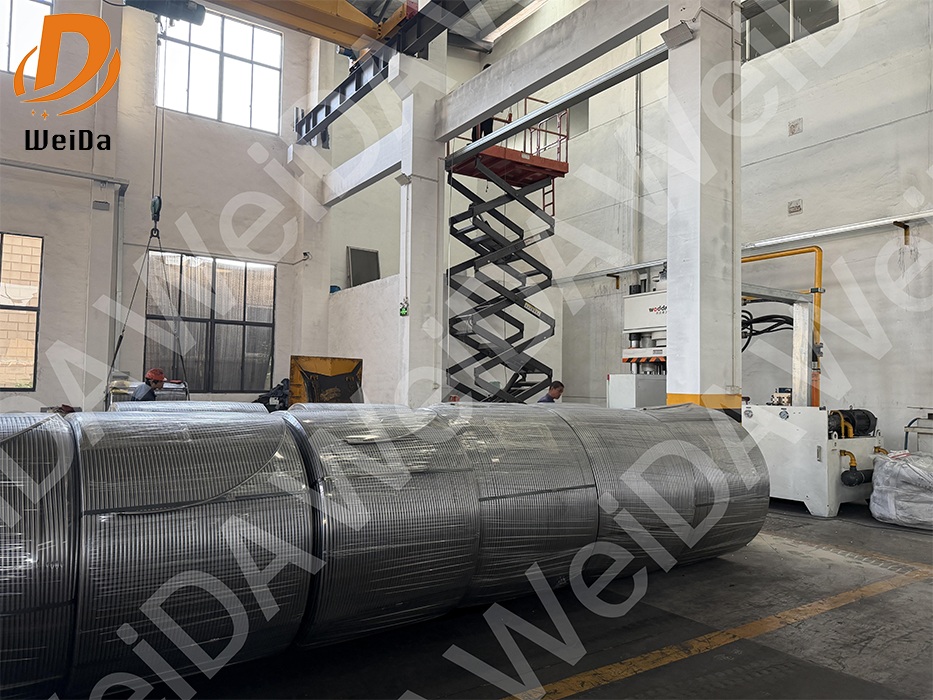
Producing sour service pipeline steel does not need to come at the cost of increased expenses. Wuxi WeiDa's full-process solution helps you achieve HIC performance pass rates close to 100% without significantly increasing steelmaking costs. Our customers have successfully produced pipeline steel meeting the sour service requirements of X65, X70, and even X80 grades, passing certifications from multiple domestic and international companies.
If you are producing or planning to develop sour service pipeline steel and wish to pass HIC performance tests on the first attempt, please visit our website https://www.weidamaterials.com/ to obtain the complete technical solution for rare earth treatment, sulfide morphology control, and HIC prevention.