

In the previous article, we discussed how to eliminate the risk of hydrogen-induced cracking in sour service pipeline steel through rare earth treatment and sulfide morphology control. Today, we focus on a practical challenge faced by all steel enterprises pursuing high quality: how to achieve ultra-low sulfur steelmaking within limited time. Controlling sulfur content below 0.005% has become standard for many high-end steel grades. For products such as submarine pipeline steel, high-grade bearing steel, nuclear power steel, and low-temperature vessel steel, sulfur content must be controlled below 0.001% or even 0.0005%. However, traditional deep desulfurization processes often require extending refining time by 30-60 minutes. This not only consumes significant amounts of electrical energy and refractories but also severely constrains the rhythm matching between steelmaking and continuous casting. How can you achieve stable ultra-low sulfur production without extending, or even while shortening, the refining cycle? Wuxi WeiDa Cored Wire Co.,Ltd provides a comprehensive solution based on rapid slag formation, high-efficiency desulfurizers, and kinetic intensification.
The "Time Trap" of Deep Desulfurization: Why Are Traditional Processes So Slow?
In the ladle refining furnace (LF), the desulfurization reaction is a typical slag-metal interface reaction: [S] + (O²⁻) → (S²⁻) + [O] . The rate of this reaction is constrained by three factors. First, slow slag formation speed. Traditional slag materials (lime, fluorspar, bauxite) are added to the ladle in lump or powder form. They require time to melt, diffuse, and mix with the molten steel to form a liquid slag with desulfurization capability. This process typically takes 10-20 minutes. Second, poor kinetic conditions. Even if a high-basicity slag is formed, if the contact area between slag and steel is insufficient and the interface renewal rate is too slow, the desulfurization reaction remains slow. Third, risk of sulfur reversion. When the sulfur content in the molten steel has already been reduced to very low levels, sulfur from the slag or refractories can diffuse back into the steel, leading to a tug-of-war of "desulfurization and reversion simultaneously."
Limitations of Traditional Countermeasures
To accelerate desulfurization, many enterprises take measures such as increasing slag basicity, increasing argon stirring intensity, and raising refining temperature. However, these measures all have side effects. Excessively high basicity makes the slag viscous, hindering the diffusion of the desulfurization product (CaS). Excessively strong argon stirring causes steel splashing and slag entrainment, and can even emulsify FeO from the slag into the steel, causing reoxidation. Excessively high temperatures increase energy consumption and accelerate refractory erosion.
Our Solution: Rapid Slag Formation and Kinetic Intensification
Wuxi WeiDa Cored Wire Co.,Ltd has redesigned the desulfurization process from the dimension of "time."
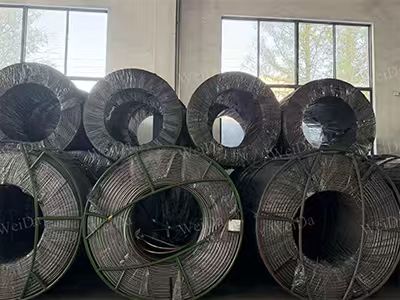
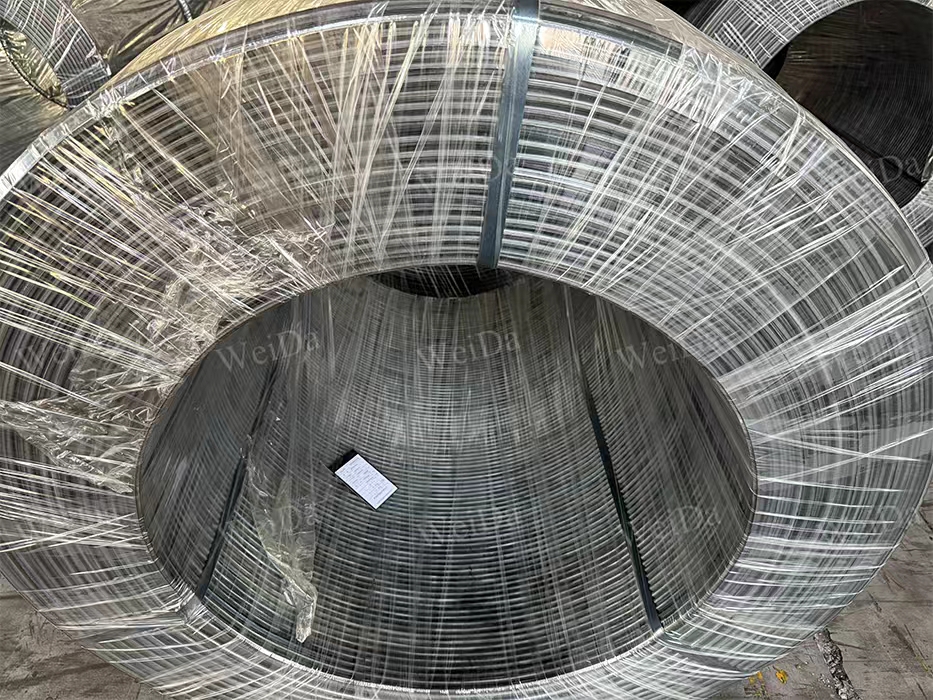
First, use pre-melted synthetic slag cored wire to achieve "second-level" slag formation. This is the most effective method for shortening desulfurization time. Traditional lime and fluorspar require 10-20 minutes to completely melt and form desulfurizing slag. Our pre-melted synthetic slag cored wire has already undergone pre-melting of components such as CaO, Al₂O₃, CaF₂, and MgO at the factory, forming a glassy material with uniform composition and a low melting point. When you inject it into the ladle via the wire feeder, it melts rapidly within 1-3 minutes, immediately forming a liquid refining slag with high desulfurization capability. This means you can save 10-15 minutes of slag formation waiting time.
Second, optimize the slag system design to increase sulfide capacity. A high-efficiency desulfurizing slag requires not only high basicity (CaO/SiO₂ > 4) but also appropriate Al₂O₃ and MgO contents. Our synthetic slag formulation precisely controls the composition point in the CaO-Al₂O₃-MgO ternary phase diagram, placing it in a region of low melting point, high fluidity, and high sulfide capacity. This allows the slag to absorb more CaS without becoming saturated, maintaining the desulfurization driving force.
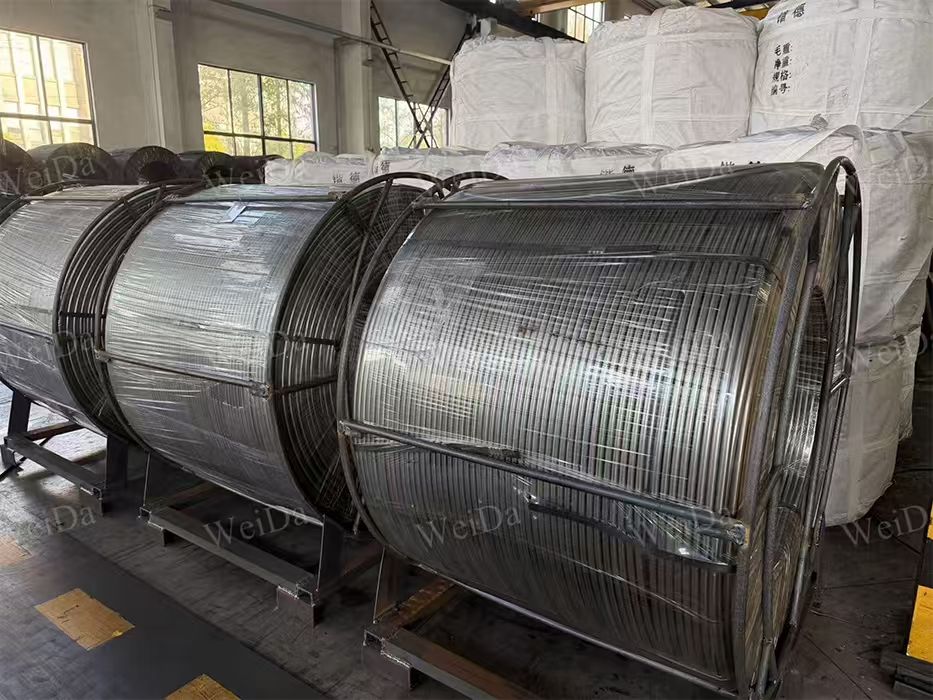
Third, precise calcium treatment to intensify desulfurization kinetics. Calcium is not only a tool for modifying inclusions but also a "catalyst" for desulfurization. In the late stage of refining, by feeding pure calcium wire or calcium iron wire, metallic calcium vaporizes deep in the molten steel, forming fine bubbles. The flotation process of these bubbles generates intense local stirring, significantly enhancing the renewal rate of the slag-steel interface. This "micro-stirring" effect is even more effective than simply increasing the argon flow rate for "macro-stirring," without causing splashing or slag entrainment. At the same time, the CaS generated by the reaction of calcium with sulfur is also absorbed by the slag.
Fourth, implement an "upfront desulfurization" strategy to reduce the LF burden. Moving the desulfurization task earlier can effectively shorten LF treatment time. We recommend:
•Hot metal pretreatment stage: Use our magnesium-based desulfurizer cored wire to rapidly reduce sulfur in the hot metal to below 0.005%. Magnesium-based desulfurizers react violently and are highly efficient, completing the process in 5-8 minutes.
•During converter/EAF tapping: Add desulfurizing synthetic slag cored wire with the steel stream during tapping, utilizing the strong stirring kinetic energy of tapping for pre-desulfurization.
Fifth, control sulfur reversion to consolidate desulfurization results. Once sulfur has been reduced below the target value, preventing reversion is equally important. We recommend:
•Use low-sulfur alloys and auxiliary materials: Especially lime, fluorspar, bauxite, etc., their sulfur content should be controlled below 0.03%.
•Control FeO content in the slag: FeO reacts with CaS to release sulfur. Through strong deoxidation, control FeO in the slag below 1%.
•Dedicated ladles for dedicated grades: For ultra-low sulfur steel grades, use dedicated ladles to avoid contamination from residual high-sulfur slag from the previous heat.
Quantifiable Benefits: Time is Money
After adopting Wuxi WeiDa's rapid desulfurization solution, numerous customers have achieved significant improvements: LF refining time reduced by 20-35 minutes, electric energy consumption per ton reduced by 15-25 kWh, refractory consumption reduced by 10-15%, while stably controlling sulfur content below 0.0008% . This means that without adding new equipment, the annual capacity of each refining furnace can be increased by 10-15% .
From "Slow and Steady" to "Fast and Good"
Traditional thinking holds that ultra-low sulfur steelmaking must be done "slowly." However, Wuxi WeiDa's technology proves that by using pre-melted slag for rapid formation, calcium treatment for kinetic intensification, and sharing the desulfurization load across multiple processes, "fast and good" ultra-low sulfur production is entirely achievable. You no longer have to choose between "productivity" and "quality."
If you are troubled by excessively long refining cycles or wish to increase the production capacity of ultra-low sulfur steels with your existing equipment, please visit our website https://www.weidamaterials.com/ to obtain the complete technical solution for rapid desulfurization and refining cycle optimization.