

In the previous article, we discussed how to reduce energy consumption in the ladle refining process. Today, we focus on an area with extremely demanding requirements for steel quality and solidification control: improving the internal quality of large forging ingots. Large forging ingots (used for generator rotors, large marine crankshafts, nuclear pressure vessels, heavy rolling mill rolls, etc.) range in weight from a few tons to several hundred tons. Due to their massive cross-sectional dimensions, solidification takes hours or even days, presenting challenges of severe segregation, porosity, shrinkage cavities, and non-metallic inclusions. If these internal defects are not effectively controlled, they directly lead to rejection of the forging during ultrasonic testing, causing huge economic losses. How can you systematically improve the internal quality of large forging ingots to ensure they withstand the demands of extreme service conditions? Wuxi WeiDa Cored Wire Co.,Ltd provides customized cored wire solutions for ingot mold metallurgy.
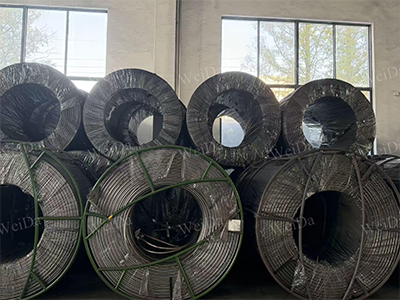
The Challenge of Large Forging Ingots: The "Price" of Slow Solidification
Due to their large heat capacity, large forging ingots lose heat extremely slowly. Unlike continuous casting slabs, forging ingots solidify layer by layer from the outside inward, without any mechanical or electromagnetic stirring to assist. This "static solidification" mode brings a series of problems. First, severe macrosegregation. Such as A-segregation (V-shaped) and V-segregation (inverted V-shaped). These segregation bands are difficult to eliminate during forging and directly lead to non-uniform properties in the forging. Second, center porosity and shrinkage cavities. Solidification shrinkage cannot be effectively compensated, leading to voids in the central region. Third, accumulation of large inclusions. Due to the long flotation path, large inclusions are easily captured by the solidification front, concentrating in the conical bottom or top of the ingot, becoming sources of inspection defects. Fourth, coarse as-cast structure. The slow cooling rate leads to extremely coarse grains, which require large reductions during subsequent forging to break up, increasing forging difficulty and energy consumption.
Limitations of Traditional Ingot Mold Metallurgy
Traditional production of large forging ingots often relies only on "experience" to control pouring speed and temperature, lacking effective intervention in the solidification process. Although some manufacturers use exothermic and insulating compounds to optimize riser feeding, there are very limited means to control segregation and inclusions within the ingot body. Traditional solutions – such as reducing pouring temperature and controlling pouring speed – while effective to some extent, have limited impact and reduce production efficiency.
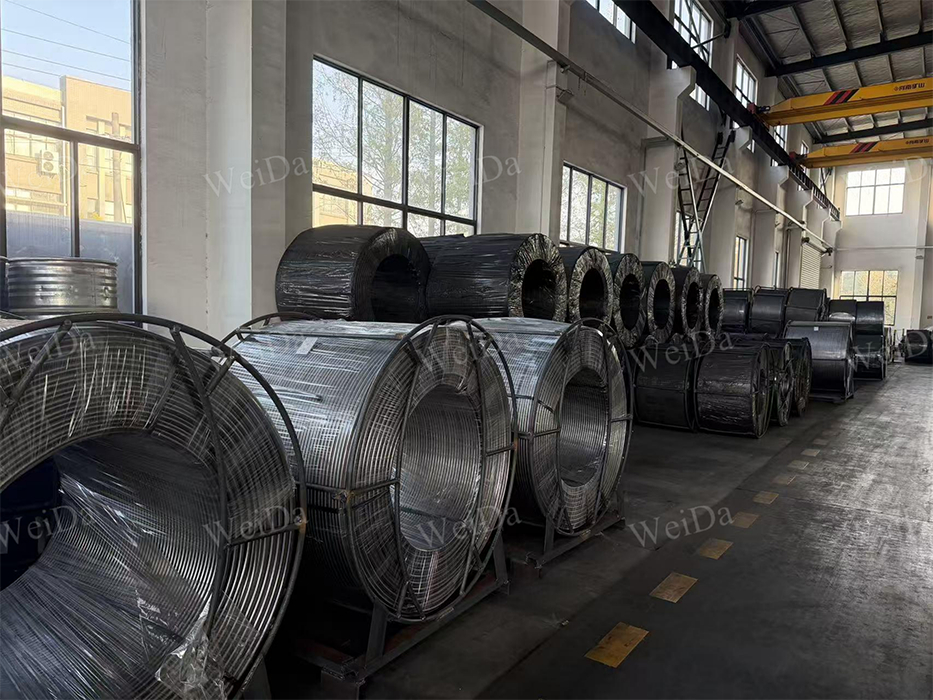
Our Solution: Precision Metallurgy Inside the Ingot Mold
Wuxi WeiDa Cored Wire Co.,Ltd has extended cored wire technology to the forging ingot sector. By feeding specific types of cored wires into the ingot mold during or after teeming, we can achieve "active intervention" in the solidification process.
First, rare earth treatment: modify inclusions and improve forging properties. This is one of the most effective means of improving the internal quality of large forging ingots. During teeming, by feeding rare earth cored wire (RE-wire) , rare earth elements (cerium, lanthanum, etc.) are uniformly introduced into the molten steel. Rare earths react with sulfur and oxygen, transforming elongated MnS and clustered Al₂O₃ into globular rare earth sulfides and rare earth oxysulfides. These globular inclusions do not deform during high-temperature forging, thereby completely eliminating the anisotropy caused by MnS. At the same time, rare earths can also react with hydrogen, reducing the risk of hydrogen-induced cracking. For alloy steel forgings such as Ni-Cr-Mo-V, rare earth treatment can significantly improve the transverse impact toughness and fatigue life of the forging.
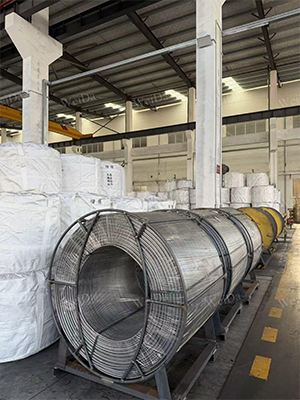
Second, add solidification nucleants to refine the as-cast structure. By feeding titanium, boron, and rare earth composite cored wires, a large number of dispersed, high-melting-point fine particles (e.g., TiN, TiC, rare earth oxides) are formed in the molten steel. These particles act as heterogeneous nucleation sites, significantly increasing the proportion of equiaxed crystals and refining grain size. The refined as-cast structure is more easily broken down and homogenized during subsequent forging, thereby improving the microstructure and mechanical properties of the forging. Research shows that after adding nucleants, the proportion of equiaxed crystals can increase from 20-30% to 50-70%.
Third, optimize riser feeding to reduce shrinkage cavity depth. For large ingots, the effectiveness of riser feeding directly determines the yield of the forging. We provide exothermic and insulating compound cored wires that can be fed into the riser area. These wires release exothermic and insulating compounds on the surface of the riser steel, delaying solidification of the riser steel, improving feeding efficiency, and reducing shrinkage cavity depth. At the same time, by feeding aluminum wire or calcium silicon wire for localized deoxidation, the fluidity of the steel in the riser can be improved, allowing it to better feed the ingot body.
Fourth, prevent secondary oxidation to reduce oxide film defects. The teeming time for large ingots is long (up to tens of minutes), and the molten steel is exposed to the atmosphere inside the ingot mold for an extended period. This leads to the formation of oxide films on the steel surface, which may be entrained into the ingot body in the later stages of teeming, becoming sources of surface cracks on the forging. We recommend continuously blowing argon into the ingot mold during teeming or feeding protective atmosphere-forming agents to isolate the air and prevent oxidation of the steel surface.
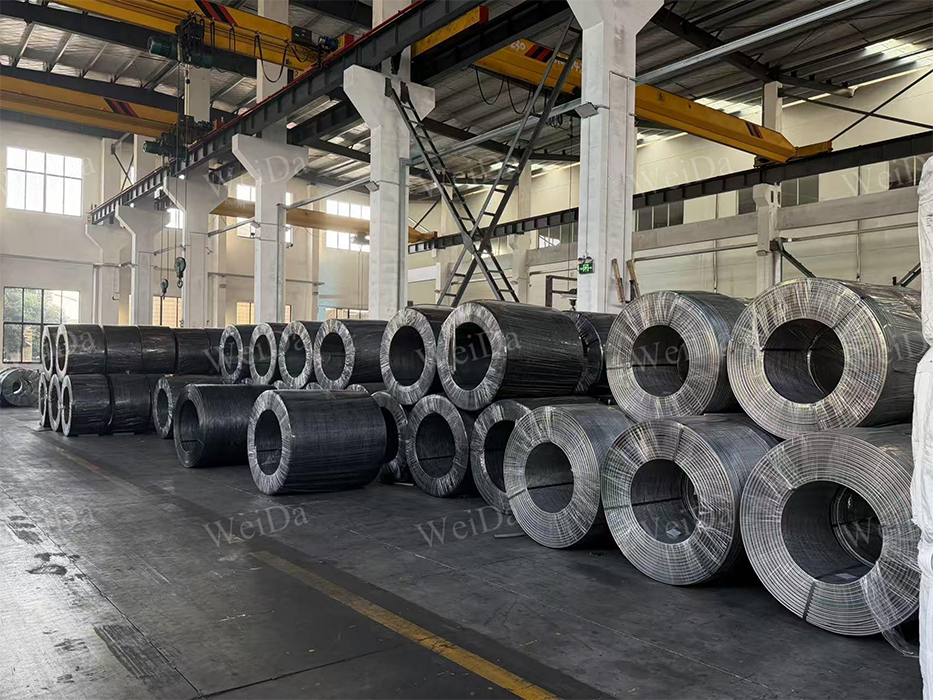
Synergistic Optimization of Process Parameters
The effectiveness of ingot mold metallurgy depends not only on the cored wire products but also on the pouring process. Wuxi WeiDa's technical team can assist you in optimizing the following parameters:
•Pouring temperature control: For large ingots, a superheat of 30-50°C is appropriate. Excessively high superheat extends solidification time and exacerbates segregation; excessively low superheat may cause nozzle freezing.
•Pouring speed control: Use a fast first, slow later pouring strategy. Pour rapidly in the initial stage to ensure the ingot body is filled, then slow down in the later stage to facilitate the flotation of gases and inclusions.
•Riser feeding practice: After pouring is complete, promptly add exothermic and insulating compounds to the riser to extend the feeding time.
Quantifiable Benefits: From "Scrap" to "Premium"
After adopting Wuxi WeiDa's ingot mold metallurgy solution, customers typically achieve: ultrasonic testing (UT) pass rate increased by 15-25% , center porosity and shrinkage cavity ratings reduced by 1-2 grades, transverse impact toughness improved by 30-50% , and forging yield increased by 10-15% . For high-value large forgings, this represents enormous economic benefits.
From "Leaving It to Chance" to "Active Control"
Traditional production of large forging ingots often carries a certain element of "luck." Even with strict control of pouring parameters, there is no guarantee that every ingot will pass inspection requirements. Wuxi WeiDa's ingot mold metallurgy technology allows you to actively intervene in the solidification process, transforming "leaving it to chance" into "precision control." Through the integrated three-pronged approach of rare earth modification of inclusions, nucleant refinement of structure, and optimized riser feeding, you can significantly improve the internal quality of large forging ingots.
If you are engaged in the production of large forgings and face challenges such as low UT pass rates, unstable properties, and low yield, please visit our website https://www.weidamaterials.com/ to obtain the complete solution for internal quality control of large forging ingots.