

In the previous article, we discussed how to improve steel cleanliness through deoxidation practice optimization. Today, we focus on another factor that significantly affects steel quality but is often overlooked: nitrogen pickup control during refining. Nitrogen is a common gaseous impurity in steel, and its behavior is more complex than oxygen. For most steel grades, nitrogen is harmful. It reduces steel toughness, promotes age hardening, and reacts with microalloying elements such as titanium, boron, and vanadium, weakening their intended effects. An increase in nitrogen content from 40ppm to 70ppm is sufficient to significantly deteriorate the formability of deep-drawing steels or reduce the low-temperature toughness of pipeline steels. However, during processes such as LF refining, ladle transfer, and continuous casting, molten steel readily absorbs nitrogen from the atmosphere. How can you effectively control nitrogen pickup during refining and stabilize steel nitrogen content within the target range? Wuxi WeiDa Cored Wire Co.,Ltd provides a comprehensive solution based on protective casting, slag surface control, and process optimization.
(Image placement suggestion: Comparison curve chart showing the effect of different nitrogen contents on steel impact toughness)
The Root Cause of Nitrogen Pickup: Ubiquitous "Nitrogen Sources"
Nitrogen in molten steel primarily comes from the atmosphere, not from raw materials. Unlike oxygen, nitrogen solubility in molten steel increases with temperature and precipitates sharply during solidification. During LF refining, electric arc heating ionizes the gas above the steel surface, increasing the nitrogen partial pressure and accelerating absorption. Steel exposure during ladle transfer and secondary oxidation during continuous casting are also pathways for nitrogen pickup. The harm of nitrogen pickup is cumulative – every 10ppm increase in nitrogen can reduce low-temperature impact energy by 10-20 Joules or lower grain coarsening temperature by 30-50°C.
Limitations of Traditional Nitrogen Control Methods
Traditional nitrogen control methods – such as reducing LF heating power and shortening ladle transfer time – while somewhat effective, often conflict with production efficiency. Increasing argon sealing flow can isolate air, but excessive argon flow causes steel temperature drop and increased slag entrapment risk. Using low-nitrogen alloys can reduce nitrogen introduction at the source, but the cost is high and the effect is limited.
Our Solution: Protection, Isolation, and Fixation
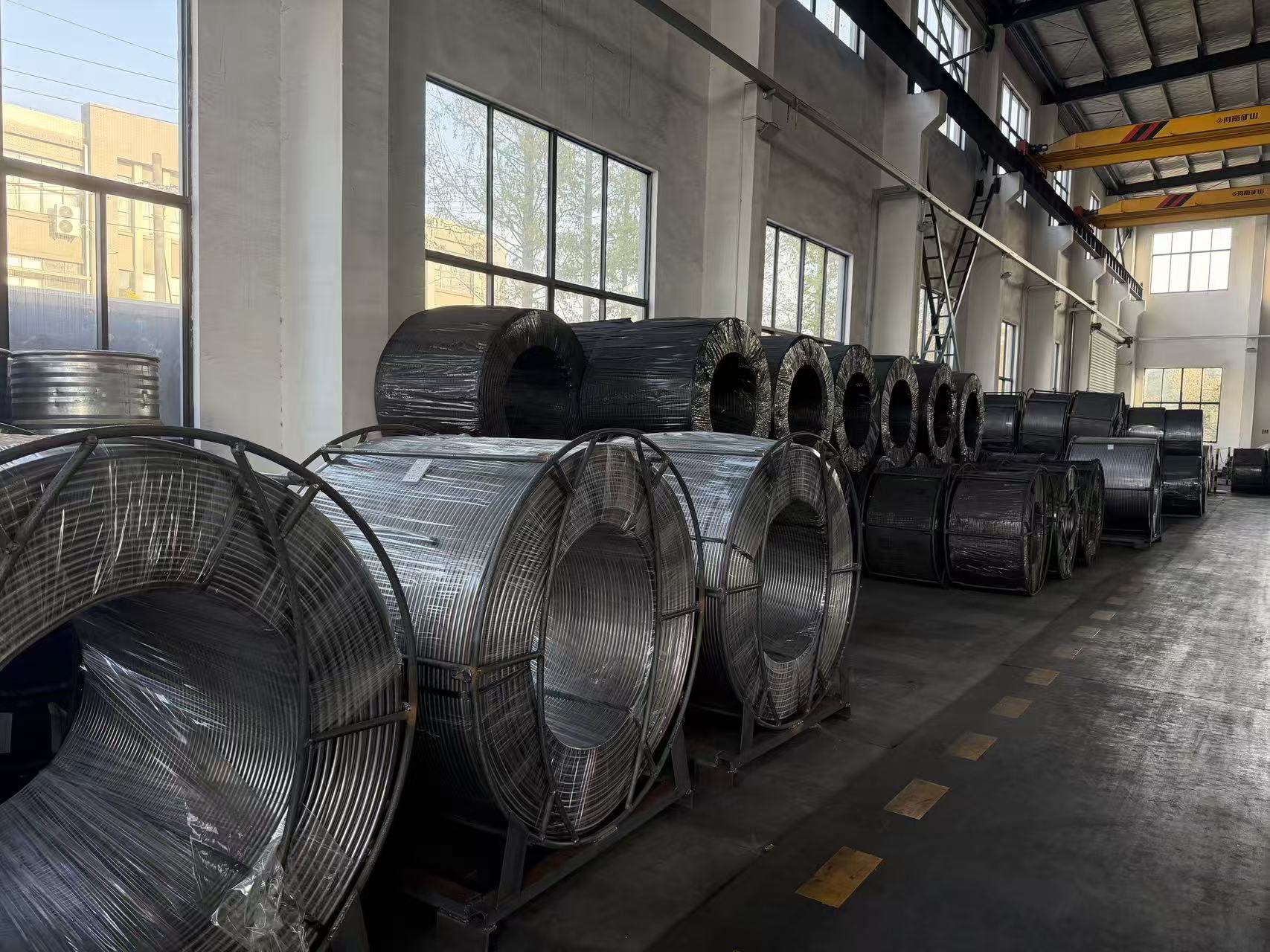
Wuxi WeiDa Cored Wire Co.,Ltd helps you control nitrogen pickup from three dimensions: "source blocking, process isolation, and chemical fixation."
First, strengthen protective casting to block the nitrogen source. This is the most direct and effective means of controlling nitrogen pickup. We recommend:
•Ladle long nozzle argon sealing: During teeming from ladle to tundish, use a long nozzle with argon injection for sealing to prevent molten steel from exposure to the atmosphere. Control argon flow at 50-150 liters/minute to ensure sealing effectiveness without causing slag entrapment.
•Tundish covering flux: Use high-basicity, low-SiO₂ tundish covering flux to form a dense protective layer on the tundish steel surface, isolating it from air. Control covering flux consumption at 0.4-0.8 kg per ton.
•Submerged entry nozzle protection: During mold casting, use submerged entry nozzles with argon sealing to prevent nitrogen pickup in the mold.
Second, optimize LF refining operations to reduce nitrogen absorption in the arc zone. Ionized nitrogen in the arc zone is the main source of nitrogen pickup during LF refining. We recommend:
•Control slag layer thickness: Maintain slag layer thickness at 40-60mm, using the slag layer as a "barrier" to reduce contact between molten steel and ionized gas.
•Use foaming agents: Add foaming agent cored wire to the slag surface to create foaming slag that further isolates the air.
•Shorten heating time: Through rapid slag formation and shortened refining cycles, reduce the time molten steel is exposed to the arc zone.
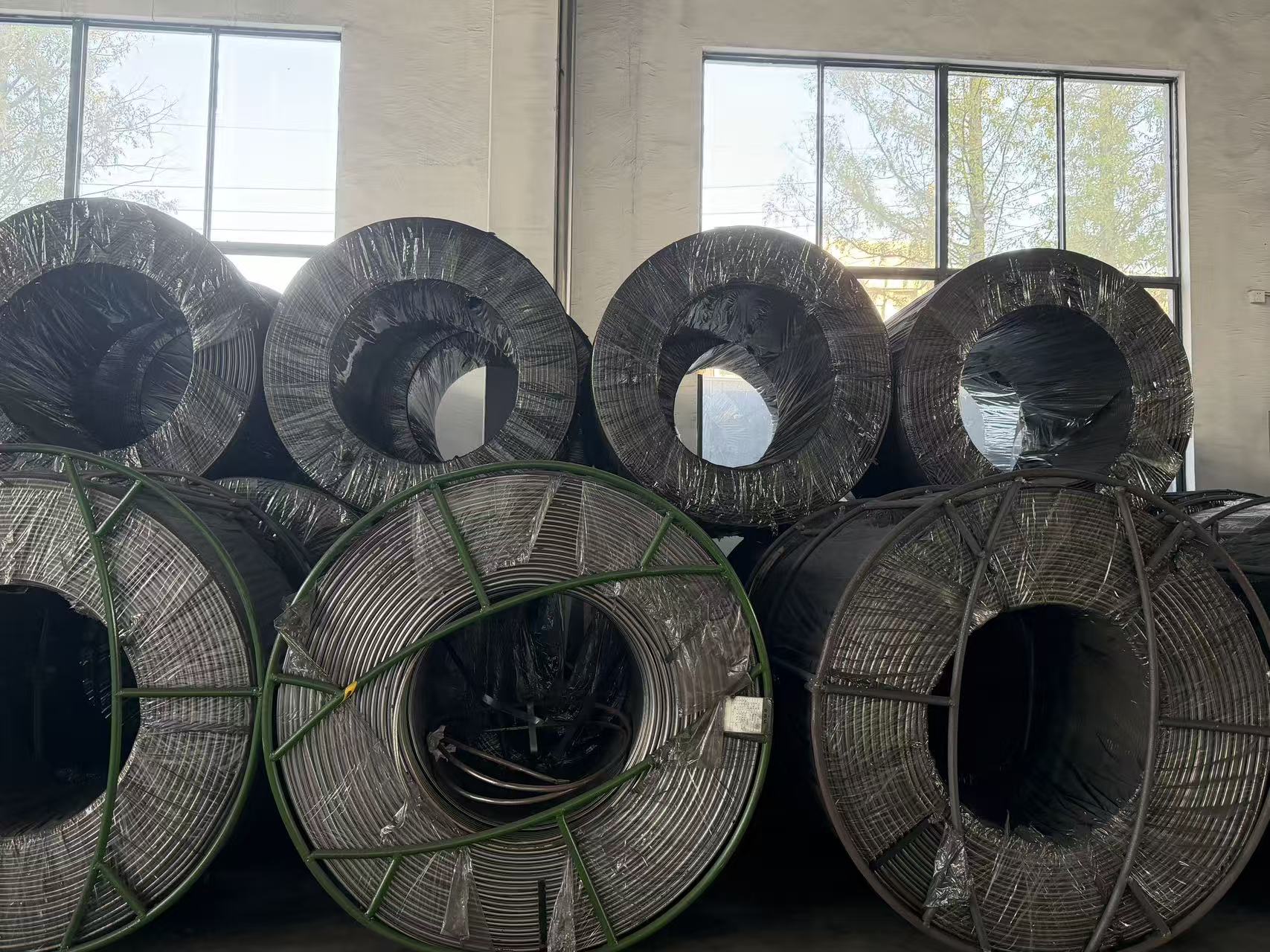
Third, use titanium for "chemical nitrogen fixation." When nitrogen in the steel is unavoidable, titanium can be added to "fix" it as TiN. TiN is a stable high-melting-point compound that does not precipitate during subsequent processing and does not harm properties. Our ferro titanium cored wire enables precise addition of titanium, with a target Ti/N ratio controlled at 3.4-5.0 (by weight). This is equivalent to using 5-10 kg of ferrotitanium to fix approximately 30-50ppm of nitrogen per ton of steel.
Fourth, strictly control nitrogen introduced through raw materials. For steel grades requiring extremely low nitrogen (such as nuclear-grade stainless steels and aerospace steels), nitrogen introduction through raw materials must be controlled. We recommend:
•Use low-nitrogen alloys: Choose ferroalloys such as ferrosilicon and ferromanganese with nitrogen content below 100ppm.
•Use DRI/HBI instead of scrap: Direct reduced iron has much lower nitrogen content (approximately 20-40ppm) than scrap (approximately 60-100ppm).
•Avoid nitrogen-containing carburizers.
Fifth, establish online prediction and monitoring of nitrogen content. Nitrogen content detection typically requires sampling and analysis, which takes time. We recommend establishing a nitrogen content prediction model based on process parameters – using heating time, argon flow rate, slag layer condition, and other parameters to predict nitrogen content trends in real-time and take timely intervention measures.
Quantifiable Benefits
After adopting Wuxi WeiDa's nitrogen control solution, customers typically achieve: nitrogen pickup in molten steel reduced from 15-25ppm to 5-10ppm, nitrogen content pass rate improved from 85% to over 95% , r-value of deep-drawing steels improved by 5-10% , and -40°C impact energy of pipeline steels increased by 15-25 Joules.
From "Passive Acceptance" to "Active Control"
Nitrogen pickup is a common problem during refining, but it is not uncontrollable. Wuxi WeiDa's nitrogen control solution, through the synergy of protective casting, slag surface control, chemical nitrogen fixation, and raw material management, enables you to transition from "passively accepting nitrogen pickup" to "actively controlling nitrogen content."
If you are troubled by excessive nitrogen content in molten steel or performance fluctuations caused by nitrogen, please visit our website https://www.weidamaterials.com/ to obtain the complete solution for nitrogen pickup control during refining.