

In the previous article, we discussed how to control nitrogen pickup during the refining process. Today, we focus on a key internal defect in continuous casting slabs that affects the density and mechanical properties of final products: centerline porosity. Centerline porosity refers to the presence of tiny pores in the central region of the slab. If these pores cannot be welded shut during subsequent rolling, they directly lead to lamination in steel plates, leakage in seamless tubes, and center cracks in bars, severely affecting the impact toughness, fatigue life, and hydrogen-induced cracking resistance of the product. For products such as heavy plates, pipeline steel, seamless tube rounds, and forging blooms, the control level of centerline porosity directly determines whether the product can pass stringent quality certifications. How can you effectively eliminate or reduce centerline porosity during continuous casting to improve the internal density of the slab? Wuxi WeiDa Cored Wire Co.,Ltd provides a comprehensive solution based on solidification end optimization, dynamic soft reduction, and microalloying.
The Formation Mechanism of Centerline Porosity: The "Final Trap" of Solidification Shrinkage
The formation of centerline porosity is closely related to the solidification process of the slab. As the slab solidifies layer by layer from the surface toward the center, the remaining liquid phase at the center undergoes solidification shrinkage in the final stage. If there is insufficient liquid phase to compensate for this shrinkage, tiny pores form in the central region. The severity of centerline porosity depends on four factors. First, solidification rate. Slower solidification rates lead to more developed dendrites and greater likelihood of "bridging," hindering feeding channels. Second, steel superheat. Higher superheat results in longer solidification time and more severe porosity. Third, slab cross-sectional size. Larger cross-sections have longer solidification times and greater porosity tendency. Fourth, steel grade characteristics. High carbon steels and alloy steels have wider solidification ranges and are more prone to porosity. Centerline porosity and centerline segregation often appear as "twins." The presence of porosity provides "accumulation" space for enriched solutes, and the low-melting-point phases caused by segregation affect feeding, further worsening porosity.
Limitations of Traditional Methods
Traditional methods for reducing centerline porosity – such as reducing superheat and increasing secondary cooling intensity – while effective, impact production efficiency and slab surface quality. Electromagnetic stirring can expand the equiaxed crystal zone, but stirring parameters require fine optimization for specific steel grades and cross-sections. Soft reduction technology is currently the most effective means, but if the reduction amount and reduction zone are not properly controlled, the effect is limited and may even have negative consequences.
Our Solution: Synergy of Electromagnetic Stirring, Soft Reduction, and Microalloying
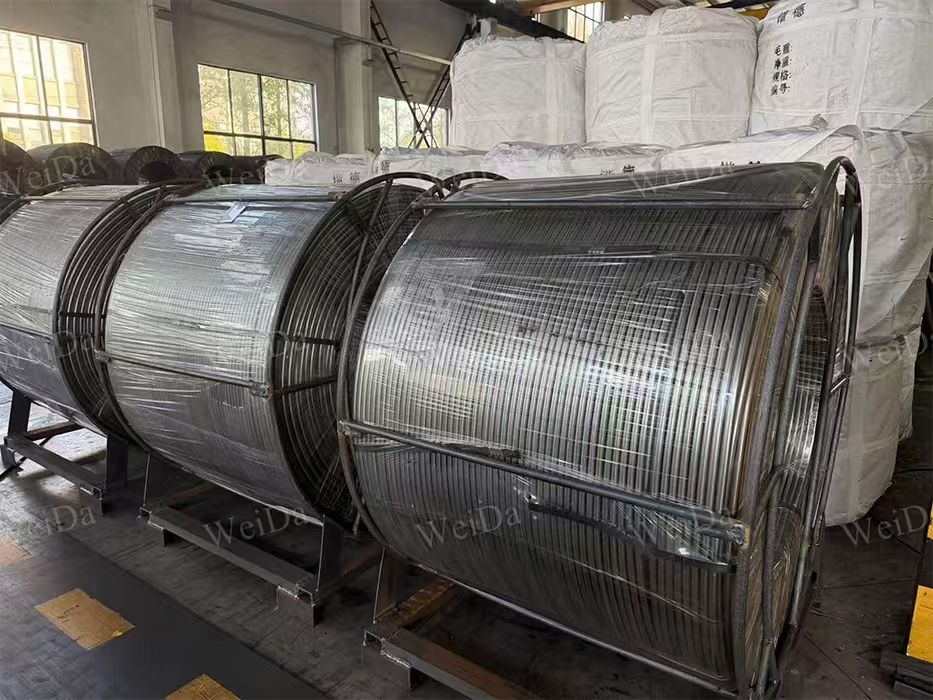
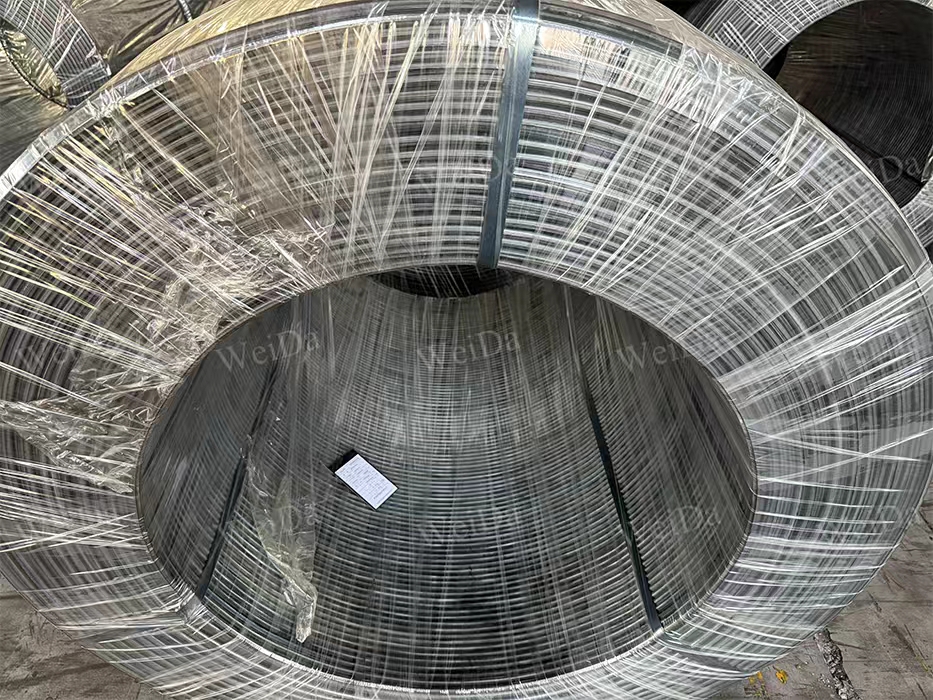
Wuxi WeiDa Cored Wire Co.,Ltd, although not a manufacturer of continuous casting equipment, leverages its deep understanding of metallurgical processes to help you maximize the effectiveness of your existing equipment and provide auxiliary optimization through cored wire technology.
First, optimize electromagnetic stirring parameters to expand the equiaxed crystal zone. Mold electromagnetic stirring (M-EMS) and final electromagnetic stirring (F-EMS) are core methods for reducing centerline porosity. M-EMS generates a horizontal rotating flow field in the mold, breaking up columnar crystals and forming more equiaxed crystal nuclei. F-EMS enhances stirring at the solidification end, homogenizing the central composition and promoting feeding. We recommend, based on your slab cross-section and steel grade, controlling the M-EMS stirring intensity at 200-400A, frequency 2-5Hz; and the F-EMS stirring intensity at 100-300A, frequency 3-7Hz.
Second, implement dynamic soft reduction technology. Applying reduction force at the solidification end of the slab (in the region with solid fraction 0.6-0.9) can mechanically close already-formed porosity while simultaneously "pushing back" enriched solutes in the central region into the liquid phase, improving segregation. We recommend controlling the total reduction amount between 6-12mm based on the steel grade and cross-section. For high-carbon and alloy steels, due to their wide solidification ranges, the reduction zone should be appropriately extended to ensure reduction is applied at the optimal time.
Third, reduce steel superheat. Superheat is a fundamental factor affecting centerline porosity. For most steel grades, we recommend controlling the tundish steel superheat at 15-25°C. For every 10°C reduction in superheat, the proportion of equiaxed crystals can increase by 5-10%, solidification time shortens, and porosity tendency decreases. Our tundish heating technology and nozzle clogging prevention measures can help you achieve stable casting at low superheat.
Fourth, optimize composition through cored wire technology to promote equiaxed crystal formation. This is a unique advantage of Wuxi WeiDa.
•Rare earth treatment: Globular rare earth sulfides formed by rare earths (cerium, lanthanum) can act as heterogeneous nucleation sites, promoting equiaxed crystal formation. Recommended addition: 20-50 grams per ton of steel.
•Titanium microalloying: TiN particles (size 1-3 microns) formed by the reaction of titanium with nitrogen are highly efficient nucleation sites. By feeding ferro titanium cored wire and controlling titanium content at 0.01%-0.03%, the equiaxed crystal zone can be significantly expanded.
•Boron microalloying: Trace amounts of boron (0.001%-0.003% ) can refine the solidification structure, but must be combined with titanium to prevent BN formation.
Fifth, optimize the secondary cooling regime. An inappropriate secondary cooling regime can cause repeated reheating of the slab surface (temperature recovery), exacerbating centerline porosity. We provide optimization services for dynamic secondary cooling models, adjusting water spray rates in different cooling zones in real-time based on your casting speed and steel grade, ensuring uniform slab temperature decrease and avoiding temperature recovery.
Quantifiable Benefits
After adopting Wuxi WeiDa's comprehensive solution, customers typically achieve: centerline porosity rating reduced from 1.5-2.0 to 0.5-1.0 (according to YB/T 4003 standard), ultrasonic testing pass rate improved by 15-20% , Z-direction reduction of area for heavy plates improved by 10-15% , and hydraulic burst test pass rate for seamless tubes significantly improved.
From "Passive Acceptance" to "Active Control"
Centerline porosity is a phenomenon that cannot be completely avoided during continuous casting, but it can be controlled at very low levels. Wuxi WeiDa's systematic solution – electromagnetic stirring optimization, precise dynamic soft reduction control, superheat management, and microalloying assistance – enables you to transition from "passively accepting porosity" to "actively controlling density."
If you are troubled by product quality issues caused by centerline porosity in continuous casting slabs, or wish to improve the internal quality of heavy plates, pipeline steel, or seamless tube rounds, please visit our website https://www.weidamaterials.com/ to obtain the complete solution for centerline porosity control.