

In the previous article, we discussed how to optimize LF heating for energy-efficient refining. Today, we focus on a challenge that is becoming increasingly prominent with the growing popularity of high-aluminum steels (such as TRIP steel and TWIP steel) in continuous casting: submerged entry nozzle (SEN) clogging. High-aluminum steels contain 1-3% aluminum. The active aluminum in the molten steel reacts with SiO₂ in the mold flux, generating large quantities of Al₂O₃ inclusions that accumulate on the SEN inner wall and cause clogging. How can you effectively prevent SEN clogging to achieve stable multi-heat continuous casting? Wuxi WeiDa Cored Wire Co.,Ltd provides a comprehensive solution based on silica-free mold flux, nozzle anti-clogging coatings, and calcium treatment.
Clogging Mechanism: A Chemical Reaction
In high-aluminum steel casting, the root cause of clogging is: 4Al + 3SiO₂ → 2Al₂O₃ + 3Si. This reaction causes mold flux degradation, viscosity increase, and liquid slag layer disruption. Simultaneously, Al₂O₃ is generated in large quantities and deposits on the nozzle inner wall, eventually leading to complete clogging. Traditional measures such as reducing casting speed, changing SEN materials, and increasing argon purging provide only temporary relief and cannot solve the fundamental problem.
Our Solution
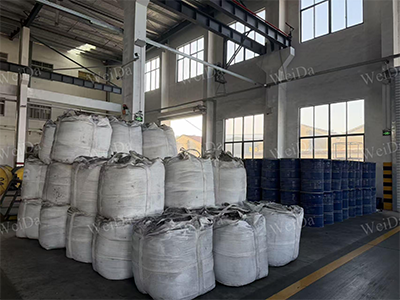
First, silica-free mold flux to cut the reaction at the source. Our CaO-Al₂O₃ system silica-free mold flux (SiO₂<1%) completely eliminates the material basis for the aluminum-silicon reaction. Melting point: 1050-1150°C, viscosity: 0.8-1.2 poise. The flux has stable properties and does not react with high-aluminum steel.
Second, SEN anti-clogging coating. Apply a CaO-ZrO₂ system or BN system coating on the inner wall to reduce Al₂O₃ adhesion. Even if deposition occurs, it is easily flushed away by the steel flow.
Third, micro-calcium treatment. Control the Ca/Al ratio at 0.06-0.10 (lower than for steel grades) to modify Al₂O₃ into liquid globular calcium aluminates at the minimum dose, avoiding the formation of high-melting-point calcium aluminates.
Fourth, optimize SEN design. Port angle: 20-25° downward, immersion depth: 140-180mm, argon flow rate: 3-6 L/min – balancing clogging prevention with slag entrapment prevention.
Fifth, enhance tundish metallurgy. Use weirs and dams to optimize the flow field, extending residence time to promote Al₂O₃ flotation. Use high-absorption covering flux to ensure inclusions are absorbed.
Benefits
After implementation, customers typically achieve: SEN service life extended by 2-3 times, sequence casting heats increased from 3-5 to 12-15, casting speed restored to normal levels, and Al₂O₃ inclusion rating reduced by 1-2 grades.
From "Frequent Nozzle Changes" to "Stable Multi-Heat Continuous Casting"
Through the three-pronged solution of silica-free flux + SEN coating + micro-calcium treatment, you can transition from the reactive approach of frequent nozzle changes to the proactive control of stable multi-heat continuous casting.
If you are troubled by SEN clogging in high-aluminum steel and low sequence casting heats, please visit https://www.weidamaterials.com/ to obtain the complete solution.