

In the previous article, we explored "How Do the Key Technologies of Cored Wire Directly Impact Your Casting Quality?"(https://www.weidamaterials.com/show-18-1245.html), discussing how core wire technology directly affects casting quality. This article will focus on a more specific application challenge: under harsh conditions of high impact and high wear, how can high manganese steel components overcome their weaknesses of low initial hardness and susceptibility to early deformation and wear? We will delve into the application research of Yttrium Rare Earth Composite Multi-Alloy Modifying Cored Wire, revealing how it significantly enhances the work hardening capacity and wear resistance of high manganese steel.
Application Challenges of High Manganese Steel and the Potential of Rare Earth Modification
High manganese steel is widely used to manufacture key components subject to severe impact and abrasion, such as bucket teeth, liner plates, and track shoes, due to its excellent impact hardening characteristics. However, its initial strength and hardness are relatively low, making it prone to plastic deformation and significant wear during the early stages of service, which affects equipment efficiency and increases replacement frequency. Traditional processes often encounter bottlenecks in improving its overall performance. Research indicates that rare earth elements, particularly yttrium-based heavy rare earths, can effectively purify molten steel, refine grains, and improve carbide morphology. However, efficiently and stably adding rare earths to molten steel has always been an industry challenge. Wuxi WeiDa Cored Wire Co., Ltd. provides an efficient and stable solution to this problem through innovative cored wire feeding technology, which manufactures rare earth alloys into cored wire.
Experimental Insights: How Yttrium-Based Heavy Rare Earths Alter Steel Microstructure and Properties
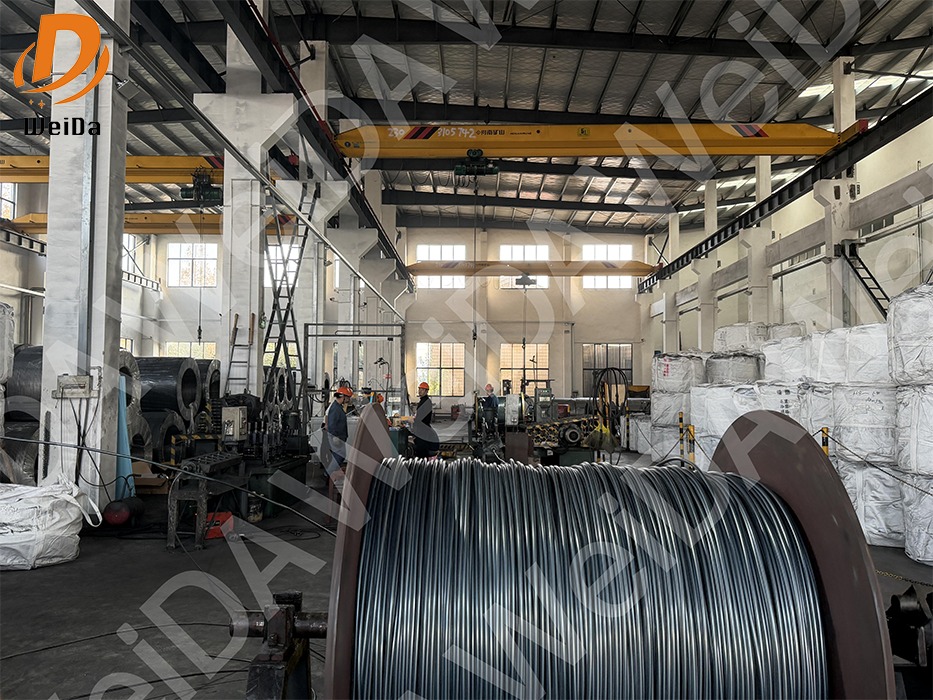
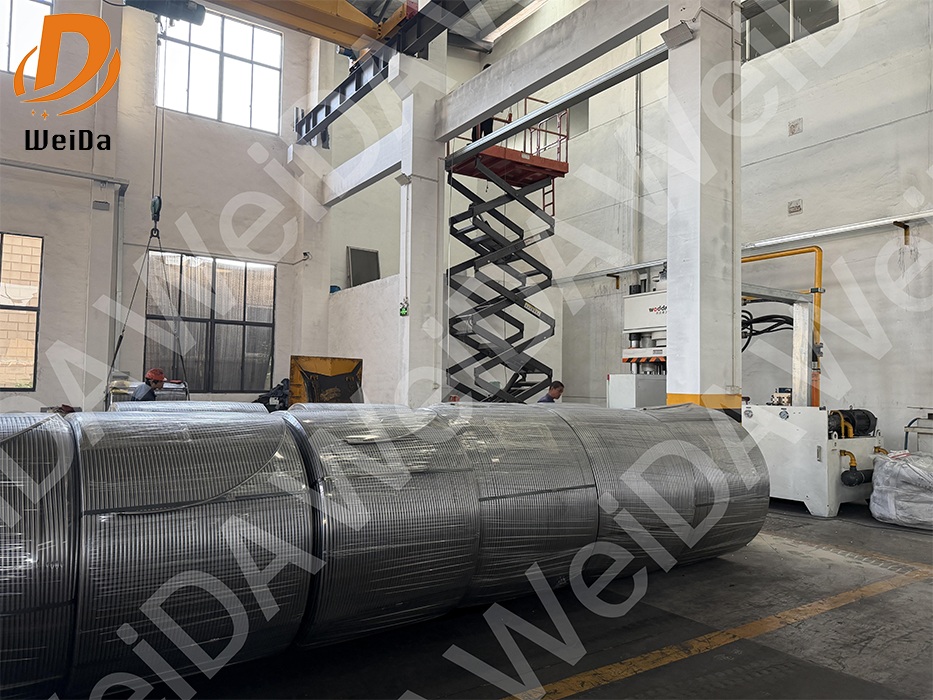
This study utilized Φ13mm Yttrium Rare Earth Composite Multi-Alloy Modifying Cored Wire produced by Wuxi WeiDa Cored Wire Co., Ltd. to modify high manganese steel via a precisely controlled wire feeding process. The core of the study was to compare the effects of light rare earths and yttrium-based heavy rare earths.
Significant Optimization of Metallographic Structure
In the as-cast structure without rare earth addition, grain boundaries are covered with coarse network carbides, and inclusion sizes can reach up to 40μm, severely fracturing the matrix. After adding ordinary light rare earths, inclusions are spheroidized and refined. With the addition of yttrium-based heavy rare earth composite modifying wire, the changes are even more profound: the network carbides at grain boundaries are significantly reduced, and carbides and fine inclusions are uniformly dispersed as particles within the grains. These fine rare earth oxysulfides act as heterogeneous nucleation sites, refining the austenite grains and improving the grain size rating by several levels.
Positive Impact on Mechanical Properties and Fracture Morphology
Although modification treatment results in moderate improvements in impact toughness and initial hardness, the enhancement in plasticity is particularly outstanding. Samples treated with yttrium rare earth modifying wire show a significant increase in elongation compared to untreated samples. Fracture analysis reveals that untreated samples exhibit brittle cleavage characteristics, while samples with yttrium rare earth addition show numerous deep dimples, presenting a tougher quasi-cleavage + dimple morphology. This indicates the material can absorb more energy before fracture.
Leap in Wear Resistance: Work Hardening Capacity is the Key
The wear resistance of high manganese steel essentially relies on its ability to rapidly harden the surface layer under impact. Wear test data from this study reveals key findings:
•Light rare earth modification improved the wear resistance of samples by 10%~20% compared to untreated samples.
•Samples treated with Yttrium Rare Earth Composite Multi-Alloy Modifying Wire showed a further substantial increase in wear resistance—20% to 30% higher—than samples treated with ordinary rare earths.
This leap is attributed to the significant enhancement of the work hardening capacity of high manganese steel by yttrium rare earths. Yttrium elements segregate at grain boundaries, making it easier to induce twinning and dislocation multiplication under external impact, and strongly promoting the transformation of surface austenite into hard martensite. Post-wear hardness tests indicate that samples treated with yttrium rare earths develop a thicker and harder surface hardened layer, thereby demonstrating superior wear resistance in practical applications.
Core Advantages of the Wuxi WeiDa Cored Wire Solution
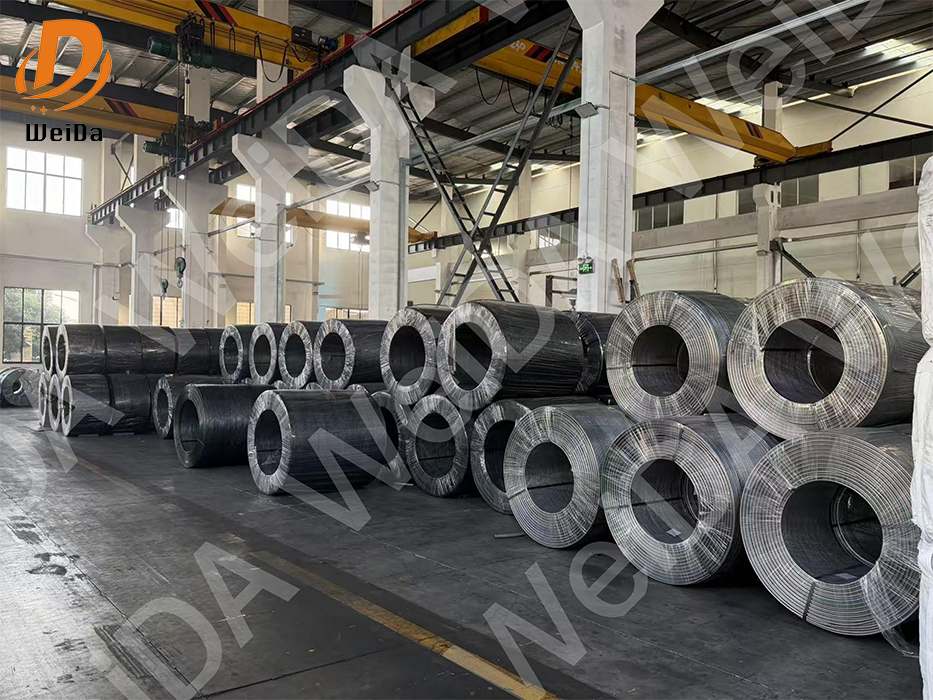
Addressing the process challenges of improving high manganese steel performance, the Rare Earth Alloy Cored Wire Feeding Process from Wuxi WeiDa Cored Wire Co., Ltd. offers a direct and efficient solution:
•Precision, Efficiency, and Stable Yield: Utilizing a wire feeder for ladle wire feeding treatment delivers active elements deep into the molten steel for reaction, significantly reducing the burn-off of rare earth elements. This ensures stable rare earth recovery rates and reproducible modification effects, avoiding the composition fluctuations common with traditional addition methods.
•Profound Effects and Comprehensive Performance Improvement: Our Yttrium-Based Heavy Rare Earth Composite Multi-Alloy Modifying Wire not only purifies molten steel and refines grains, but also fundamentally alters the morphology and distribution of carbides and inclusions, strengthens the matrix, and significantly enhances work hardening potential, directly targeting the core issue of early wear in high manganese steel.
•Simple Operation and Controllable Quality: The wire feeding process is highly automated, reducing human factor interference. This makes the molten steel modification treatment process more controllable and better suited for quality control requirements in modern foundry production lines.
Conclusion
In summary, treating high manganese steel with the advanced Yttrium Rare Earth Composite Multi-Alloy Modifying Cored Wire and wire feeding process from Wuxi WeiDa Cored Wire Co., Ltd. achieves comprehensive effects including grain refinement, microstructure purification, and carbide spheroidization. Most importantly, it significantly activates the work hardening capacity of high manganese steel, resulting in a substantial wear resistance improvement of up to 20%-30%. This effectively addresses the industry-wide problem of severe initial wear in high manganese steel components. This is not merely a material improvement but a reliable enhancement of the casting process through cored wire technology.
To learn more about how High Manganese Steel Modification Treatment, Rare Earth Cored Wire, and Wire Feeding Technology can bring breakthrough performance to your wear-resistant castings, visit the Wuxi WeiDa Cored Wire Co., Ltd. website at https://www.weidamaterials.com/ for professional solutions.