

In the previous discussion on "How to Truly Stabilize Sulfur Content Control in Steel," we highlighted the key role of wire feeding technology. Today, we delve deeper into this process itself. Faced with increasingly stringent steel composition requirements and fierce cost competition, traditional alloy addition methods—such as direct pouring or blowing alloy powders—are revealing more and more limitations: insufficient composition control precision, severe alloy burn-off, poor production environment, and high labor intensity. How to achieve precise, efficient, and clean alloy trimming is a practical challenge for every metallurgical engineer. Wuxi WeiDa Cored Wire Co., Ltd. firmly believes that the wire feeding process is the modern answer to these challenges.
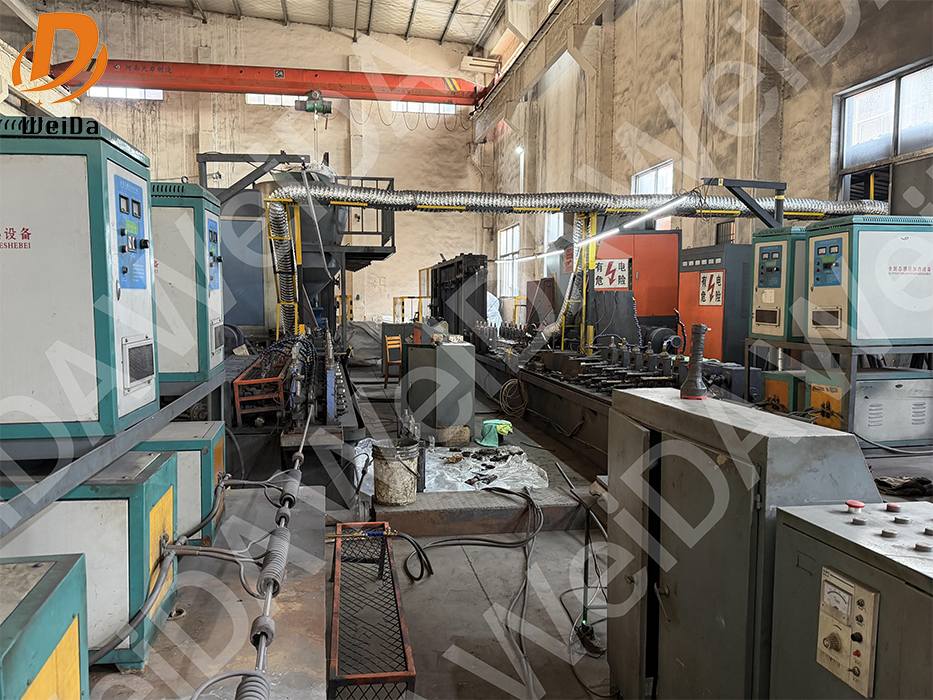
The "Gray Area" of Traditional Alloy Addition
Adding lump or powdered alloys directly into the ladle or furnace seems simple but is actually full of uncertainty. The yield of alloys is affected by various factors such as molten steel temperature, oxidation level, and stirring intensity, leading to significant batch-to-batch variations and final compositions often "hovering" around the standard line. To ensure composition meets standards, companies often have to adopt the conservative strategy of "over-addition," which directly causes waste of expensive alloying elements. Meanwhile, dust and splashing not only worsen the working environment but also pose safety and metal loss problems.
Wire Feeding Process: Opening the Door to Precision Metallurgy
The complete cored wire wire feeding solution provided by Wuxi WeiDa is designed to end this "fuzzy" state. We encapsulate various deoxidizers (like silicon calcium, aluminum calcium), alloying agents (like ferro titanium, ferro boron), modifiers (like rare earth, tellurium), or pure metals (like calcium, magnesium) that customers need, with precise weight and ratio, into steel strips to produce "wires" of various diameters. These are then injected into the molten steel via high-performance wire feeders at preset speeds and depths.
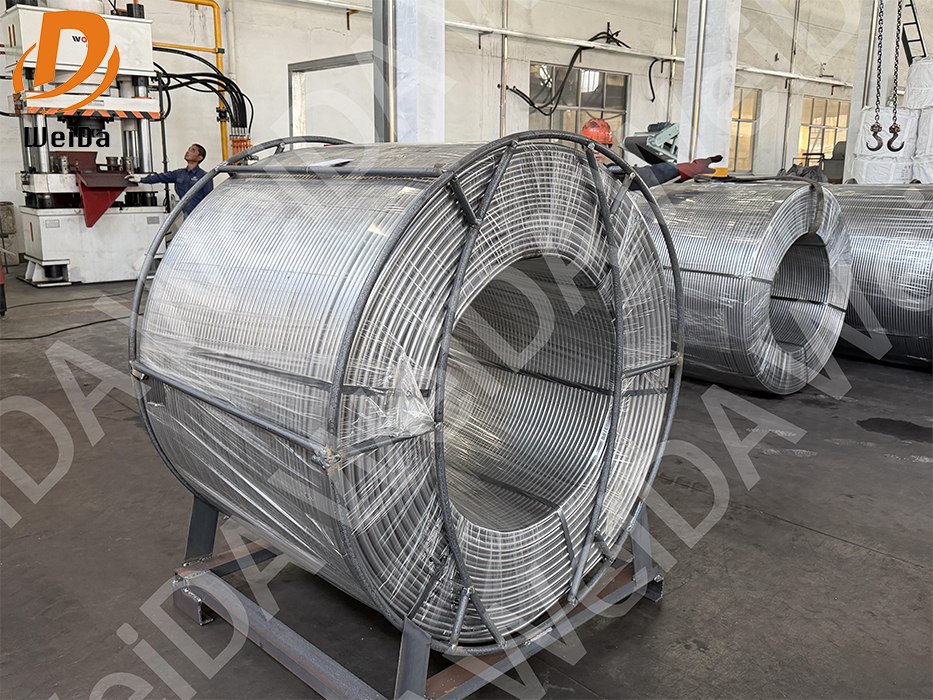
The advantages of this process are revolutionary: First, precise and controllable. Like "injecting," it delivers the effective components directly to the deep liquid steel where reaction is needed, avoiding contact with the atmosphere. Alloy element yield can be increased by 10%-30%, and composition control precision reaches the ten-thousandth level. Second, highly efficient and thorough reaction. Forced penetration causes intense local stirring, enabling instant melting and rapid diffusion of additives for a more complete reaction. Third, improved working environment. Almost no smoke, dust, or splashing, enabling clean steelmaking production. Fourth, high flexibility. Particularly suitable for post-furnace micro-alloying adjustment of molten steel and addition of special elements, meeting the needs of high-end steel production with small batches and multiple grades.
From Cost Center to Value Creation
Adopting the wire feeding process may require initial equipment investment, but the long-term value it brings far exceeds imagination. It quickly returns on investment through reducing consumption of precious alloys, enhancing product quality stability, lowering scrap rates, and saving on environmental control costs. It is not just a change in addition method but also a significant step for enterprises toward intelligent steelmaking and refined production management.
If you are looking for methods to improve alloy yield, achieve narrow composition precision control, or upgrade your secondary refining equipment, Wuxi WeiDa Cored Wire Co., Ltd. can provide you with a complete service from core wire products to process guidance. Welcome to visit https://www.weidamaterials.com/ to learn more.