

In the previous article, we discussed how to prevent SEN clogging during continuous casting of high-aluminum steels. Today, we focus on sulfur control in free-cutting steels. Free-cutting steels achieve their machinability by adding sulfur (0.08%-0.35%) to form MnS inclusions for chip breaking and lubrication, improving cutting speed. However, sulfur is a "double-edged sword": insufficient sulfur results in poor machinability; excessive sulfur or uncontrolled morphology leads to increased hot shortness, deteriorated transverse properties, and nozzle clogging. How can you precisely control sulfur content and sulfide morphology to balance machinability and mechanical properties? Wuxi WeiDa Cored Wire Co.,Ltd provides a comprehensive solution based on sulfide morphology control and precision sulfur addition.
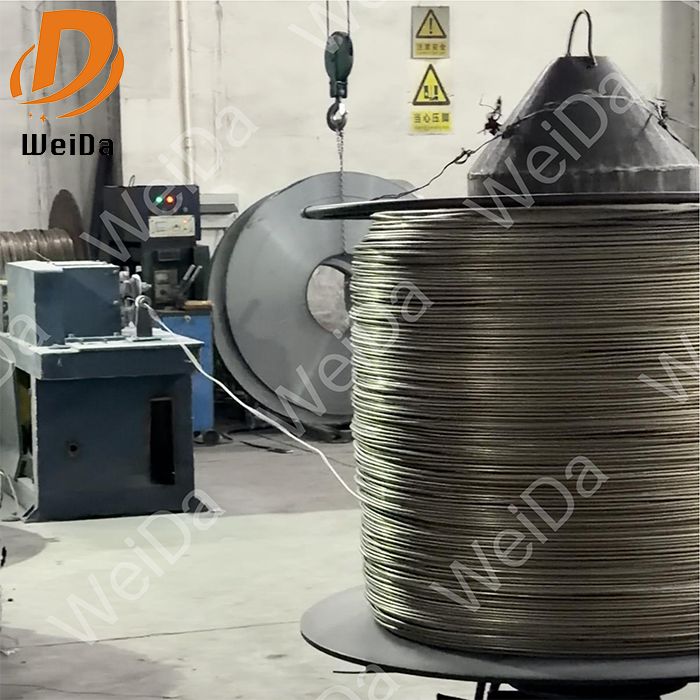
The "Double-Edged Sword" Effect of Sulfur
MnS morphology determines performance. Spindle-shaped or globular MnS is beneficial – it deforms little and causes limited damage to transverse properties. Elongated MnS severely disrupts the steel matrix, causing sharp drops in transverse impact toughness and becoming initiation sites for hydrogen-induced cracking. The traditional "sulfur addition – deoxidation – continuous casting" route offers limited control over morphology.
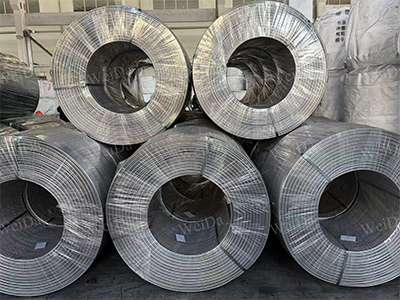
Our Solution
First, precision sulfur addition. Use sulfur cored wire added deep into the molten steel via a wire feeder, achieving stable recovery above 95% , online adjustment capability, and uniform distribution.
Second, morphology modifiers. Tellurium cored wire (10-30 ppm) transforms elongated MnS into globular shapes. Rare earth cored wire (20-50 ppm) forms globular rare earth sulfides. Calcium iron cored wire transforms MnS into globular CaS, with addition amount matched to sulfur content.
Third, deoxidation practice coordination. Use silicon-manganese composite deoxidation instead of aluminum deoxidation to reduce Al₂O₃ as heterogeneous nucleation sites for MnS, promoting spheroidization.
Fourth, continuous casting process coordination. Control superheat at 15-25°C to promote fine MnS precipitation. Use M-EMS to promote uniform distribution. Use soft cooling to avoid grain boundary precipitation.
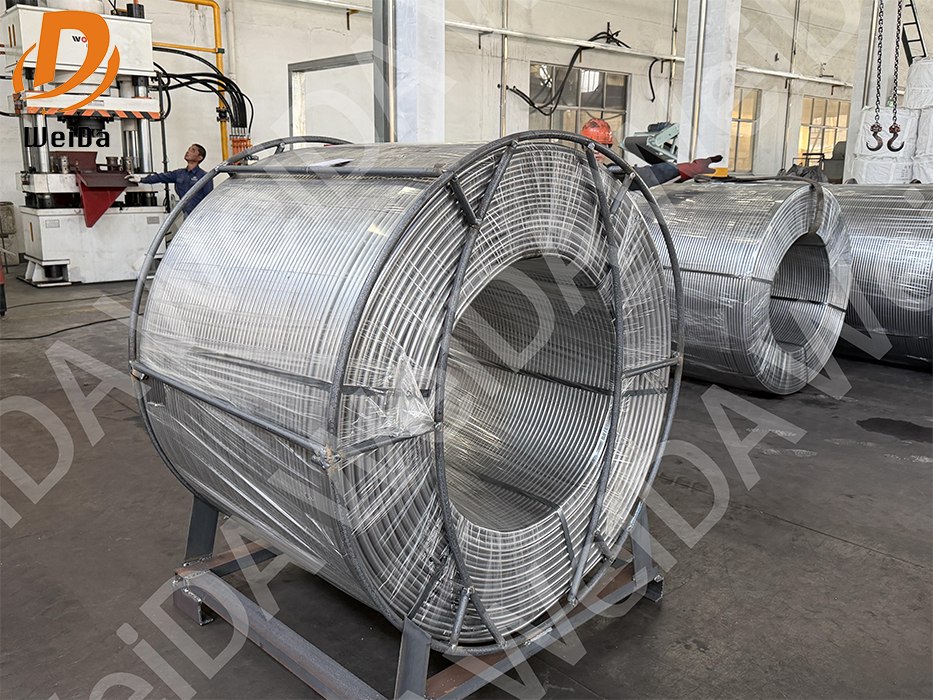
Benefits
After implementation, customers typically achieve: cutting speed increased by 20-40% , tool life extended by 30-50% , transverse impact toughness improved by 30-60% , and nozzle clogging rate reduced by over 50% .
From "Rough Sulfur Addition" to "Morphology Engineering"
Through the four-pronged synergy of precision sulfur addition, morphology modification, deoxidation coordination, and continuous casting process, you can maximize protection of mechanical properties while ensuring machinability.
If you are producing free-cutting steels and wish to balance the conflict between machinability and mechanical properties, please visit https://www.weidamaterials.com/ to obtain the complete solution.